Kumar Bahukhandi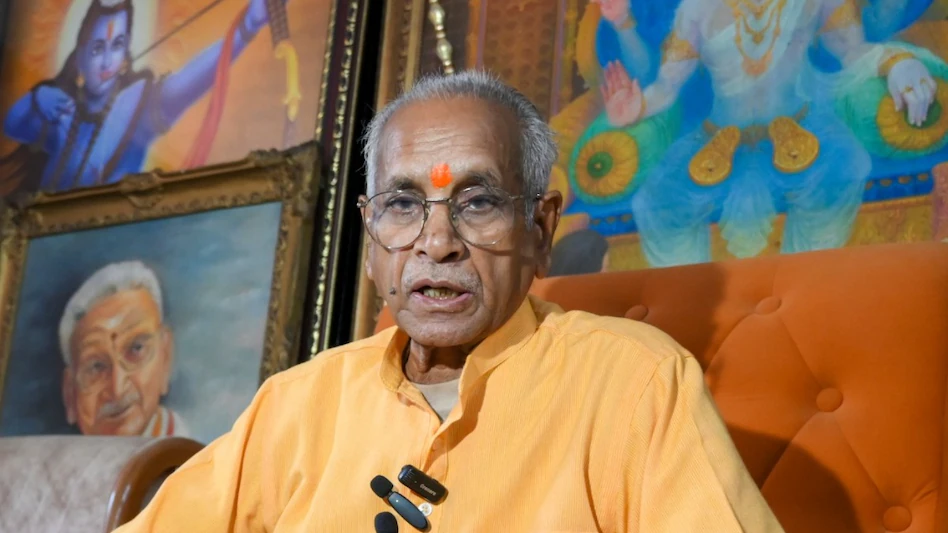
Champat Rai resigns as General Secretary of the Ram Mandir Trust (Photo: PTI)
Action has commenced regarding the theft of offerings at the Shri Ram Temple. Following the registration of an FIR naming eight individuals in the donation theft case, Champat Rai, the General Secretary of the Trust, has resigned from his post.
Let us find out who Champat Rai is and how he came to play a pivotal role in the temple trust.
Action has been initiated following the submission of the SIT report concerning the theft of offerings at the Shri Ram Janmabhoomi Temple in Ayodhya. An FIR has been registered against eight people in this matter, and seven of them have been arrested. Champat Rai, who plays a crucial role in the Ram Mandir Trust, has come under scrutiny, a development that has tarnished his Hindutva image.
Amidst the controversies surrounding the Ram Mandir donation theft, Champat Rai resigned as the General Secretary of the Shri Ram Janmabhoomi Trust on Friday June 26, 2026 . Along with Champat Rai, temple trustee Anil Mishra has also resigned.
Questions had been raised about Champat Rai ever since the donation theft case came to light. Opposition leaders are demanding an investigation into Champat Rai’s role regarding irregularities linked to temple funds and land transactions.
Know who Chapmat Rai is
Champat Rai, a prominent figure in the Hindutva movement, was born on November 18, 1946, in the Nagina tehsil of Bijnor district, Uttar Pradesh. His father, Rameshwar Prasad Bansal, was associated with the RSS, and his mother’s name is Savitri Devi. Champat Rai is the second eldest among ten siblings.
The family environment was ideologically inclined towards Hindutva; influenced by this, he began attending Sangh shakhas (gatherings) during his childhood, thereby becoming associated with the RSS. After completing his education, Champat Rai began his career as a chemistry teacher at RSM Degree College in Dhampur, Bijnor.
Recognition through the Temple Movement
While serving as a teacher, Champat Rai began working to propagate the RSS’s mission. When Indira Gandhi imposed the Emergency, he joined the protests, leading to his arrest and imprisonment. After spending eight months in jail, he was released; he then left his teaching job to become a full-time pracharak (organiser/missionary) for the Sangh.
During his time with the Sangh, he initially worked on expanding the organization in several places, including Agra, Dehradun, and Haridwar. He served as a Vibhag Pracharak (divisional organizer) within the Sangh before being deputed to the Vishwa Hindu Parishad (VHP), where he took on the role of Joint Regional Organising Secretary.
It was from this point that his involvement with the Ram Janmabhoomi movement began.
Following the Dharma Sansad of 1984, when the VHP began to organise and advance the Ram Janmabhoomi movement systematically, several pracharaks—including Ashok Singhal and Champat Rai—were deputed from the Sangh to the VHP. Champat Rai handled tasks such as formulating strategies from behind the scenes, executing them, gathering documents for legal cases, and coordinating with lawyers.
In 1991, he was sent to Ayodhya, where he worked on preparations for the Ram Mandir movement. During the movement, he preserved thousands of historical documents and texts related to the temple. He was present in Ayodhya on December 6, 1992, when the disputed structure was demolished. Champat Rai was regarded as a skilled strategist; he was known for working quietly behind the scenes rather than operating in the limelight. The Encyclopedia of Ayodhya
Champat Rai is known as the “Encyclopedia of Ayodhya” due to his profound knowledge of the history and geography of the city that houses the Ram Mandir. When the Ayodhya Ram Janmabhoomi dispute reached the courts, he was responsible for gathering and presenting the necessary legal documents. He also played a pivotal role in organizing meetings with lawyers in Delhi prior to every crucial hearing at the Supreme Court.
His stature within the VHP continued to rise due to his advocacy for the Ram Mandir and his active involvement in the Ayodhya movement. Champat Rai was considered one of Ashok Singhal’s trusted associates. When a leadership crisis emerged within the Vishwa Hindu Parishad—amidst a conflict involving Dr. Pravin Togadia and other leaders—Rai was among those who played a crucial role in stabilizing the organization and maintaining a balance.
He became part of the Vishwa Hindu Parishad’s (VHP) top leadership and came to be counted among the organization’s most influential strategists. In 2002, he became the Joint General Secretary of the VHP and subsequently its International General Secretary. Later, Champat Rai was appointed as the International Vice President of the VHP.
Became General Secretary of the Ram Mandir Trust
Following the Supreme Court’s Ayodhya verdict in November 2019 and the formation of the Shri Ram Janmabhoomi Teerth Kshetra Trust in February 2020, Champat Rai’s role shifted once again; he became the General Secretary of the Ram Mandir Trust. Known previously as an agitator and strategist, Rai stepped into the roles of administrator for the temple construction project and General Secretary of the Trust.
From the ‘Bhoomi Pujan’ (groundbreaking ceremony) of the grand temple on August 5, 2020, to the present, Rai has remained deeply involved in the temple’s construction and related activities as the General Secretary of the Shri Ram Janmabhoomi Teerth Kshetra Trust.
When the fundraising campaign for the Ram Mandir construction was launched, it was named the ‘Nidhi Samarpan Abhiyan’ (Fund Dedication Campaign). Champat Rai played a pivotal role in planning the campaign and taking it to the public.
As the Trust’s General Secretary, he frequently briefed the media on how the campaign would operate, how funds would be collected, and how they would be utilised.
How Champat Rai Became Embroiled in Controversies
Land was purchased in Ayodhya for the construction of the Ram Mandir. In June 2021, questions were raised regarding a specific land purchase made by the Ram Mandir Trust in Ayodhya. Leaders from the Aam Aadmi Party and the Samajwadi Party alleged irregularities in the land acquisition process. Champat Rai and the Trust categorically denied these allegations.
Champat Rai maintained that all land purchases were conducted transparently, payments were made through banking channels, and the land was acquired by the Trust at rates below the prevailing market price. He dismissed the allegations as politically motivated.
Subsequently, in June 2026, a new issue surfaced regarding the alleged theft of offerings and donations made to the Ram Mandir. Questions are being raised regarding donations linked to the Ram Mandir, the Trust’s functioning, and alleged irregularities.
Samajwadi chief Akhilesh Yadav had been targeting the “Ram Janmabhoomi Teerth Kshetra Trust” over the theft of Ram Mandir donations. It is alleged that, right under the Trust’s nose, the accounts concerning temple donations and offerings were manipulated. Following the opposition’s aggressive stance, the Yogi government constituted an SIT, and action commenced after the submission of the SIT’s preliminary report.
An FIR has been registered against eight individuals—seven of whom have been arrested—following the completion of the SIT investigation into the theft of offerings at Ayodhya’s Shri Ram Janmabhoomi temple.
Subsequently, Champat Rai, General Secretary of the Shri Ram Janmabhoomi Teerth Kshetra Trust, has resigned, as the arrested individuals include Ramashankar Yadav (alias Tinnu), who was Rai’s driver and a close associate. Investigators allege that he played a key role in the alleged diversion of donation funds.
(With PTI Inputs )