Kumar Bahukhandi
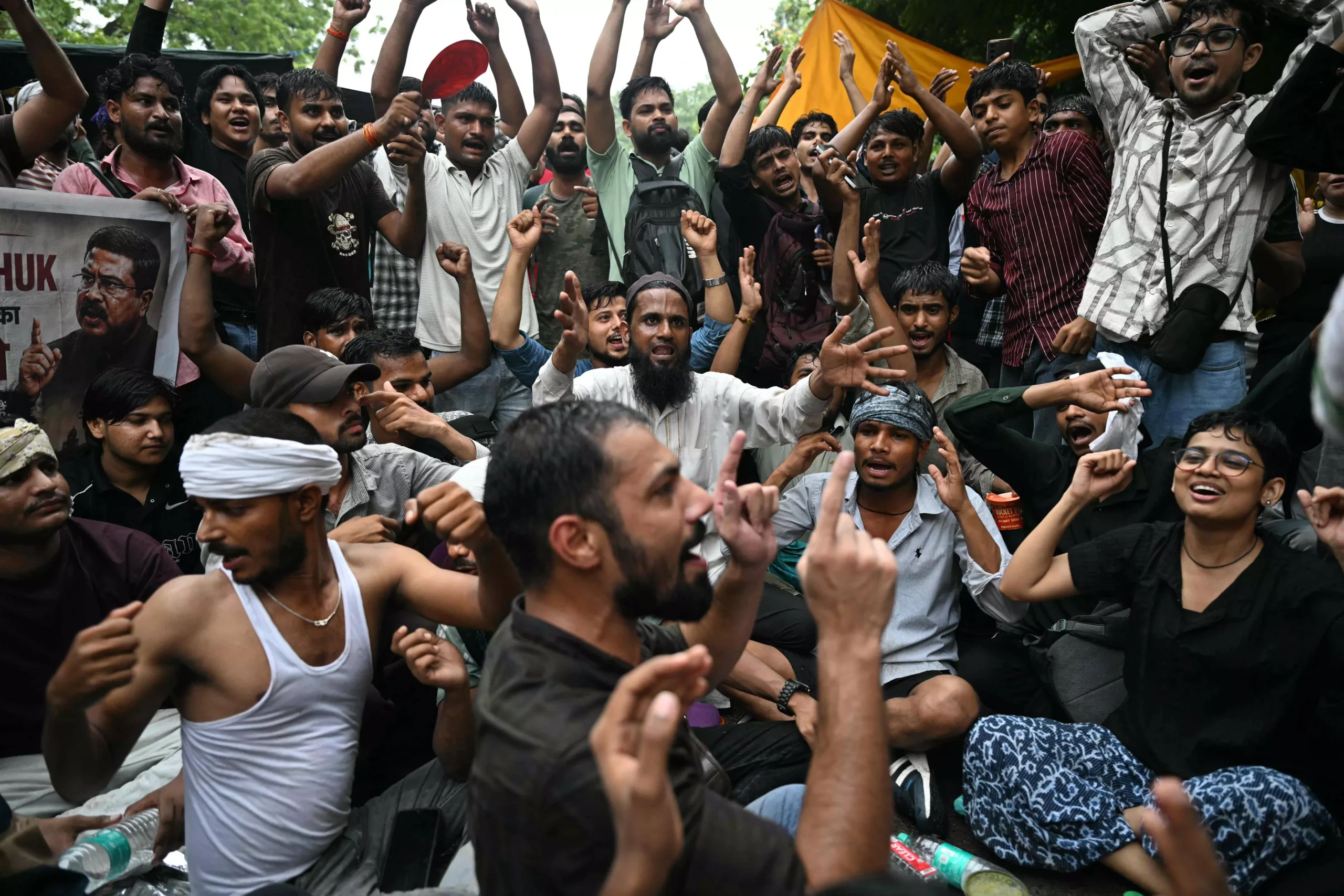
“‘Crimes cannot be justified under the guise of religious practices.’ The Allahabad High Court makes strong observations on triple talaq and halala, emphasizing that women’s dignity, constitutional rights, and the rule of law must always prevail.-Representational Image ( Credit -channel24india.com)
Court observes that no religious custom can override a woman’s fundamental rights, dignity, or the rule of law.
Prayagraj: The Allahabad High Court has made significant observations on the sensitive issues of triple talaq and halala, stating that crimes cannot be justified under the guise of religious practices. The court emphasized that any act committed against a woman in violation of her consent or the law cannot be defended merely by invoking religious customs.
The remarks came during the hearing of a petition challenging criminal proceedings arising from allegations related to triple talaq and halala. During the proceedings, the court observed that the Constitution of India guarantees every citizen the rights to equality, dignity, and personal liberty. Therefore, if a woman’s rights are violated or a criminal offence is committed in the name of a religious practice, the law must take its course.
The High Court further noted that while the Constitution protects the right to freedom of religion, this right is not absolute. Religious freedom cannot be used as a shield to conceal or legitimize criminal acts. Whenever a religious practice is allegedly used to justify conduct that amounts to an offence under the law, courts are duty-bound to intervene.
The court’s observations come at a time when issues concerning women’s rights, gender equality, and personal dignity continue to be the subject of public and legal debate. The bench indicated that while the judiciary respects religious traditions, it also has a constitutional obligation to ensure that no individual’s fundamental rights are compromised in their name.
It is pertinent to note that in 2019, Parliament enacted the Muslim Women (Protection of Rights on Marriage) Act, which declared the practice of instant triple talaq (talaq-e-biddat) illegal and punishable under law. Despite this legislative change, courts continue to hear cases involving legal questions surrounding triple talaq and halala.
Legal experts believe the High Court’s latest observations reinforce the principle that no religious or social practice can supersede the Constitution or justify criminal conduct. They view the remarks as a reminder that the protection of women’s dignity, safety, and constitutional rights remains paramount under Indian law.
The matter will continue to be heard as the court considers the submissions of the parties involved. For now, the High Court’s observations underline the judiciary’s approach of balancing religious freedom with the protection of fundamental rights, while reaffirming that the rule of law remains supreme.
Note— We are Publishing this report, clearly distinguish between the court’s observations made during the hearing and its final judicial order. Unless a final judgment has been delivered, the observations should not be presented as the court’s conclusive ruling.