Kumar Bahukhandi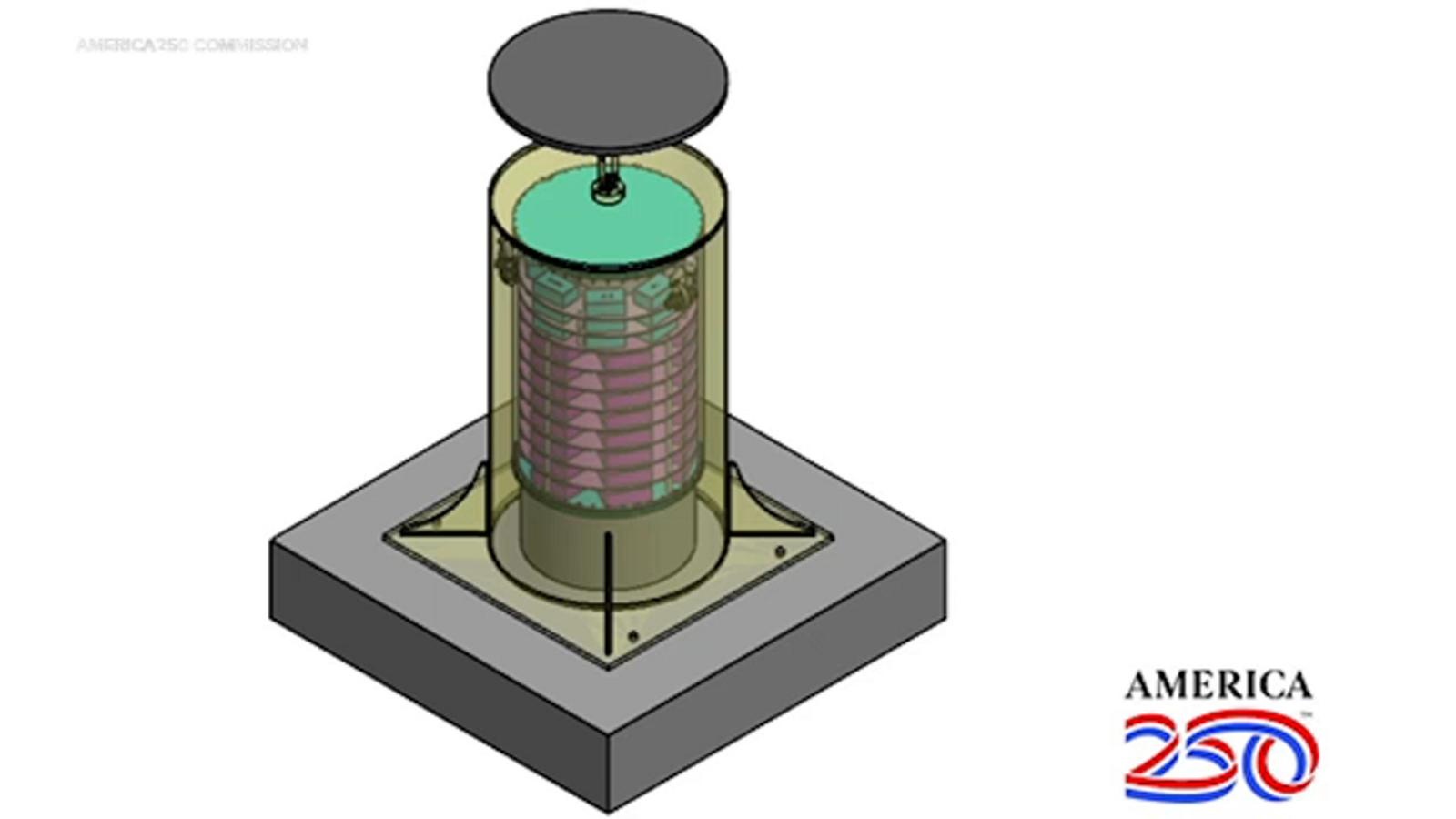
Time capsules preserve the voices, achievements, and aspirations of one generation for those who will inherit the future centuries later-Photo Credit -channel24india.com
Key Factors
- The United States’ 250th anniversary has renewed global interest in time capsules as instruments of historical preservation.
- Time capsules capture the cultural, political, scientific, and social identity of an era for future generations.
- India has witnessed its own debates over preserving history—from the controversial initiative during the tenure of former Prime Minister Indira Gandhi to modern digital archiving efforts under Prime Minister Narendra Modi.
- A time capsule is more than a sealed container—it reflects what a society believes deserves to be remembered.
As the United States prepares to preserve a message for generations yet unborn, the enduring idea of the time capsule reminds humanity that history is not just remembered—it is deliberately entrusted to the future.
A time capsule is, perhaps, humanity’s most optimistic conversation with the future. Unlike monuments that celebrate victories or memorials that honour the past, a time capsule speaks directly to people who have not yet been born. It is an act of extraordinary faith—a belief that centuries from now, someone will still care to know who we were, what we valued, and how we imagined tomorrow.
As the United States marks 250 years of its democratic journey, the decision to create a long-term time capsule reflects a powerful message: nations are built not only through infrastructure and institutions but also through collective memory. By preserving artefacts, documents, cultural symbols, and stories, today’s generation acknowledges its responsibility to leave behind an authentic record for posterity.
The idea itself is timeless. A time capsule is a carefully curated collection of objects, writings, photographs, or digital records sealed away to be opened decades—or even centuries—later. These collections offer future historians a rare, unfiltered glimpse into everyday life, technological progress, political ideals, artistic expression, and public sentiment. Unlike history books, which interpret events, time capsules preserve the raw evidence of an era.
India, too, has experienced the symbolism—and controversy—surrounding time capsules. During the tenure of former Prime Minister Indira Gandhi, a time capsule buried near the Red Fort generated intense political debate over whose version of history should be preserved. Decades later, under Prime Minister Narendra Modi, the focus has increasingly shifted toward preserving national heritage through digital archives, museums, and large-scale documentation of governance, culture, and public achievements. While the methods have evolved, the underlying objective remains unchanged: safeguarding history for generations to come.
Yet the true significance of a time capsule extends beyond politics. Every society must decide what defines its age. Is it technological innovation? Scientific discoveries? Literature? Music? Ordinary household objects? Children’s drawings? The choices reveal far more than the objects themselves—they reveal the values of the civilisation making them.
In an era dominated by cloud storage and artificial intelligence, the concept of physically burying a capsule may appear symbolic. Digital information can be copied endlessly, but it is also vulnerable to cyber threats, changing technologies, and the rapid obsolescence of storage formats. A carefully preserved physical archive serves as a tangible reminder that memory deserves permanence beyond the lifespan of devices and software.
There is also a deeper philosophical lesson. Every generation believes it lives in extraordinary times. But future generations may judge us not by our speeches or headlines, but by how honestly we documented our triumphs, failures, hopes, and fears. A meaningful time capsule should therefore preserve not only achievements but also the challenges of its age—climate change, technological transformation, public health, social movements, and the aspirations of ordinary citizens.
Ultimately, time capsules are not about nostalgia; they are about responsibility. They encourage societies to think beyond election cycles, economic quarters, and breaking news. They remind us that today’s decisions become tomorrow’s history.
When future generations eventually unseal these capsules, they will not merely discover objects. They will encounter the heartbeat of an era—the dreams, convictions, and questions of people who believed their story was worth preserving.
History is never complete when it is written only for the present. It becomes truly meaningful when it is entrusted to the future.