Kumar Bahukhandi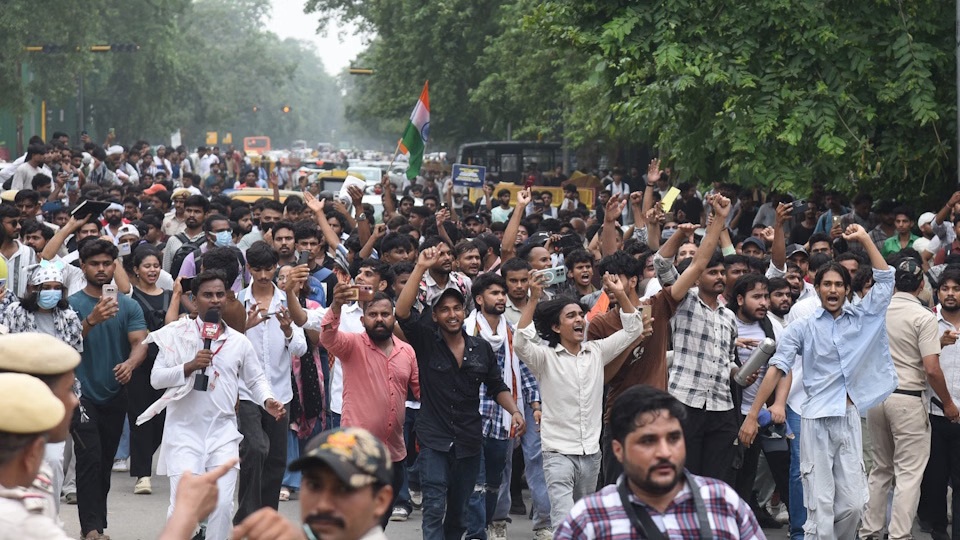
Students and supporters raise slogans during the renewed CJP protest at Jantar Mantar as security remains on high alert and the movement enters a new phase of public mobilisation-Photo Credit-channel24india.com
When a protest transforms into a national debate, governments and protesters alike must choose between confrontation and constructive engagement.
The political temperature in New Delhi has once again risen as the Cockroach Janata Party (CJP) resumed its protest at Jantar Mantar despite police action and heightened security around the national capital. What began as a youth-led campaign demanding accountability in the education system has now evolved into a larger debate on democratic rights, public protest, and the relationship between citizens and elected representatives.
The renewed gathering at Jantar Mantar, coupled with activist Sonam Wangchuk’s decision to continue his fast, has ensured that the issue remains firmly in the national spotlight. While security agencies focus on maintaining law and order, the larger question is whether India’s democratic institutions can create sufficient space for meaningful dialogue before disagreements escalate into prolonged confrontations.
A Protest That Refuses to Fade
Following the police clearance of the protest site after Monday’s commotion, many believed the demonstration had reached its conclusion. Instead, protesters regrouped within hours, signalling that administrative action alone cannot dissolve public discontent when participants believe their concerns remain unanswered.
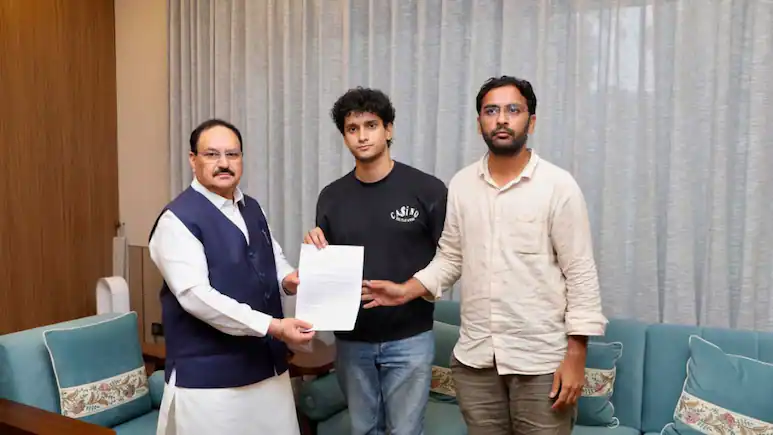
CJP representatives meet Union Minister J.P. Nadda on Monday July 20, 2026 morning , during discussions aimed at resolving the ongoing protest, even as demonstrators continue to press for direct engagement with Members of Parliament-Photo Credit- channel24india.com (Arrangements)
The return to Jantar Mantar reflects determination among the protesters, particularly students and young activists who view the movement as more than a single demonstration. Their message is that public participation should not end with elections but must continue through peaceful civic engagement whenever serious concerns arise.
However, persistence alone does not guarantee success. Every long-running movement must maintain public confidence by remaining peaceful, disciplined, and focused on clearly defined objectives.
Sonam Wangchuk’s Hunger Strike
Activist Sonam Wangchuk has once again become the moral face of the movement through his continued fast. His announcement that he will not end the fast until young leaders are permitted to meet Members of Parliament or he is allowed to interact with MPs while under medical care has added another layer of pressure on the authorities.
Hunger strikes occupy a unique place in India’s democratic history. From Mahatma Gandhi to several contemporary movements, fasting has often served as a symbolic appeal to the nation’s conscience rather than an instrument of coercion. Yet it is also a method that carries significant personal health risks and can gradually shift public attention from the original demands to concerns about the protester’s physical condition.
A democracy should ideally resolve disagreements through discussion before symbolic sacrifices become necessary.
Government’s Delicate Balancing Act
Reports indicate that CJP representatives met Union Minister J.P. Nadda, during which assurances were reportedly given that the concerns would be considered. Yet shortly afterwards, CJP leader Abhijit Deepke declared that there would be no further negotiations unless government representatives came directly to Jantar Mantar.
This exchange highlights the challenge both sides now face.
The government must maintain public order and protect Parliament while simultaneously demonstrating openness to democratic engagement. Protest leaders, meanwhile, must determine whether symbolic resistance or structured negotiations offer the more effective path toward achieving their objectives.
Neither prolonged deadlock nor political theatre ultimately benefits the public.
The Role of Parliament
India’s Parliament exists precisely to debate issues affecting citizens. If students seek to present concerns regarding education, accountability, or governance, Parliament remains the most appropriate constitutional forum for those discussions.
Equally, Members of Parliament represent the people and should remain accessible to genuine public concerns. While security considerations surrounding Parliament are unavoidable, democratic institutions gain strength when they are seen as willing to listen rather than merely defend themselves from criticism.
Bridging this gap requires trust from both sides.
The Importance of Peaceful Protest
India’s Constitution protects the right to peaceful assembly and freedom of expression, but these rights exist alongside responsibilities.
Protesters must ensure demonstrations remain peaceful, avoid disruption to ordinary citizens, and respect legal boundaries. Authorities, on the other hand, must exercise restraint, avoid unnecessary confrontation, and facilitate lawful expression wherever possible.
History repeatedly shows that excessive force often strengthens protest movements rather than ending them.
The Youth Factor
One of the most striking aspects of the current movement is the visible participation of young people. Across India, students increasingly expect greater transparency, faster accountability, and direct engagement from public institutions.
Whether or not one agrees with every demand being raised, the energy and participation of young citizens should not be viewed merely as a law-and-order issue. Their involvement reflects a generation that seeks greater participation in national decision-making.
Ignoring youthful aspirations rarely resolves underlying concerns.
Dialogue Remains the Strongest Solution
Political disagreements are inevitable in every democracy. The true measure of democratic maturity lies not in preventing protests but in resolving them through dialogue before positions harden irreversibly.
The government has an opportunity to demonstrate confidence by engaging openly with peaceful protesters. Protest leaders likewise have an opportunity to show responsibility by remaining committed to constitutional methods and constructive negotiation.
India’s democratic tradition has always been strongest when institutions listen, citizens participate responsibly, and disagreements produce reform rather than division.
The developments at Jantar Mantar are therefore about much more than one protest. They represent an important reminder that democracy is sustained not merely through elections, but through continuous conversation between those who govern and those they represent.