Kumar Bahukhandi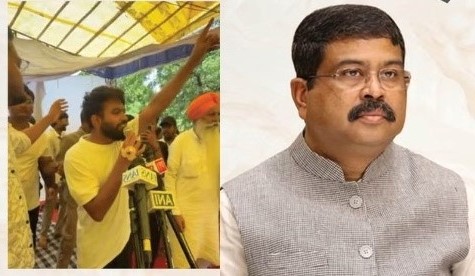
Union Education Minister Dharmendra Pradhan’s resignation following the NEET controversy has been welcomed by protesting students, who describe it as a victory for accountability while urging the government to pursue comprehensive reforms in the examination system-Photo Credit-channel24india.com
India’s Examination System Needs Structural Reform, Not Symbolic Victories
The resignation of Union Education Minister Dharmendra Pradhan marks one of the most significant political developments to emerge from the NEET examination controversy. Whether viewed as an act of accountability, political necessity, or moral responsibility, it sends a clear message: when the credibility of public institutions is questioned, those at the helm cannot remain insulated forever.
For weeks, students across India demanded accountability after allegations of irregularities in one of the country’s most important entrance examinations. What began as outrage over an examination soon evolved into a nationwide movement centred on fairness, transparency, and the future of millions of young aspirants.
If the resignation has indeed come in response to sustained public concern, it demonstrates that democratic institutions can still respond to public pressure.
However, celebrating one resignation alone would be a mistake. The real challenge begins now.
The NEET controversy exposed weaknesses that extend beyond any one minister. A national examination involving millions of candidates depends upon secure question paper management, transparent evaluation, strong digital infrastructure, effective monitoring, and swift action against organised cheating networks. If these systems remain unchanged, replacing one individual will not prevent similar crises in the future.
The protests that followed were remarkable for their scale and persistence. Students from diverse backgrounds travelled to Delhi, participated in demonstrations, and demanded institutional reforms. Civil society groups, education experts, and opposition parties also entered the debate. While political parties inevitably attempted to shape the narrative, the central issue remained the same: protecting the integrity of India’s education system.
The role of the government deserves balanced scrutiny. Once allegations emerged, investigations were initiated and several arrests were made. Yet many students believed that accountability at the highest level had been delayed. That perception fuelled prolonged demonstrations and widened the trust deficit between young citizens and public institutions.
Similarly, protest leaders must recognise that every democratic movement carries responsibility. Peaceful demonstrations strengthen public support, whereas confrontation, violence, or inflammatory rhetoric can weaken legitimate demands. The credibility of any movement depends as much on its methods as on its objectives.
The resignation should therefore be viewed as an opportunity—not merely for political celebration but for institutional correction. Parliament, policymakers, educators, examination experts, technology specialists, and student representatives should work together to create a more secure, transparent, and accountable examination framework.
Among the reforms that deserve urgent attention are stronger cybersecurity measures, independent auditing of examination processes, quicker investigation mechanisms, enhanced protection for whistle-blowers, and time-bound communication with candidates whenever irregularities occur. Public confidence can only be restored when students believe that merit—not manipulation—determines success.
History shows that democratic societies are strengthened when governments acknowledge mistakes and institutions learn from them. If this episode results only in a change of minister, the crisis will return in another form. If it results in lasting reform, it will become a turning point in India’s education system.
For millions of students who spend years preparing for competitive examinations, every paper represents more than an examination—it represents hope, sacrifice, and the promise of a better future. That trust must never again be placed at risk.
The resignation may have closed one political chapter. The much larger chapter—rebuilding confidence in India’s examination system—has only just begun.
My Perspective
A resignation can answer the question of political responsibility, but only comprehensive reforms can answer the question of public trust. The future of India’s youth deserves institutions that are as strong as their aspirations.