Kumar Bahukhandi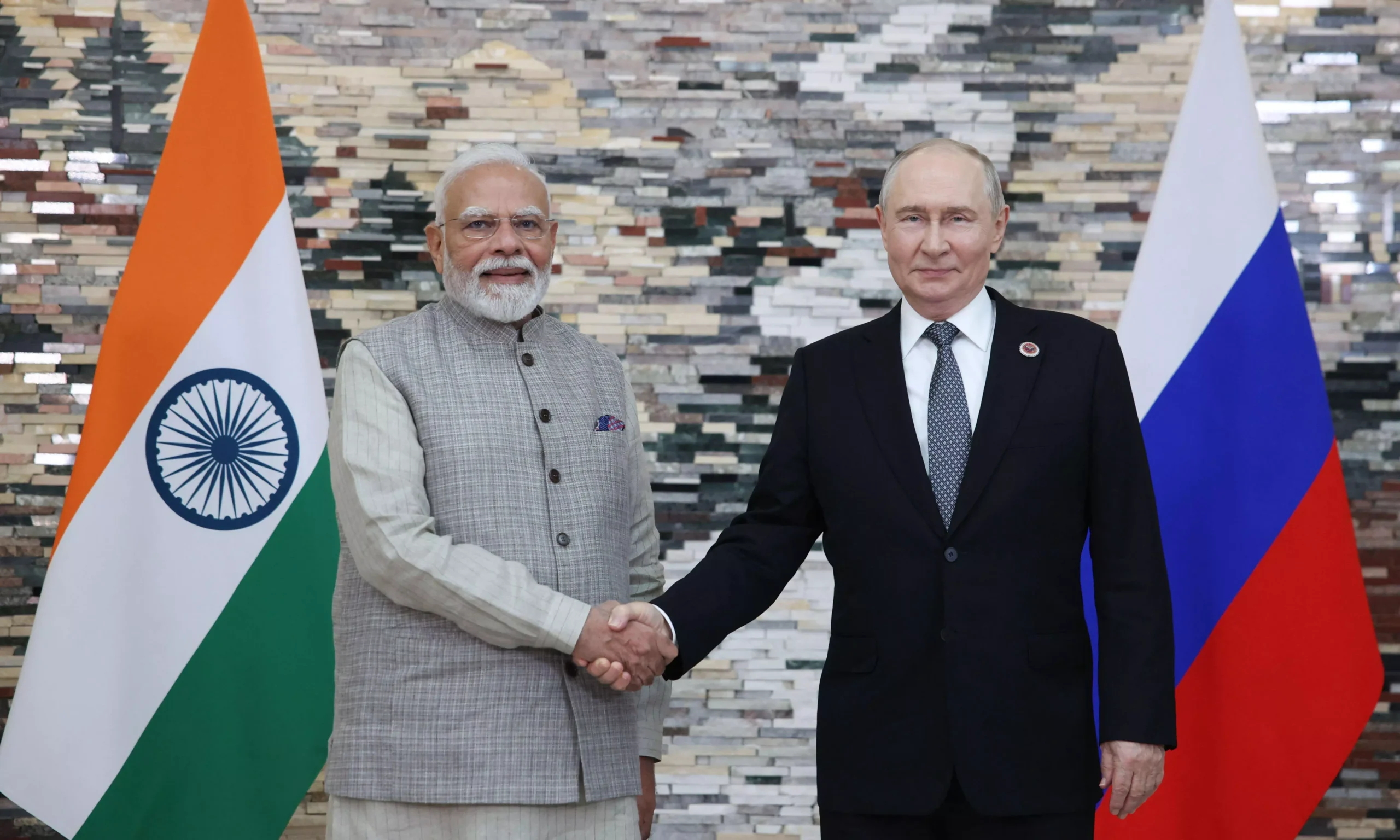
Prime Minister Narendra Modi and Russian President Vladimir Putin shake hands during their bilateral meeting on the sidelines of the Shanghai Cooperation Organisation summit in Bishkek, Kyrgyzstan, on Monday, August 31, 2026. Modi urged an end to the Ukraine conflict, saying every day of war sets humanity back. Photo: Peter Kovalev/Pool/AFP.
India backs dialogue and diplomacy as Modi and Putin review trade, energy, defence and the wider strategic partnership during talks in Bishkek
Key Highlights
- Modi urges a transition from “endless war” to the “end of war”
- Prime Minister reiterates India’s support for efforts towards a peaceful resolution of the Ukraine conflict
- Modi says every day of war pushes humanity backwards while every step towards peace creates new hope
- India and Russia review cooperation in trade, energy, defence, space and other strategic sectors
- Both leaders reaffirm the resilience of the India-Russia Special and Privileged Strategic Partnership
New Delhi : Prime Minister Narendra Modi has made a renewed appeal for an end to the Russia-Ukraine conflict, telling Russian President Vladimir Putin that prolonged warfare was setting humanity back and that disputes ultimately needed to be resolved through peace.
Modi conveyed the message during bilateral talks with Putin in Bishkek, Kyrgyzstan, on Monday, August 31, on the sidelines of the Shanghai Cooperation Organisation summit.
Referring specifically to Ukraine, Modi reiterated that India had consistently supported efforts towards peace and would continue doing so.
“Every day of war sets humanity back, whereas every step taken towards peace fills humanity with new hope and enthusiasm,” Modi said, adding that the world needed to move from “endless war towards an end to the war.”
He described an early peaceful resolution of conflicts as a call of humanity and invoked India’s traditions of Gandhi and Buddha in stressing the path of peace.
Strategic Partnership Moves Alongside the Peace Message
The Ukraine conflict was only one part of a wider conversation between the two leaders. Modi and Putin reviewed the India-Russia Special and Privileged Strategic Partnership and discussed cooperation across trade and investment, energy, defence, space and people-to-people relations.
Modi said bilateral cooperation continued to reach new levels and recalled Putin’s visit to India last year, describing it as successful and memorable.
The two leaders also discussed expanding economic relations, including efforts to increase Indian exports to Russia and address market-access and non-tariff barriers.
Their meeting came at a time when India’s relationship with Russia continues to carry considerable strategic significance. Russia remains an important partner for New Delhi in energy and defence, even as India has consistently advocated dialogue and diplomacy over the Ukraine conflict.
The two leaders also exchanged views on regional and global developments, including conflicts affecting West Asia and the Black Sea region.
In another indication of their personal rapport, Modi and Putin travelled together to the World Nomad Games following their talks, continuing the informal diplomatic interaction seen during previous meetings.
Modi’s remarks in Bishkek nevertheless placed the humanitarian consequences of prolonged conflict firmly at the centre of India’s message.
“A peaceful resolution to all issues at the earliest is the call of humanity,” he said.
For New Delhi, the message represents a continuation of a delicate diplomatic position: maintaining a longstanding strategic partnership with Moscow while repeatedly advocating an end to hostilities through dialogue and diplomacy.