Kumar Bahukhandi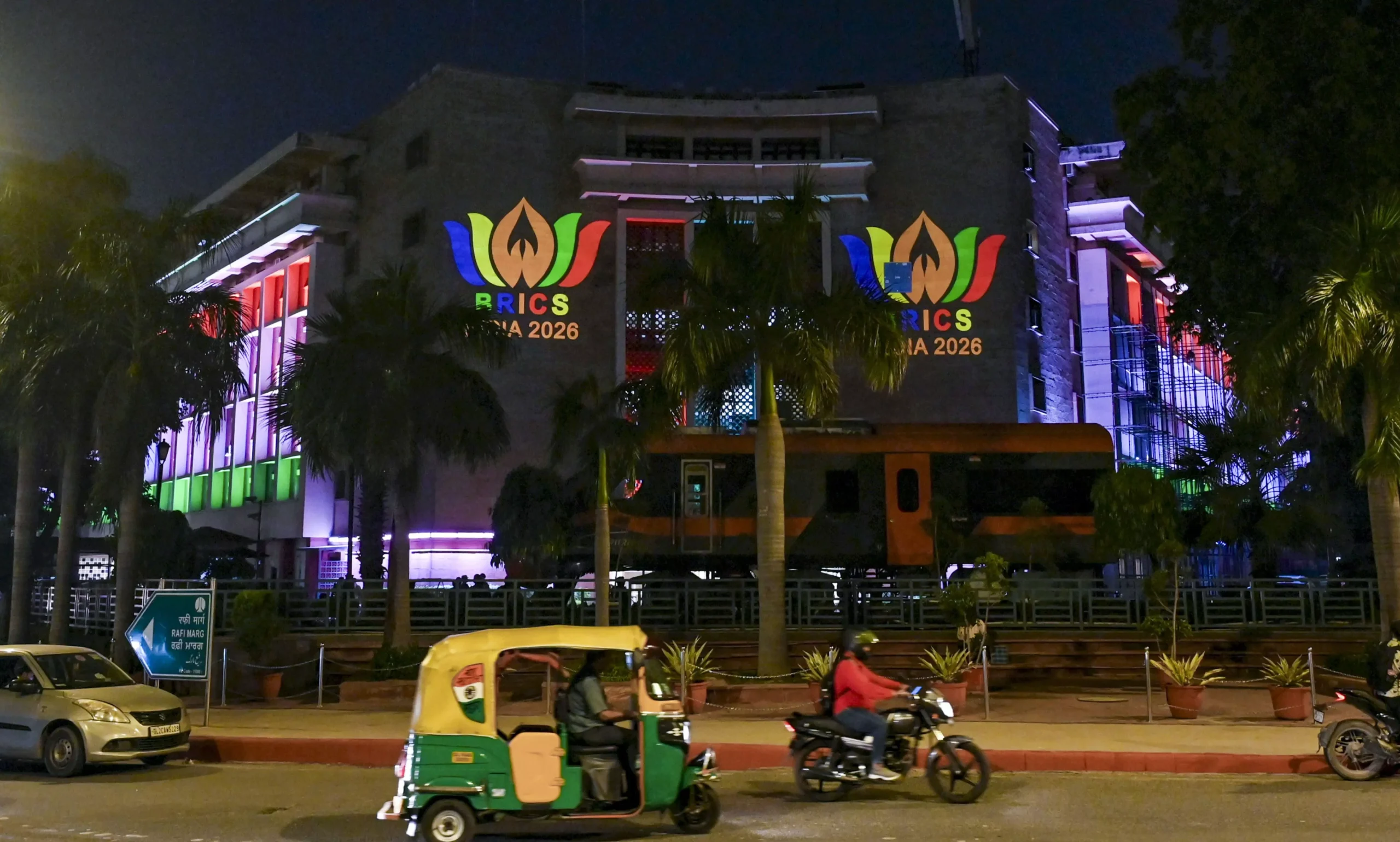
Vehicles move past the illuminated Rail Bhavan in New Delhi as the national capital prepares for the 18th BRICS Summit. Extensive security and traffic arrangements are being put in place, with more than 35 roads facing regulated movement and 22 diversion points identified for the movement of visiting leaders and international delegations. (PTI Photo)
More than 35 roads to face regulation as foreign leaders and delegations arrive for the high-profile gathering at Bharat Mandapam; commuters advised to rely on Metro and plan journeys in advance
Key Highlights
- Delhi Traffic Police issues summit traffic advisory for September 11–13.
- More than 35 roads will face regulated movement.
- 22 diversion points have been identified.
- Central and south Delhi corridors are expected to experience the greatest impact.
- Commuters are advised to use the Delhi Metro wherever possible.
- Special travel arrangements have been prepared for airport and railway-station passengers.
- Emergency and essential-service vehicles will receive priority passage.
New Delhi: Delhi is preparing for major traffic restrictions and diversions ahead of the 18th BRICS Summit, with the Traffic Police drawing up an extensive movement plan covering key corridors used by visiting heads of state, foreign delegations and other dignitaries.
The Delhi Traffic Police has issued an official advisory on Wednesday ,September 9, 2026 for September 11–13, identifying more than 35 roads for regulated movement and 22 diversion points as part of the security and traffic arrangements.
The high-level gathering is centred on Bharat Mandapam in New Delhi. With VIP movements expected between the venue, hotels and other locations, restrictions will particularly affect parts of central and south Delhi.
Additional Commissioner of Police (Traffic) Dinesh Kumar Gupta said detailed arrangements had been prepared and personnel were being familiarised with the routes to be used by visiting delegations.
“We have charted out a detailed traffic arrangement,” Gupta said, adding that carcade rehearsals were being conducted and personnel deployed for summit duties were receiving route-specific briefings.
Over 35 Roads Under Traffic Regulation
Among the important corridors affected by traffic regulation are Sardar Patel Marg, Teen Murti Marg, Akbar Road, Janpath, Ashoka Road, Barakhamba Road, Mathura Road, Dr Zakir Hussain Marg, Shanti Path, Africa Avenue Road, APJ Abdul Kalam Road and Lal Bahadur Shastri Marg, among others.
Restrictions are expected to be imposed according to VIP movement rather than treating the entire capital as a continuously closed zone.
Commuters have been advised to plan journeys in advance, allow additional travelling time and follow instructions from traffic personnel. Public transport — particularly the Delhi Metro — is being recommended wherever possible. Metro services are expected to operate normally.
Special arrangements have also been outlined for people travelling to Indira Gandhi International Airport and the New Delhi, Old Delhi and Hazrat Nizamuddin railway stations. Emergency and essential-service vehicles are to receive priority passage.
The scale of the arrangements reflects the diplomatic importance of the summit and the security requirements accompanying the movement of international leaders through one of India’s busiest urban road networks.
For Delhi residents, however, the immediate challenge will be more practical: negotiating temporary road restrictions without allowing the diplomatic gathering to bring everyday movement across the capital to a standstill.