Kumar Bahukhandi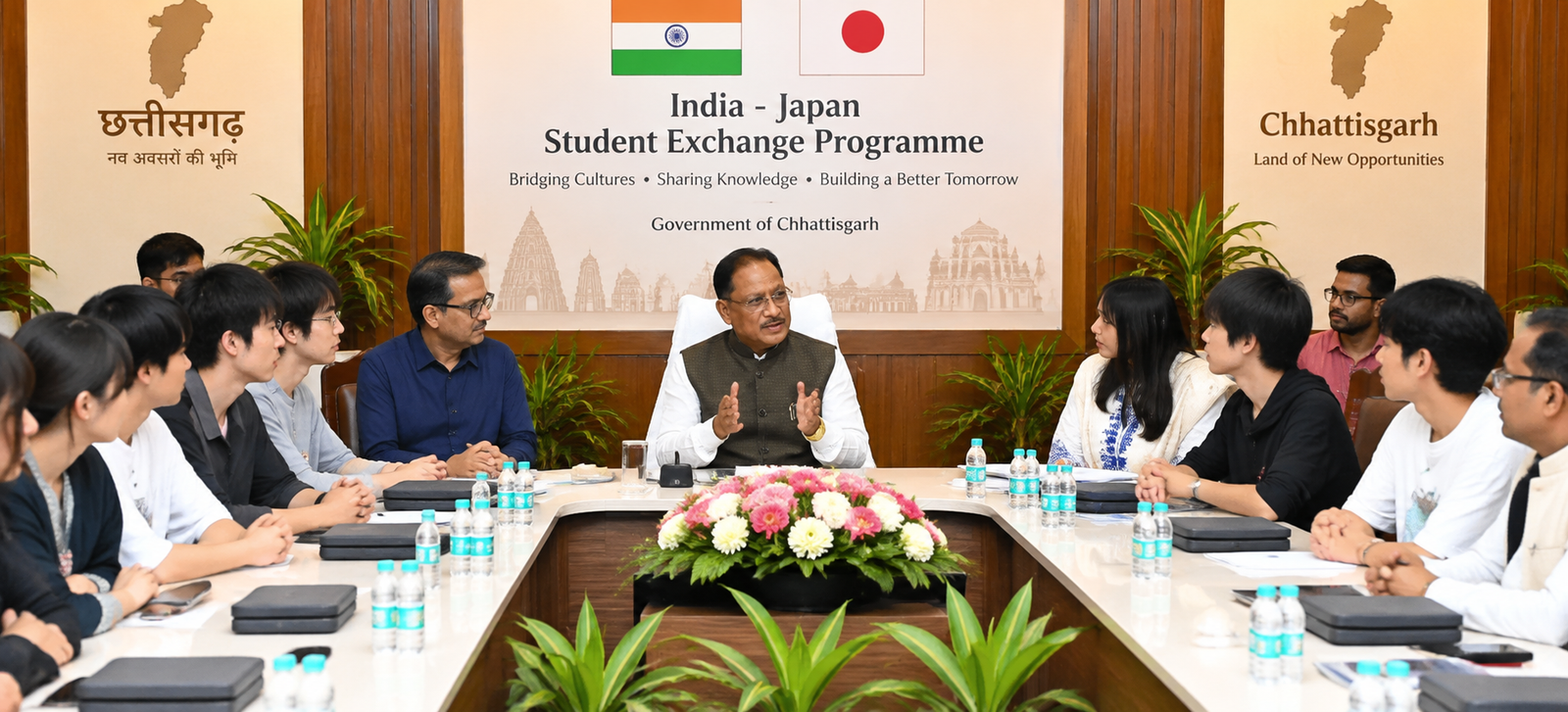
Young Minds, New Bridges: Chief Minister Vishnu Deo Sai interacts with the 17-member student delegation from Japan’s Ehime University at the Chief Minister’s residence office in Raipur on Monday, September 14, 2026. Discussions ranged from the shared cultural heritage of India and Japan to education, research, startups and technological innovation- Photo Credit:channel24india.com via CMO
17-member delegation from Japan’s Ehime University meets Chief Minister Vishnu Deo Sai; discussions span Buddhist heritage, student exchanges, research, startups and technological collaboration
Key Highlights
- A 17-member student delegation from Japan’s Ehime University met Chief Minister Vishnu Deo Sai in Raipur.
- Sai highlighted Buddhist heritage as an enduring cultural link between India and Japan.
- Discussions covered education, research, technology, innovation, startups and student exchanges.
- The Chief Minister introduced the delegation to the heritage of Sirpur, Mainpat and Bhongapal.
- Japanese students visited NIT Raipur’s research and incubation centres and showed interest in technological innovation and possible collaboration.
- The delegation will visit Sirpur to explore Chhattisgarh’s ancient Buddhist and archaeological heritage.
Raipur: A shared Buddhist heritage may have connected India and Japan for centuries, but education, technology and young minds are now giving that relationship a distinctly modern dimension.
That message emerged as a 17-member student delegation from Japan’s Ehime University met Chhattisgarh Chief Minister Vishnu Deo Sai at his residence office in Raipur during a three-day educational visit under the India-Japan Inter Exchange Programme.
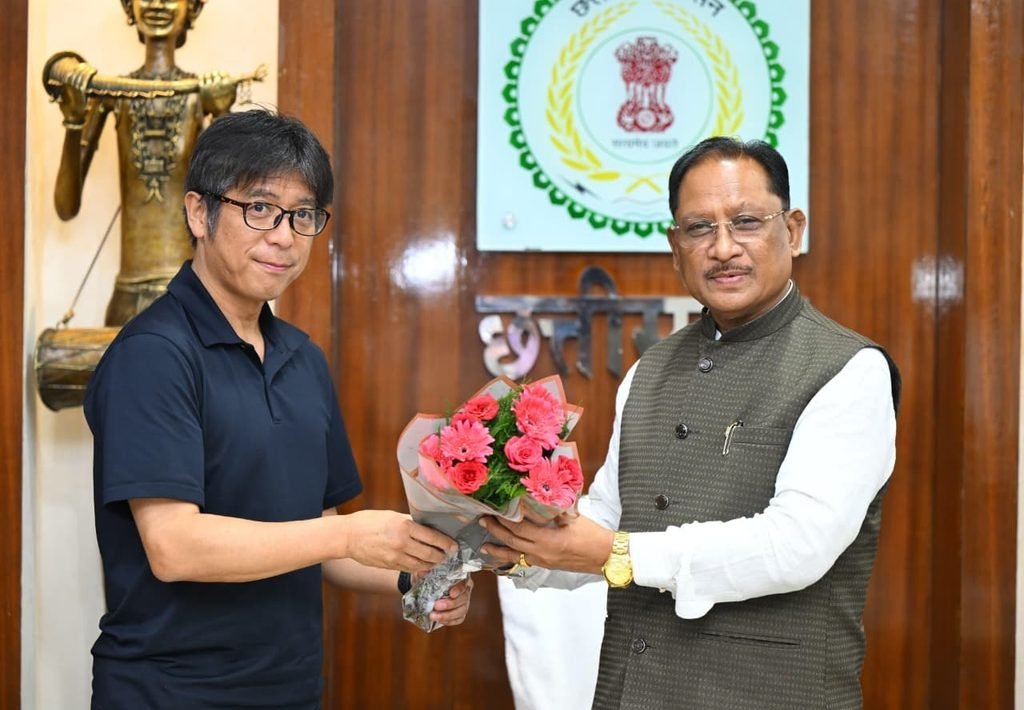
A Warm Chhattisgarh Welcome: Chief Minister Vishnu Deo Sai welcomes the head of the visiting Ehime University delegation during the Japanese students’ educational and cultural visit to Chhattisgarh in Raipur on Monday, September 14, 2026.-Photo Credit:channel24india,com via CMO
The interaction moved well beyond a formal courtesy call. Sai spoke with the Japanese students about the historical relationship between the two countries, Chhattisgarh’s Buddhist and archaeological heritage, education and research, technological innovation and the possibilities that could emerge from greater interaction between young people in India and Japan.
“The friendship between India and Japan is deeply rooted in the ancient cultural and spiritual heritage of the two countries,” Sai said, pointing out that the relationship has steadily expanded into education, science, technology, innovation and economic cooperation.
He said exchanges involving students and young people could give the India-Japan relationship greater depth in the coming generations.
From Buddhist Heritage to the Technology of Tomorrow
Sai drew attention to Buddhism as one of the enduring cultural links between India and Japan. India, he said, is the land of Lord Buddha, whose teachings of peace, compassion, friendship and human welfare travelled far beyond the country’s borders and left a deep imprint on Japanese culture.
For Chhattisgarh, that historical connection also opens an interesting window to the world.
The Chief Minister introduced the students to the State’s archaeological and cultural heritage, mentioning Sirpur, Mainpat and Bhongapal. He described Sirpur, situated on the banks of the Mahanadi, as an important centre of ancient civilisation, architecture, art and Buddhist heritage.
The State Government, he said, is working to give Chhattisgarh’s historical and archaeological treasures greater national and international visibility, including efforts to develop Sirpur as a major heritage and tourism destination.
The Japanese delegation is scheduled to visit Sirpur as part of its Chhattisgarh itinerary, giving the students an opportunity to encounter the State’s Buddhist legacy and ancient architecture firsthand.
Sai also shared impressions from his own visit to Japan, particularly its disciplined work culture, technological advancement and ability to preserve tradition alongside modernisation.
For India and Japan, he suggested, that balance between heritage and innovation provides considerable common ground.
Students Look Beyond the Classroom
The visiting students also shared their experiences of Chhattisgarh with the Chief Minister.
According to the information provided, members of the delegation spoke warmly about the hospitality they experienced in Raipur and their exposure to Indian culture and traditions. The students had an opportunity to learn about Ganesh festival traditions, while some of the Japanese women students tried mehendi and shopped for Indian attire.
The visit, therefore, became more than an academic programme. It offered the students a glimpse of India through everyday culture, food, traditions and personal interaction.
Technology formed the other major dimension of the tour.
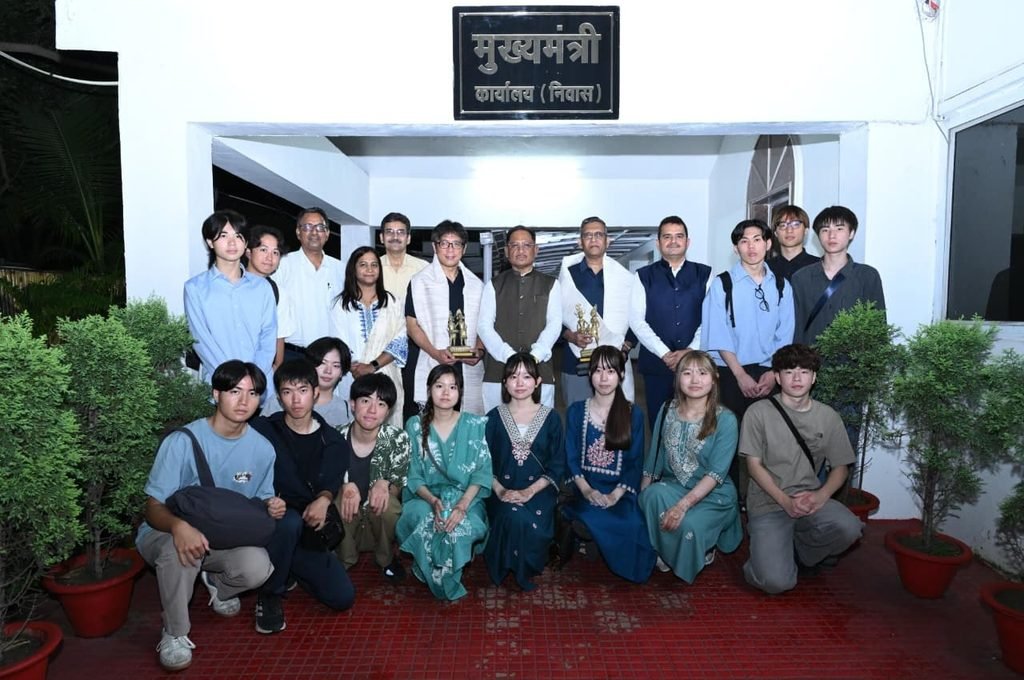
India-Japan Friendship Through the Next Generation: Chief Minister Vishnu Deo Sai with the 17-member delegation from Japan’s Ehime University and officials at the Chief Minister’s residence office in Raipur on Monday, September 14, 2026. The students are visiting Chhattisgarh under the India-Japan Inter Exchange Programme-Photo Credit:channel24india.com via CMO
During a visit to NIT Raipur, the delegation explored research and incubation centres and learnt about startups and technologies being developed there. Innovations aimed at finding practical technological solutions to everyday problems particularly attracted their attention.
The delegation also showed interest in possibilities involving technology transfer, research and innovation-based cooperation.
Sai said greater interaction between Ehime University and higher educational and technical institutions in Chhattisgarh could eventually create opportunities for joint research, innovation, startups and technological collaboration.
“Such programmes do not merely build institutional relationships between two countries; they also create a strong foundation of friendship and mutual understanding among young people,” he said.
The meeting reflected a wider possibility for Chhattisgarh: international engagement need not be confined to investment and trade. Universities, researchers and students can become equally important bridges connecting the State with the world.
For the young visitors from Japan, Chhattisgarh offered a journey from laboratories and startups in Raipur to the ancient Buddhist heritage of Sirpur. For the State, their visit offered an opportunity to present a Chhattisgarh where history and technology can become complementary parts of its global identity.