Kumar Bahukhandi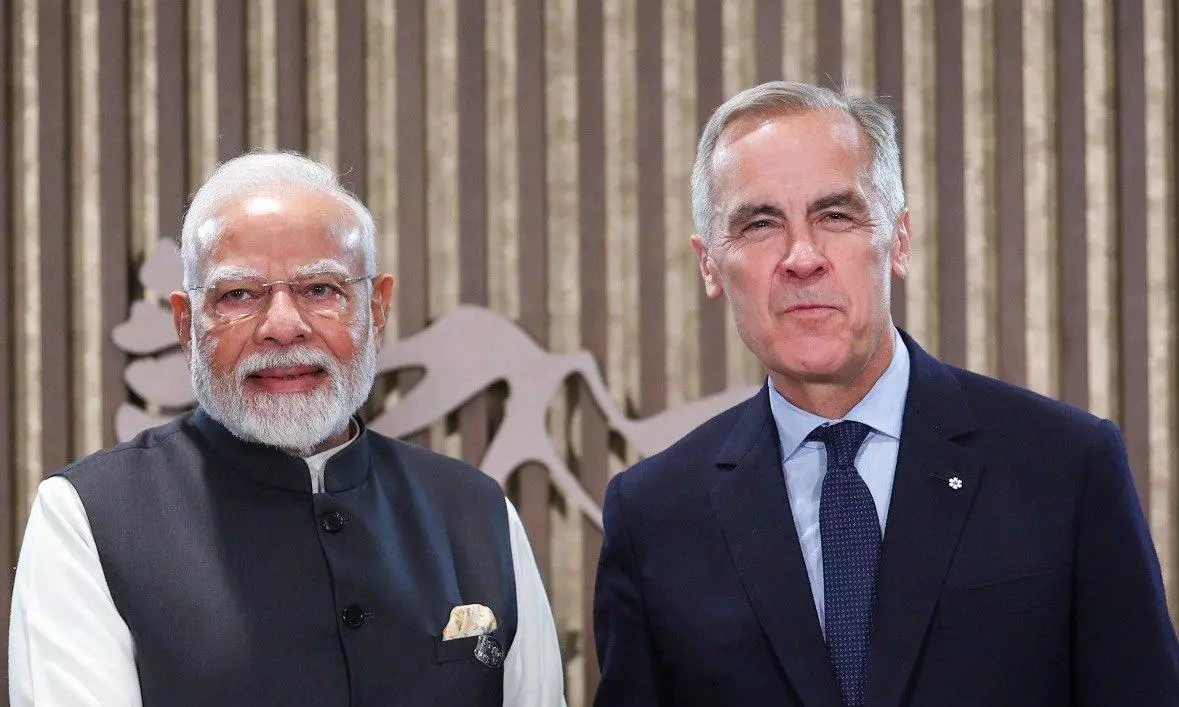
Prime Minister Narendra Modi with Canadian Prime Minister Mark Carney. India and Canada began the fourth round of negotiations for a Comprehensive Economic Partnership Agreement in New Delhi on Monday, September 14, 2026, as the two countries seek to conclude the proposed trade pact by the end of the year and substantially expand bilateral commerce. (Photo Credit; PTI)
ive-day negotiations in New Delhi focus on goods, services, rules of origin and technical trade barriers as the two countries seek to expand bilateral trade to $50 billion by 2030
Key Highlights
- India and Canada begin the fourth round of CEPA negotiations in New Delhi.
- Five-day talks run from September 14 to September 18, 2026.
- Negotiations cover goods, services, rules of origin and technical trade barriers.
- Both countries aim to conclude CEPA negotiations by the end of 2026.
- India and Canada are targeting bilateral trade of around $50 billion by 2030.
- The third negotiating round was held in Ottawa in July
New Delh : India and Canada on Monday began the fourth round of negotiations for a proposed Comprehensive Economic Partnership Agreement (CEPA), taking another significant step towards rebuilding and deepening economic ties between the two countries.
The latest round is being held in New Delhi from September 14 to 18, with negotiators expected to discuss trade in goods and services, rules of origin, technical barriers to trade and other issues. The previous round was held in Ottawa in July. Both governments are working towards concluding the negotiations by the end of 2026
From Diplomatic Reset to Economic Partnership
The negotiations carry significance beyond tariff reductions. India and Canada have been steadily rebuilding institutional engagement, and CEPA is emerging as a central economic pillar of that renewed relationship.
Prime Ministers Narendra Modi and Mark Carney earlier backed an ambitious and mutually beneficial agreement, describing a comprehensive trade framework as a potential long-term economic anchor for the bilateral relationship. The two sides have set an aspiration of expanding bilateral trade to about $50 billion by 2030.
The agreement is expected to seek greater market access while strengthening supply chains and opening opportunities across areas including services, investment and other mutually agreed sectors.
Recent India-Canada engagements have also identified potential for deeper cooperation in clean energy, critical minerals, agri-food, advanced manufacturing, digital technologies and skills development.
The fourth round therefore represents more than another technical negotiating session. With both governments publicly committed to completing the process this year, the coming months could determine whether the diplomatic improvement between New Delhi and Ottawa is translated into a durable new economic framework.