Kumar Bahukhandi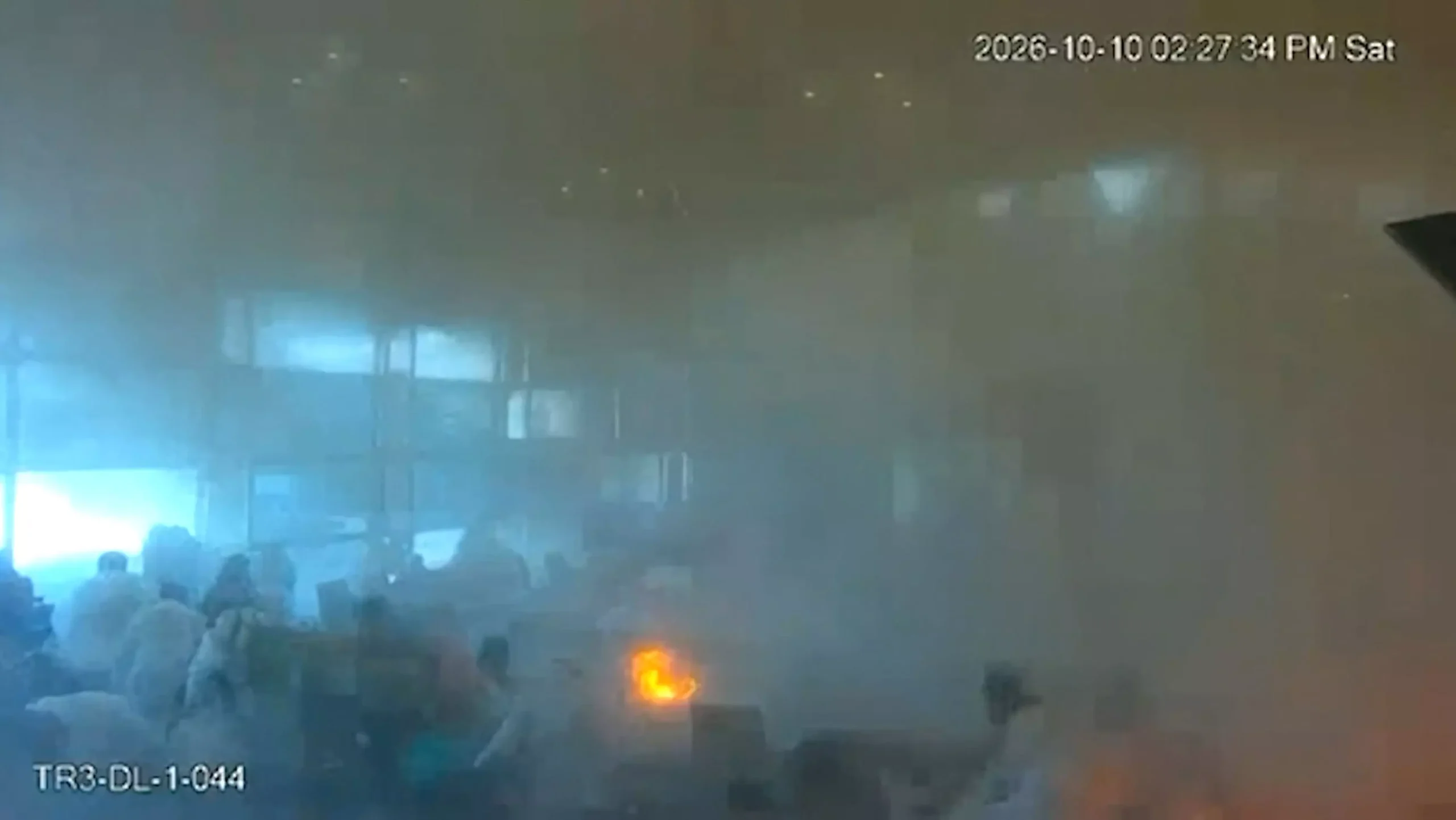
A CCTV image released by the Saudi Media Ministry shows smoke, flames and people inside King Khalid International Airport during a Houthi strike in Riyadh, Saudi Arabia, on Saturday, October 10, 2026. The attack killed at least 12 people and injured hundreds, prompting the suspension of airport operations and a subsequent extension of the closure amid further strikes.Photo: Saudi Media Ministry/AFP
Saudi Authorities Face a Major Security and Aviation Crisis After an Attack on the Kingdom’s International Airport; Saudi-Led Coalition Vows a Decisive Response as Regional Tensions Escalate
Key Highlights
- A Houthi strike hit Riyadh’s international airport on Saturday, October 10, 2026.
- Twelve people were reported killed and hundreds injured in the attack.
- The airport’s closure was extended following the strike, disrupting aviation operations.
- The Saudi-led coalition vowed a decisive response against Yemen’s Houthis on October 11.
- The attack followed an escalation in Houthi strikes after a truce in Yemen’s long-running conflict reportedly unravelled in July 2026.
- CCTV footage released by the Saudi Media Ministry showed smoke, flames and people moving through the affected airport area.
Riyadh: Saudi Arabia is confronting a major aviation and security crisis following a deadly Houthi strike on Riyadh’s international airport that reportedly killed 12 people and wounded hundreds, prompting authorities to extend the airport’s closure and the Saudi-led coalition to threaten a decisive response. The attack, carried out on Saturday, October 10, 2026, has intensified concerns over the security of critical civilian infrastructure amid renewed hostilities involving Yemen’s Houthi movement.
The strike has been described as the deadliest attack on Saudi territory in more than a decade, marking a serious escalation in the confrontation between the Houthis and the Saudi-led coalition.
CCTV footage released by the Saudi Media Ministry on Sunday, October 11, showed a smoke-filled airport area, visible flames and people moving through the affected premises.
The images illustrated the immediate danger faced by people inside the airport, although the footage alone does not establish the full extent of the casualties or structural damage.
Airport Closure Extended Following Deadly Attack
The decision to extend the closure of Riyadh’s international airport reflects the seriousness of the security situation following the strike.
Airports are particularly sensitive infrastructure because their operations depend on the safety of passengers, aviation personnel, aircraft and surrounding facilities.
A major attack can disrupt flight movements, ground operations and essential airport services even after the immediate danger has passed.
The reported casualties and damage have raised concerns about the vulnerability of civilian transport infrastructure during periods of military escalation.
The available information does not establish when normal airport operations will resume or how many flights have been affected.
Saudi-Led Coalition Vows Decisive Response
The Saudi-led coalition responded to the attack by promising decisive action against Yemen’s Houthis.
The warning came on October 11, a day after the strike, signalling the possibility of further military escalation.
The coalition has been involved in Yemen’s long-running conflict in support of the country’s internationally recognised government.
The latest attack places renewed pressure on Saudi authorities to protect critical infrastructure while responding to threats originating from the conflict.
However, the nature, timing and scale of any subsequent military response remain uncertain from the information available.
Renewed Houthi Attacks Raise Regional Security Concerns
The Riyadh airport strike occurred amid an unprecedented wave of Houthi attacks on Saudi Arabia since a truce in the group’s conflict with Yemen’s Riyadh-backed government reportedly collapsed in July 2026.
The renewed hostilities have increased fears that the conflict could extend beyond traditional military targets and place additional civilian infrastructure at risk.
The airport attack also highlights the broader consequences of prolonged regional instability, particularly when armed confrontations threaten transport networks and other essential services.
The risk of retaliatory action has further complicated the security outlook.
Airport to Remain Closed Until October 17
In a significant development on Monday, October 12, Saudi Arabia extended the closure of King Khalid International Airport until October 17 amid continuing security threats.
The suspension has affected international airlines, forced flight cancellations and diversions, and raised concerns about the safety of commercial aviation across the region.
Fresh Attack Adds to Casualties
The October 10 attack was followed by another strike on Sunday, October 11, when a projectile hit the airport, killing one person and injuring 11 others.
Subsequent reporting indicates that the combined death toll from the two attacks reached at least 14, with more than 320 people injured. The earlier figure of 12 deaths refers specifically to the initial October 10 attack.
Indian National Among the Victims
The violence has also affected the Indian community in Saudi Arabia.
An Indian national who was injured in the airport attack subsequently died, according to the Indian Embassy. The embassy said it was in contact with the family to assist with repatriation arrangements.
Civilian Aviation Faces Growing Threat
The attacks have raised wider concerns about the protection of civilian airports during armed conflict.
The disruption extends beyond Saudi Arabia, affecting international flight schedules, travel connections and commercial activity.
Aviation authorities and airlines face difficult decisions about operating in airspace exposed to missile and drone threats. The continued closure of Riyadh’s principal airport demonstrates how quickly military escalation can disrupt essential civilian services.
Regional Stability Faces Another Test
The strikes have brought renewed attention to Yemen’s prolonged conflict and the risks of further confrontation between the Houthis and the Saudi-led coalition.
While Saudi Arabia has signalled its determination to respond, further military action could intensify an already volatile regional security situation.
The immediate priorities remain protecting civilians, treating the injured, assessing airport damage and restoring safe aviation operations.
The crisis also highlights the wider consequences of attacks on civilian infrastructure, where the effects extend beyond the immediate casualties to international travel, economic activity and regional stability.