Kumar Bahukhandi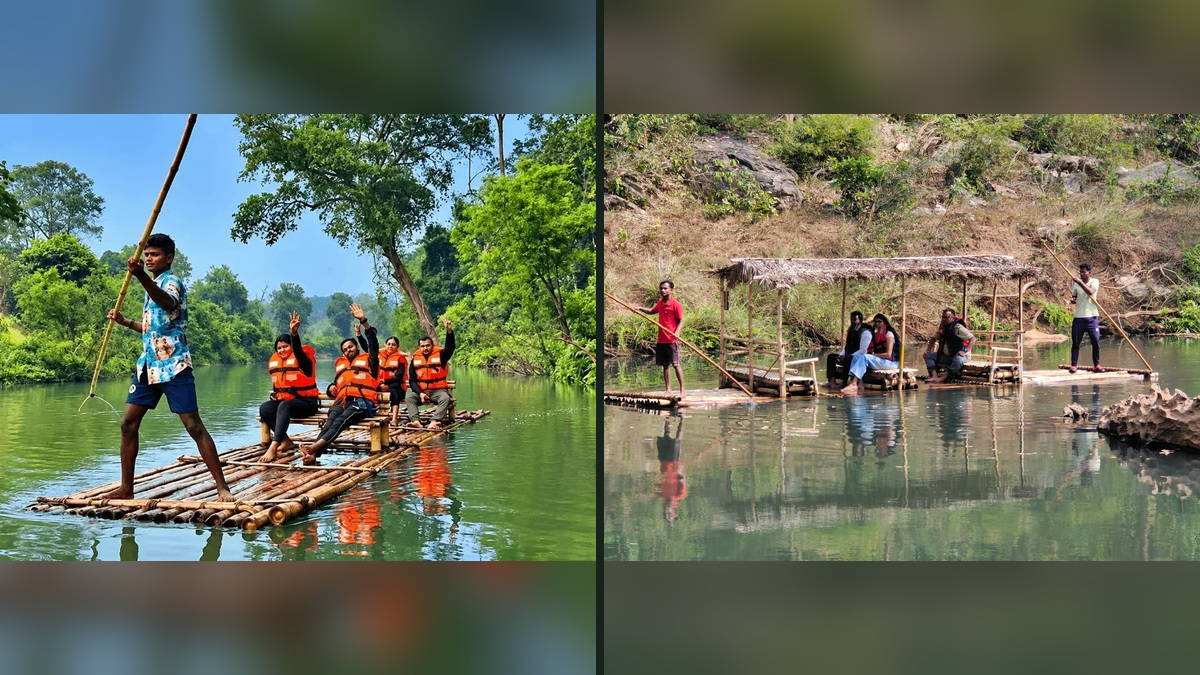
Tourists enjoy traditional bamboo-raft rides along the scenic, forest-fringed waterways of Chhattisgarh, showcasing the state’s growing potential for nature-based and community-led tourism. Under Chief Minister Vishnu Deo Sai’s rural tourism initiatives, such experiences are being promoted to encourage local entrepreneurship, generate employment and strengthen village economies.Photo:channel24india.com via Dhananjay Rathore
Author
From Tribal Homestays and Community-Based Tourism to the Chendru State Rural Tourism Award, Chhattisgarh Is Seeking to Transform Its Natural and Cultural Heritage into Sustainable Livelihood Opportunities
Chhattisgarh’s forests, rivers, waterfalls, mountains and centuries-old tribal traditions are emerging as powerful resources for rural development under Chief Minister Vishnu Deo Sai’s tourism initiatives. From the natural landscapes of Bastar to the cultural richness of Surguja, the state government is seeking to create an economic model in which tourism does more than attract visitors: it generates livelihoods, encourages local entrepreneurship, preserves indigenous heritage and brings new opportunities to villages that have traditionally remained outside the mainstream tourism economy.
The government’s strategy brings together three major initiatives: recognition of tourism as an industry under the Industrial Policy 2024–2030, promotion of village-based accommodation through the Chhattisgarh Homestay Policy 2025–2030, and the introduction of the Chendru State Rural Tourism Award.
Together, these measures seek to place rural communities at the centre of tourism development, ensuring that the benefits of growing visitor interest reach local families, artisans, women, young entrepreneurs and traditional cultural practitioners.
Chhattisgarh’s Natural Heritage Offers New Opportunities
Stretching from the northern hills of Surguja to the forested landscapes of Bastar, Chhattisgarh possesses an extraordinary combination of natural beauty and cultural diversity.
Its rivers, waterfalls, forests, historic settlements, tribal traditions, handicrafts and regional cuisines provide opportunities to develop distinctive tourism experiences.
Bastar, in particular, has attracted attention for its forests, indigenous communities and living cultural traditions.
The region’s appeal extends beyond conventional sightseeing. Visitors can encounter local art forms, traditional food, village life and cultural practices that have been preserved across generations.
The state government’s approach seeks to connect these attractions with improved accommodation, transport, visitor services and opportunities for local participation.
Bastar’s Cultural Identity Finds a Wider Audience
Bastar’s cultural heritage has long held a distinctive place in Chhattisgarh’s identity.
Among its most celebrated traditions is Bastar Dussehra, a festival renowned for its elaborate rituals, community participation and cultural significance.
Unlike conventional celebrations centred on the burning of Ravana’s effigy, Bastar Dussehra is associated with the region’s distinctive religious and tribal traditions.
The festival, whose observances extend over approximately 75 days, attracts visitors interested in the region’s cultural history and traditional ceremonies.
The government expects tourism associated with Bastar’s festivals, forests and cultural attractions to create opportunities for hospitality providers, transport operators, artisans and local businesses.
However, sustaining this growth will require careful attention to environmental protection, cultural sensitivity and the interests of the communities whose traditions attract visitors.
Three Initiatives Designed to Strengthen Rural Tourism
The Sai government’s rural tourism strategy combines policy support, financial incentives and public recognition of community contributions.
The decision to accord industry status to tourism under the Industrial Policy 2024–2030 is intended to encourage investment in accommodation, tourism infrastructure and related services.
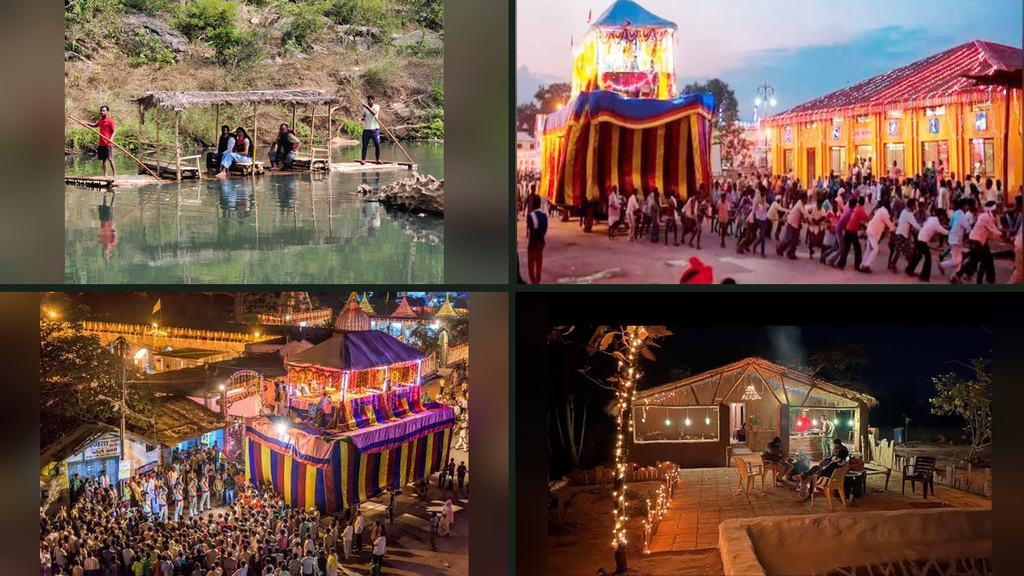
A glimpse of Chhattisgarh’s rich tourism heritage, featuring traditional bamboo rafting, the colourful celebrations of Bastar Dussehra and village-based homestay experiences. The Vishnu Deo Sai government’s tourism development initiatives seek to preserve tribal traditions, promote cultural and eco-tourism, and create sustainable livelihood opportunities for rural families, artisans and local youth. Photo: channel24india.com via Dhananjay Rathore
The Chhattisgarh Homestay Policy 2025–2030 seeks to help rural families convert suitable homes into accommodation for visitors.
The Chendru State Rural Tourism Award, meanwhile, recognises individuals and organisations working to preserve local culture, natural heritage and community-based tourism.
Together, the initiatives aim to develop tourism as a source of income that can support village economies while encouraging the preservation of Chhattisgarh’s distinctive identity.
Chendru Mandavi’s Legacy Inspires a New State Award
The Chendru State Rural Tourism Award takes its name from Chendru Mandavi, the celebrated boy from Bastar whose friendship with a tiger named Tembu attracted international attention.
Popularly remembered as Bastar’s ‘Tiger Boy’, Chendru became known internationally through the Swedish film Jungle Saga.
His story introduced audiences beyond India to the natural surroundings and everyday life of Bastar.
By naming the award after him, the state government seeks to honour a figure associated with the region’s international recognition and its close relationship with nature.
The award also symbolises the belief that rural communities and their cultural traditions can become central to the state’s tourism identity.
Rs 1 Lakh Award to Honour Rural Tourism Contributors
The Chendru State Rural Tourism Award Rules, 2025, provide the framework for recognising individuals and organisations contributing to rural tourism.
The award carries a cash prize of Rs 1 lakh and a certificate of appreciation.
It is intended to honour contributions to rural tourism, folk arts, handicrafts and the conservation of natural heritage.
A six-member jury chaired by the Managing Director of the Chhattisgarh Tourism Board will select the recipient.
The winner is to be honoured during the state’s Rajyotsav celebrations, with an illustrated commemorative publication highlighting the recipient’s contribution.
The initiative is designed to give public recognition to grassroots individuals and institutions whose work helps protect local traditions while creating opportunities for tourism development.
Homestays Could Bring Tourism Income Directly to Villages
One of the most significant components of the government’s strategy is the promotion of homestays in rural and tribal areas.
Under the Chhattisgarh Homestay Policy 2025–2030, eligible households are intended to receive opportunities to develop visitor accommodation within their existing homes or through suitable improvements.
For tourists, the model offers an experience different from conventional hotel accommodation.
Visitors may have opportunities to enjoy traditional regional meals, experience village hospitality, explore agricultural surroundings and learn about local customs and lifestyles.
For host families, homestays could provide supplementary income without requiring them to abandon their traditional occupations.
The policy also envisages financial assistance for establishing or upgrading accommodation and training in hospitality, cleanliness and business management.
These provisions are intended to help rural households develop tourism-related enterprises while maintaining appropriate standards for visitors.
Women and Self-Help Groups Could Benefit from Local Tourism
Community-based tourism has the potential to create income opportunities extending well beyond accommodation.
Women involved in self-help groups may find opportunities in preparing traditional food, producing handicrafts, supplying locally made products and offering hospitality services.
Artisans could gain access to customers interested in authentic regional crafts.
Local farmers and small producers may also benefit when homestays and tourism establishments purchase food and other supplies from nearby villages.
The government’s approach seeks to keep a greater share of tourism-related spending within local communities.
Its success will depend on effective implementation, training, access to finance and the ability of rural enterprises to attract visitors consistently.
Tourism Receives Industry Status Under New Industrial Policy
The Chhattisgarh Industrial Policy 2024–2030 includes tourism, entertainment and other social service activities within its framework for industrial development.
The decision to recognise tourism as an industry is intended to improve access to investment incentives and encourage the development of tourism-related infrastructure.
The policy provides for applicable concessions and support measures for eligible projects, including those associated with accommodation and visitor facilities.
For rural tourism, the government envisages benefits for eligible entrepreneurs and self-help groups developing homestays, ecotourism projects and related infrastructure.
Capital subsidies, interest assistance and single-window clearance mechanisms are among the incentives outlined in the government’s tourism development approach.
Such measures are intended to reduce barriers for entrepreneurs seeking to establish tourism enterprises.
Local Youth Could Become Tourism Entrepreneurs
The state government’s plans place particular emphasis on creating employment and self-employment opportunities for young people.
Tourism can generate demand for guides, drivers, hospitality workers, accommodation operators, cultural performers, craft producers and digital service providers.
The government has outlined training opportunities in hospitality, tour guiding and digital marketing to help rural youth develop relevant skills.
These initiatives could allow young people to establish enterprises within their own communities rather than depend entirely on employment opportunities elsewhere.
The objective is to create a local tourism economy in which residents participate as business owners, service providers and skilled professionals.
Private Investment Expected to Strengthen Tourism Infrastructure
Chief Minister Vishnu Deo Sai has highlighted the importance of investment in developing Chhattisgarh’s tourism sector.
According to the state government’s account, Indian Hotels Company Limited has expressed interest in investment opportunities in Chhattisgarh.
Sai said such investment could strengthen tourism infrastructure and create new employment and self-employment opportunities for local youth.
The government is also focusing on road connectivity, accommodation, transport and visitor services to improve access to tourism destinations.
The development of these facilities could make lesser-known destinations more accessible while supporting tourism enterprises in surrounding communities.
Expressions of investment interest, however, should be distinguished from finalised projects and operational facilities.
Sustainable Tourism Must Protect Nature and Tribal Heritage
The development of rural tourism presents opportunities as well as responsibilities.
Chhattisgarh’s natural landscapes and indigenous traditions are among its greatest attractions, but they also require protection from unplanned development and excessive commercialisation.
Tourism initiatives will need to consider environmental safeguards, waste management, water resources and the preservation of cultural practices.
Community participation will be particularly important in tribal areas, where tourism development should respect local traditions and decision-making processes.
A sustainable approach can help ensure that tourism creates livelihoods without undermining the natural and cultural resources on which those livelihoods depend.
From Tourist Destinations to Stronger Village Economies
The central idea behind the Sai government’s tourism strategy is to make rural communities active participants in the visitor economy.
A homestay operator, a traditional craftsperson, a village guide or a women’s self-help group can become part of a wider network of tourism services.
The Chendru Award adds recognition to this model by celebrating people who contribute to rural tourism and cultural preservation.
Industry status and the homestay policy provide the proposed economic and institutional support.
If implemented effectively, the three initiatives could help distribute tourism benefits more widely and strengthen local entrepreneurship.
A New Direction for Rural Empowerment
Chhattisgarh’s tourism potential lies not only in its scenic destinations but also in the people who preserve its traditions and welcome visitors into their communities.
The state’s effort to link tourism with rural livelihoods represents an opportunity to create a development model rooted in local identity, cultural heritage and natural resources.
From Bastar’s internationally recognised traditions to the emerging possibilities of village homestays, the government’s initiatives seek to turn tourism into a source of dignity, enterprise and economic opportunity.
Under Chief Minister Vishnu Deo Sai’s leadership, the proposed model aims to ensure that the growth of tourism contributes not merely to the visibility of Chhattisgarh’s destinations but also to the prosperity of the communities that sustain them.
About the Author : Dhananjay Rathore is the Joint Director of the Department of Public Relations (DPR), Government of Chhattisgarh, Raipur. He writes on governance, public welfare, rural development, tourism, cultural heritage and government initiatives aimed at promoting socio-economic development and improving people’s livelihoods.