Kumar Bahukhandi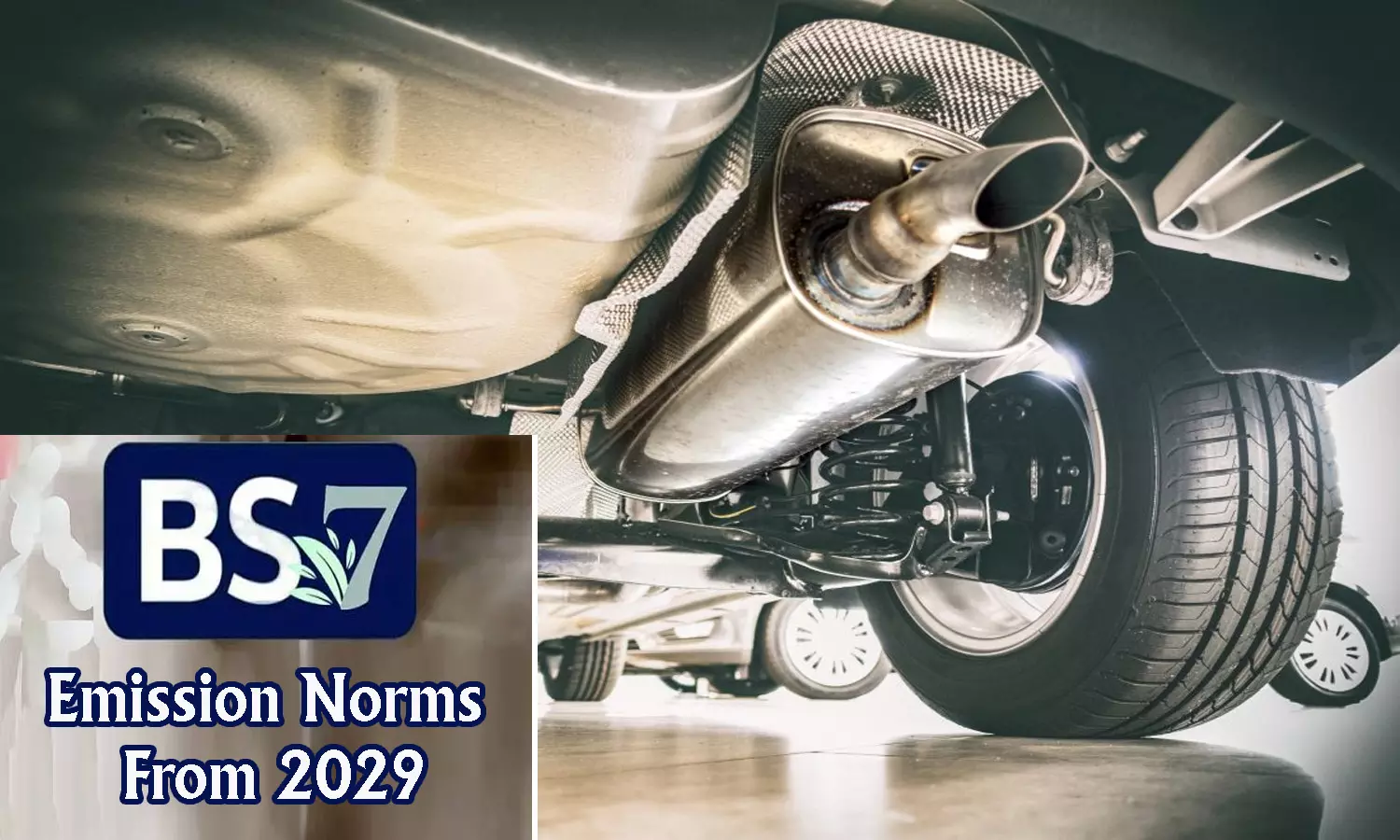
A vehicle’s exhaust system is seen in this representational image accompanying a report on Wednesday, October 14, 2026, about the Central Government’s proposal to introduce Bharat Stage-VII (BS-VII) emission standards for new passenger cars and SUVs from April 2029, followed by small commercial vehicles in April 2030 and heavy-duty vehicles in April 2031. The proposed regulations are intended to align with European Euro 7 standards and strengthen pollution-control requirements for India’s automobile industry. Representational image
Proposed standards will align with Europe’s Euro 7 regulations as the government prepares a phased transition towards stricter vehicle emission controls, cleaner mobility and improved air quality.
Key Highlights
- BS-VII emission standards proposed for new passenger cars and SUVs from April 2029.
- Small goods delivery vehicles and pick-up vans expected to come under the new standards from April 2030.
- Heavy-duty vehicles proposed to comply with BS-VII norms from April 2031.
- Road Transport and Highways Ministry has reportedly approved the proposed guidelines.
- New emission standards are expected to align with European Euro 7 regulations.
- Draft notifications are expected shortly, with detailed technical requirements still to be formally announced.
New Delhi: India is preparing for another major transformation in automobile emission regulations, with the Central Government planning to introduce Bharat Stage-VII (BS-VII) standards for new passenger cars and sport utility vehicles (SUVs) from April 2029. The proposed transition, aimed at tightening pollution controls and bringing Indian vehicle emission requirements into alignment with European Euro 7 standards, will be implemented in phases, extending to small commercial vehicles from April 2030 and heavy-duty vehicles from April 2031, according to information attributed to a senior government official on Wednesday, October 14, 2026.
The proposed regulations represent the next stage in India’s efforts to reduce pollution from road transport while encouraging the automobile industry to adopt cleaner technologies.
According to the official cited in the report, the Ministry of Road Transport and Highways has approved the proposed guidelines, and draft notifications are expected shortly.
However, the standards remain at the proposal stage, and their final requirements and implementation dates will depend on the government’s formal notifications.
Passenger Cars and SUVs to Enter BS-VII Era First
Under the proposed implementation schedule, new passenger cars and SUVs would become the first major category of vehicles to comply with BS-VII emission requirements.
The April 2029 target would give automobile manufacturers time to prepare engines, emission-control systems and vehicle platforms for the new standards.
The transition could require manufacturers to reassess existing petrol and diesel technologies, particularly where tighter pollution limits or additional testing requirements are introduced.
Unlike an immediate nationwide restriction on vehicles already operating on the roads, the proposal specifically concerns new vehicles covered by the future standards.
There is no indication in the supplied announcement that existing BS-VI vehicles would automatically become illegal when BS-VII norms take effect.
Commercial Vehicles to Follow in Phased Transition
The government is proposing a staggered timetable rather than introducing the new requirements across every vehicle category simultaneously.
Small goods delivery vehicles and pick-up vans would move to the new standards from April 2030, followed by heavy-duty vehicles from April 2031.
The phased approach recognises the different engineering requirements and development cycles of passenger and commercial vehicles.
Heavy-duty vehicles, including those used in freight transportation, often operate over longer distances and under substantially different load conditions than passenger cars.
Providing additional preparation time could help manufacturers adapt their vehicle technologies and production processes to the proposed regulatory framework.
India to Align New Standards with Europe’s Euro 7 Regulations
A significant feature of the proposed BS-VII framework is its intended alignment with Europe’s Euro 7 standards.
European emission regulations are designed to address pollutants generated by road vehicles and strengthen environmental performance requirements.
Euro 7 also introduces requirements concerning certain non-exhaust emissions, including brake particles and tyre abrasion, alongside provisions relating to vehicle durability and other performance measures.
The precise extent to which these provisions will be incorporated into India’s BS-VII framework will become clear only after the draft regulations are published.
Alignment with international standards could help Indian automobile manufacturers develop products for multiple markets while strengthening the country’s regulatory approach to vehicle pollution.
However, implementing more demanding standards will require appropriate testing infrastructure, certification systems and technical preparedness.
Why India Needs Stricter Vehicle Emission Standards
Vehicular pollution remains an important environmental concern in India’s growing cities and transport corridors.
Road vehicles contribute to emissions of nitrogen oxides, particulate matter and other pollutants that can adversely affect air quality and public health.
Although successive emission standards have reduced pollutants from newer vehicles, the expansion of road transport continues to create environmental challenges.
BS-VII regulations are intended to strengthen emission controls as vehicle technology evolves.
The effectiveness of the new standards will depend not only on regulatory limits but also on testing, enforcement, fuel quality, vehicle maintenance and compliance throughout the prescribed operational life of vehicles.
From BS-IV to BS-VI: India’s Emission Control Journey
India has already undergone a significant transformation in automobile emission regulations.
One of the country’s most consequential decisions was the direct transition from Bharat Stage-IV to Bharat Stage-VI standards in April 2020, bypassing BS-V.
The transition required major technological investments by automobile manufacturers and fuel suppliers.
BS-VI introduced significantly stricter limits for several pollutants, particularly those associated with diesel vehicles.
The subsequent introduction of more demanding testing and compliance requirements further strengthened the regulatory framework.
The proposed BS-VII standards would build upon this progression, potentially bringing additional requirements concerning emission durability, testing and pollution-control technologies.
Automobile Manufacturers Face Fresh Engineering Challenges
The transition to BS-VII could require substantial preparation by vehicle manufacturers, component suppliers and testing agencies.
Depending on the final regulations, manufacturers may need to upgrade exhaust after-treatment systems, engine calibration, emission monitoring technologies and other components.
The introduction of new standards could also affect research and development expenditure, manufacturing processes and vehicle certification.
For manufacturers producing vehicles for both Indian and international markets, regulatory alignment may offer opportunities to standardise technologies.
Nevertheless, the financial implications will depend on the specific requirements adopted by the government and the extent of modifications needed for individual vehicle models.
Will BS-VII Make Cars and SUVs More Expensive?
Stricter emission regulations can increase production costs when manufacturers must introduce additional pollution-control equipment, modify engines or conduct more extensive testing.
However, it would be premature to predict a specific increase in vehicle prices before the government publishes the final BS-VII requirements.
The effect on consumers could vary according to vehicle category, fuel type, engine technology and the manufacturer’s existing level of compliance with international standards.
Automobile companies will also need to balance regulatory expenditure with changing consumer preferences, competition and the increasing availability of alternative powertrain technologies.
What BS-VII Could Mean for Existing Vehicle Owners
For millions of Indian motorists, one of the most important questions will be whether the new regulations affect vehicles they already own.
The proposal described by the government official concerns new vehicles entering the market according to the phased implementation schedule.
It does not establish any requirement for owners of existing BS-VI cars or SUVs to replace their vehicles in April 2029.
Existing vehicles would continue to be governed by applicable registration, fitness, pollution-control and other legal requirements, unless future regulations specifically provide otherwise.
Vehicle owners should therefore distinguish between proposed manufacturing standards for new vehicles and rules governing vehicles already in use.
Cleaner Transport Requires More Than New Emission Standards
While improved vehicle emission standards are an important element of pollution control, they cannot independently resolve every environmental challenge associated with road transport.
Traffic congestion, poor vehicle maintenance, ageing fleets, road dust and the quality of public transportation also influence urban air quality.
A comprehensive approach requires stronger inspection systems, cleaner public transport, effective enforcement and sustained improvements in urban mobility.
The proposed BS-VII transition could become an important component of India’s wider strategy to reduce transport-related pollution.
Draft Notification Will Determine the Final Regulatory Framework
The next important development will be the publication of draft notifications by the Ministry of Road Transport and Highways.
These are expected to clarify the proposed standards, implementation arrangements and compliance requirements.
Manufacturers and other stakeholders will need to examine the detailed provisions before assessing the full technological and commercial implications.
The government may also consider industry feedback before finalising the regulatory framework.
For now, the proposed timetable indicates a significant shift in India’s approach to vehicle emission control.
If implemented as outlined, BS-VII will introduce a new regulatory phase for passenger vehicles in April 2029, smaller commercial vehicles in April 2030 and heavy-duty vehicles in April 2031.
The ultimate objective will be to ensure that India’s expanding automobile sector moves towards cleaner technologies without compromising the country’s broader mobility and economic requirements.