Kumar Bahukhandi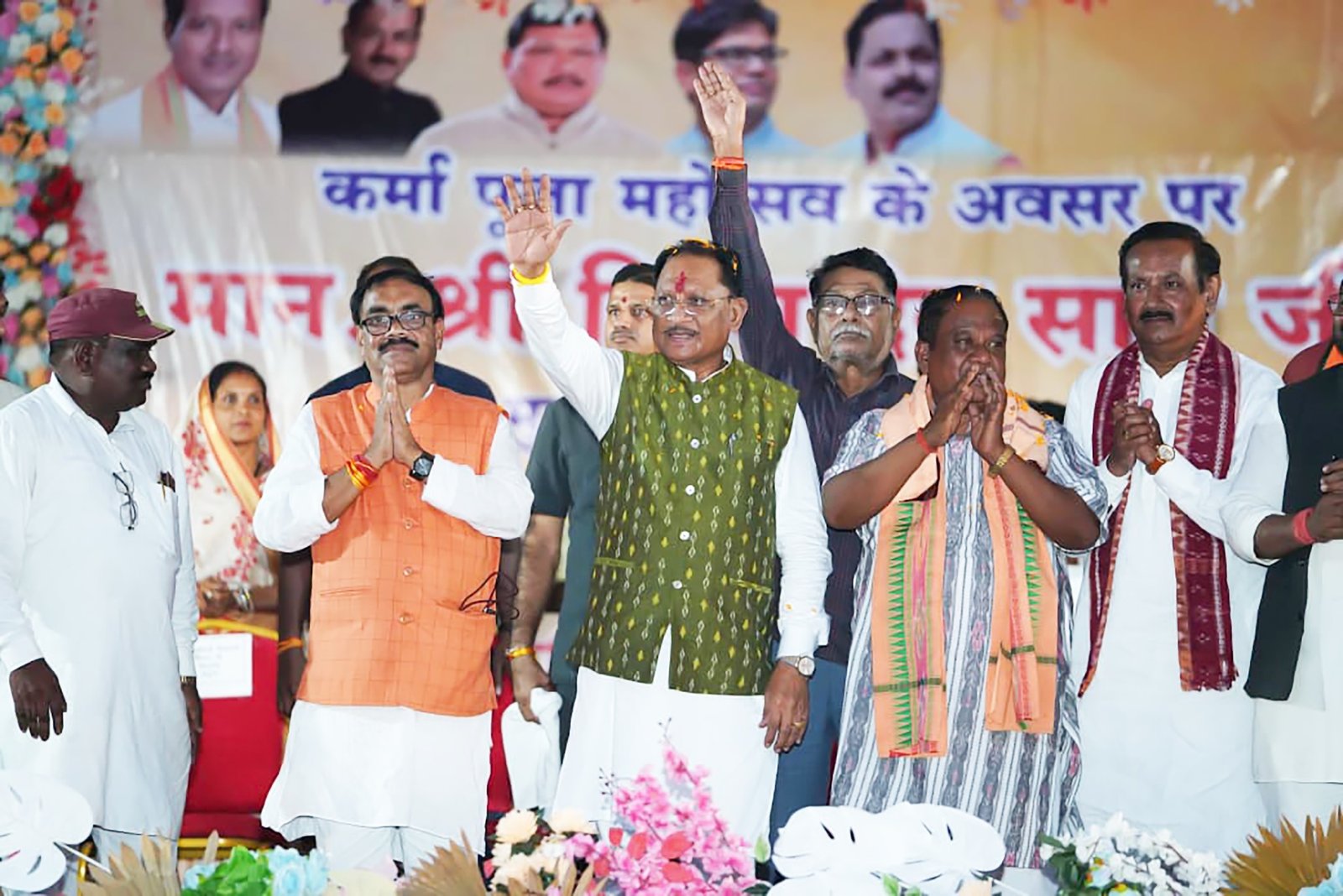
Chhattisgarh Chief Minister Vishnu Deo Sai greets members of the Oraon community and other participants during the Karma Puja Mahotsav organised at Sarsmal village in the Tamnar development block of Raigarh district on Thursday, October 15, 2026. The Chief Minister emphasised the importance of preserving tribal traditions, protecting nature and expanding educational and employment opportunities for young people.Photo: channel24india.com via CG/DPR
Chief Minister joins the Karma Puja Mahotsav at Sarsmal in Raigarh, participates in traditional celebrations with the Oraon community and calls for greater educational opportunities, employment and preservation of tribal traditions.
Key Highlights
- Chief Minister Vishnu Deo Sai celebrates the Oraon community’s rich cultural heritage and centuries-old tradition of protecting nature.
- Sai joins the Karma Puja Mahotsav at Sarsmal in Raigarh district and participates in traditional festivities with community members.
- Chief Minister offers prayers to Lord Karam Dev, Lord Shiva and Goddess Parvati for the prosperity of Chhattisgarh.
- Tribal freedom fighters, including Birsa Munda, Shaheed Veer Narayan Singh and Gundadhur, remembered for their sacrifices.
- Chief Minister urges tribal youth to pursue higher education, competitive examinations, skill development and employment opportunities.
- Government highlights PM-JANMAN, Dharti Aaba Janjatiya Gram Utkarsh Abhiyan and expanded educational facilities for tribal communities.
Raigarh: Chhattisgarh Chief Minister Vishnu Deo Sai has described the history of India’s tribal communities as a glorious legacy of courage, self-respect, sacrifice and an extraordinary relationship with nature, asserting that their traditional commitment to protecting forests, water and land offers an enduring lesson to the entire country. Addressing the Karma Puja Mahotsav organised by the Oraon Samaj Vikas Samiti, Chhattisgarh–Odisha Himgir region, at the Middle School playground in Sarsmal village under Tamnar development block of Raigarh district on Thursday, October 15, 2026, the Chief Minister emphasised that preserving tribal identity and expanding opportunities for education, employment and development must advance together.
The Chief Minister participated in the religious and cultural celebrations, offering prayers to Lord Karam Dev, Lord Shiva and Goddess Parvati for the peace, prosperity and happiness of the people of Chhattisgarh.
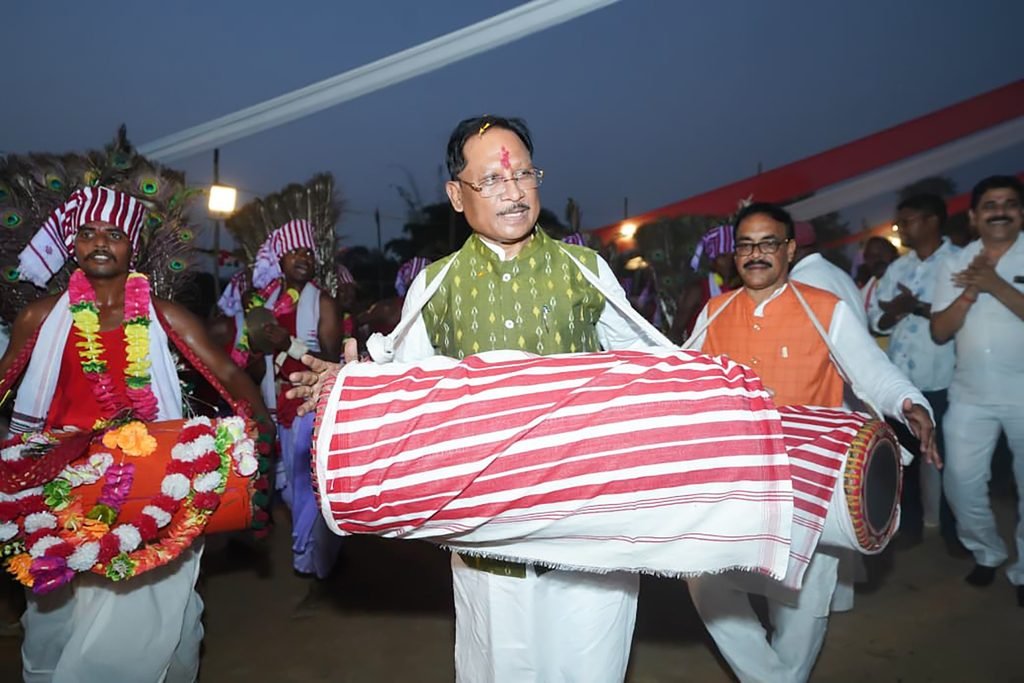
Chief Minister Vishnu Deo Sai participates in the traditional Karma celebrations with a mandar drum, accompanied by members of the Oraon community and folk performers in colourful traditional attire, at Sarsmal village in Raigarh district on Thursday, October 15, 2026. His participation highlighted the cultural significance of the festival and the community’s rich musical heritage.Photo: channel24india.com via CG/DPR
The occasion became a vibrant celebration of tribal traditions when Sai joined community members in the festivities, carrying a traditional mandar drum and participating in Karma dance to the rhythm of folk music.
Members of the Oraon community welcomed the Chief Minister with a ceremonial floral garland, reflecting the warmth and cultural traditions associated with the festival.
Tribal Society’s Respect for Nature Is an Inspiration to the World: Sai
Addressing the gathering, Chief Minister Vishnu Deo Sai said the cultural heritage of tribal communities was deeply connected with the natural environment and the values of collective responsibility.
He emphasised that the tribal way of life had preserved an understanding of environmental conservation long before the subject became a major international concern.
The Chief Minister stated:
“The history of tribal society is a glorious history of courage, self-respect, struggle and profound reverence for nature. In our tribal culture, nature is not merely the foundation of life; it is also an object of worship.”
Sai said the relationship between tribal communities and their natural surroundings represented an important cultural and ecological inheritance.
“The lessons of protecting water, forests and land that tribal communities have taught through their lives and traditions for centuries are an inspiration to the entire world. The Karma festival is a living symbol of this rich cultural consciousness, collective spirit and gratitude towards nature.”
He observed that the significance of tribal festivals extended beyond religious observances, reflecting the relationship between human communities, agriculture, forests and the natural world.
Chief Minister Joins Traditional Karma Dance, Plays Mandar
One of the most memorable moments of the celebration came when Chief Minister Sai responded to the invitation of traditional Karma dance performers and joined them in the festivities.
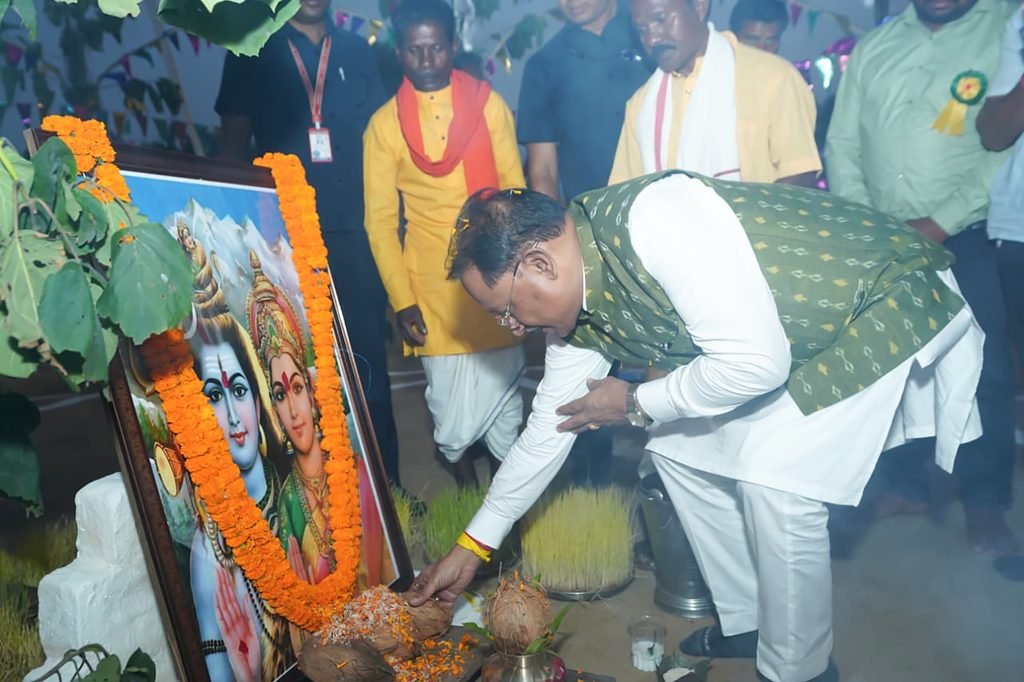
Chhattisgarh Chief Minister Vishnu Deo Sai offers prayers and floral tributes before a garlanded portrait of Lord Shiva and Goddess Parvati during the Karma Puja Mahotsav organised by the Oraon community at Sarsmal village in the Tamnar development block of Raigarh district on Thursday, October 15, 2026. The Chief Minister sought peace, prosperity and happiness for the people of Chhattisgarh while participating in the traditional religious and cultural celebrations. Photo: channel24india.com via CG/DPR
Carrying a mandar, the Chief Minister participated alongside men and women dressed in traditional attire, while the rhythmic beats of drums and folk melodies filled the venue.
His participation added to the enthusiasm of the gathering and highlighted the cultural importance of the occasion.
The Karma dance, performed collectively, expresses joy, devotion, community unity and gratitude towards nature.
The colourful traditional costumes, ceremonial decorations and rhythmic movements offered a vivid representation of the region’s living tribal heritage.
Tribal Freedom Fighters Must Remain an Inspiration for Future Generations
Chief Minister Sai paid tribute to the contribution of tribal communities to India’s cultural history and freedom struggle.
He recalled the courage and sacrifices of Bhagwan Birsa Munda, Shaheed Veer Narayan Singh, Gundadhur and other tribal heroes who fought to defend their homeland, dignity and rights.
The Chief Minister said:
“Our tribal heroes displayed extraordinary courage in protecting their motherland, self-respect and rights. It is our collective responsibility to acquaint the younger generation with their sacrifices, struggles and contributions.”
Sai emphasised that the legacy of these personalities should remain an integral part of education and public awareness.
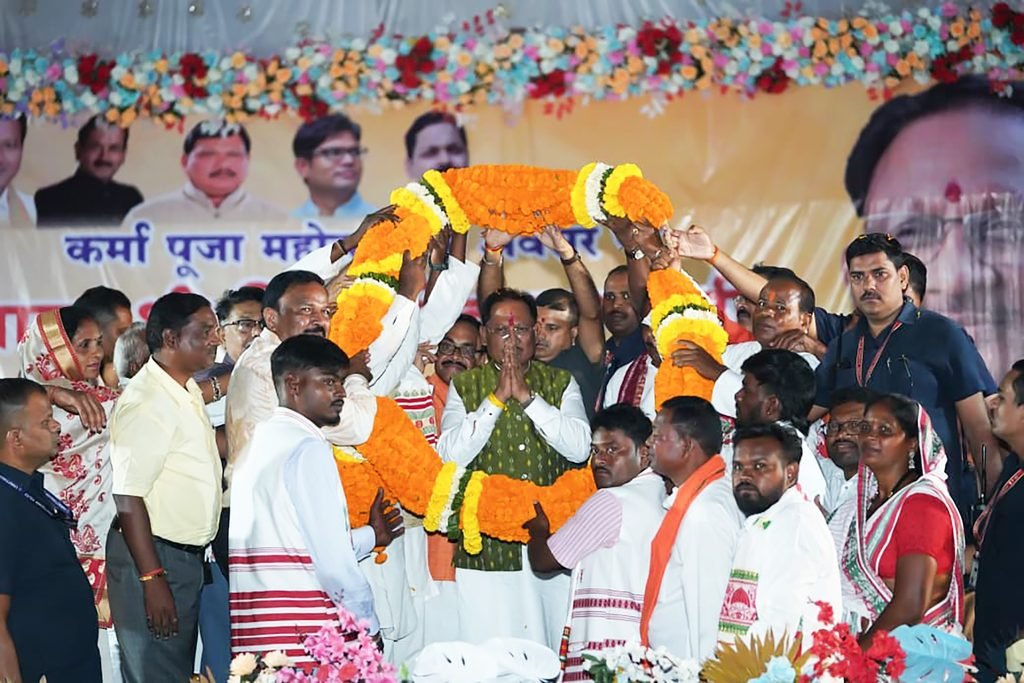
Members of the Oraon community accord a traditional welcome to Chhattisgarh Chief Minister Vishnu Deo Sai by presenting a magnificent floral gajmala during the Karma Puja Mahotsav at Sarsmal village in Raigarh district on Thursday, October 15, 2026. The ceremonial honour reflects the community’s rich cultural traditions and warm reception of the Chief Minister. Photo: channel24india.com via CG/DPR
He also recalled the contribution of former Prime Minister Atal Bihari Vajpayee, who established a separate Ministry of Tribal Affairs to provide an institutional framework for tribal welfare and development.
The Chief Minister said the creation of the ministry had strengthened the national focus on the requirements and aspirations of tribal communities.
Tribal Representation Reflects Growing Recognition and Participation
Referring to the growing participation of tribal communities in public life, Sai expressed pride that President Droupadi Murmu, who comes from a tribal background, occupies the country’s highest constitutional office.
He also referred to his own opportunity to serve Chhattisgarh as Chief Minister.
According to Sai, these developments reflected the increasing recognition and participation of tribal communities in the country’s democratic and administrative institutions.
The Chief Minister emphasised that political representation must be accompanied by meaningful progress in education, healthcare, housing, infrastructure and livelihood opportunities.
He credited Prime Minister Narendra Modi’s leadership for initiatives intended to strengthen tribal welfare and expand access to essential services.
Preserving Tribal Languages, Customs and Cultural Identity
Chief Minister Sai said tribal communities had preserved their distinctive languages, traditions, social values and artistic expressions through generations.
He called upon families and community organisations to ensure that younger generations remained familiar with their cultural roots.
The Chief Minister stated:
“Our culture is our identity, and education is the foundation of our bright future. By remaining connected to our roots while embracing education and modern opportunities, society can move forward rapidly.”
Sai said cultural preservation and modern development were not competing objectives.
He emphasised that tribal youth should be encouraged to pursue professional and academic success while retaining pride in their heritage.
The Chief Minister also referred to the tribal museum established in Nava Raipur, describing it as an important means of introducing younger generations to tribal history, lifestyles, traditions and the contributions of distinguished tribal personalities.
He said such institutions could help preserve cultural knowledge while expanding public understanding of the state’s diverse communities.
Education Is the Strongest Instrument of Tribal Advancement
Placing particular emphasis on education, Chief Minister Sai urged young people to set ambitious goals and make full use of the opportunities available to them.
He said education remained essential for improving the social and economic circumstances of families and communities.
The Chief Minister stated:
“Education is the most powerful means of progressing in life. Our young people have numerous opportunities before them. What they need is the determination to set goals, work hard and make full use of the facilities available to them.”
Sai highlighted the government’s efforts to provide better educational opportunities to tribal students.
He referred to the role of Prayas Residential Schools in supporting talented students and preparing them for further academic advancement.
The Chief Minister also discussed the expansion of modern study facilities such as Nalanda campuses, which are intended to provide students with an environment conducive to preparing for competitive examinations.
He encouraged young people to seek admission to reputed national educational institutions and pursue careers in administration, medicine, engineering, technology, industry and entrepreneurship.
Delhi Hostel Capacity Increased to 200 Seats
The Chief Minister said the capacity of hostel facilities for tribal students in Delhi had been increased to 200 seats.
He explained that the initiative was intended to support students pursuing higher education and preparing for competitive examinations.
Sai said the availability of accommodation and educational resources could help students from tribal regions overcome practical difficulties associated with studying away from home.
He encouraged parents and community organisations to place greater emphasis on education and support the aspirations of young people.
The Chief Minister said the progress of tribal society would be strengthened when more students entered professional fields and participated in public administration, science, technology and enterprise.
Employment, Skill Development and Self-Reliance
Chief Minister Sai said the state government was giving particular attention to connecting young people with education, professional skills and employment opportunities.
He referred to recruitment processes in government departments, employment fairs and opportunities emerging through industrial development.
The Chief Minister urged young people to remain informed about competitive examinations, skill development programmes, employment initiatives and self-employment schemes.
He emphasised that education and employment could create wider benefits beyond individual achievement.
According to Sai, when young people achieve professional success, they contribute to the economic security of their families and the broader progress of their communities.
The government, he said, was seeking to create an environment in which tribal youth could participate more actively in the state’s economic development.
Development Must Reach the Most Remote Tribal Settlements
Referring to development initiatives in tribal-majority areas, Chief Minister Sai said the Centre and the state government were committed to extending essential services to remote communities.
He highlighted the Dharti Aaba Janjatiya Gram Utkarsh Abhiyan and the Pradhan Mantri Janjati Adivasi Nyaya Maha Abhiyan, commonly known as PM-JANMAN.
These initiatives focus on improving access to basic amenities, particularly in tribal regions and among Particularly Vulnerable Tribal Groups.
The Chief Minister said efforts were being made to expand housing, road connectivity, drinking water and other essential facilities.
He stressed that geographical remoteness should not prevent eligible families from accessing government welfare programmes.
Sai said the government’s priority was to ensure that development reached the last person and that tribal communities received opportunities to participate in the state’s progress.
Rajya Sabha MP Devendra Pratap Singh Calls for Education and Cultural Unity
Rajya Sabha MP Devendra Pratap Singh, addressing the gathering, praised tribal communities for preserving their culture, traditions and folk arts across generations.
He said the contributions of tribal heroes deserved wider recognition and should be communicated to young people.
Singh emphasised that education was fundamental to social progress and urged families to give it the highest priority.
He also highlighted the importance of social unity in protecting cultural identity and supporting collective development.
According to Singh, educational advancement and cultural solidarity together could strengthen the future of tribal communities.
Oraon Community Highlights Its Rich Cultural Traditions
Oraon Samaj Vikas Samiti President Pant Ram Bhagat, delivering the welcome address, spoke about the ancient traditions associated with the Karma festival.
He explained the significance of the Oraon community’s language, folk arts, cultural practices and clan traditions connected with nature.
Bhagat emphasised the importance of preserving the community’s distinctive identity and maintaining social unity.
He said traditional celebrations such as Karma Puja helped bring together different generations and strengthened their connection with ancestral customs.
Karma Puja Reflects the Living Relationship Between Culture and Nature
The Karma Puja Mahotsav offered a colourful demonstration of the region’s traditional folk culture.
Men and women in customary attire performed collective Karma dances to the rhythmic accompaniment of mandar, mridang and other traditional drums.
The performances reflected devotion, collective celebration and the community’s close relationship with nature.
The festival also symbolises gratitude for agricultural abundance and the importance of sustaining cultural traditions through community participation.
For tribal communities, Karma Puja is not simply a ceremonial occasion but an expression of shared values, social harmony and respect for the natural environment.
Cultural Preservation and Modern Opportunities Must Advance Together
The celebration at Sarsmal brought together the themes of tribal identity, environmental conservation, historical remembrance, educational advancement and inclusive development.
Chief Minister Vishnu Deo Sai’s participation in traditional festivities, his tribute to tribal freedom fighters and his appeal to young people to pursue higher education reinforced the central message of the programme.
The Chief Minister maintained that the future of tribal communities depended upon preserving their rich cultural heritage while ensuring access to modern education, employment, infrastructure and public services.
The Karma Puja Mahotsav concluded as a celebration of the Oraon community’s traditions and a reaffirmation of the importance of cultural pride, social unity and opportunities for the next generation.