Kumar Bahukhandi
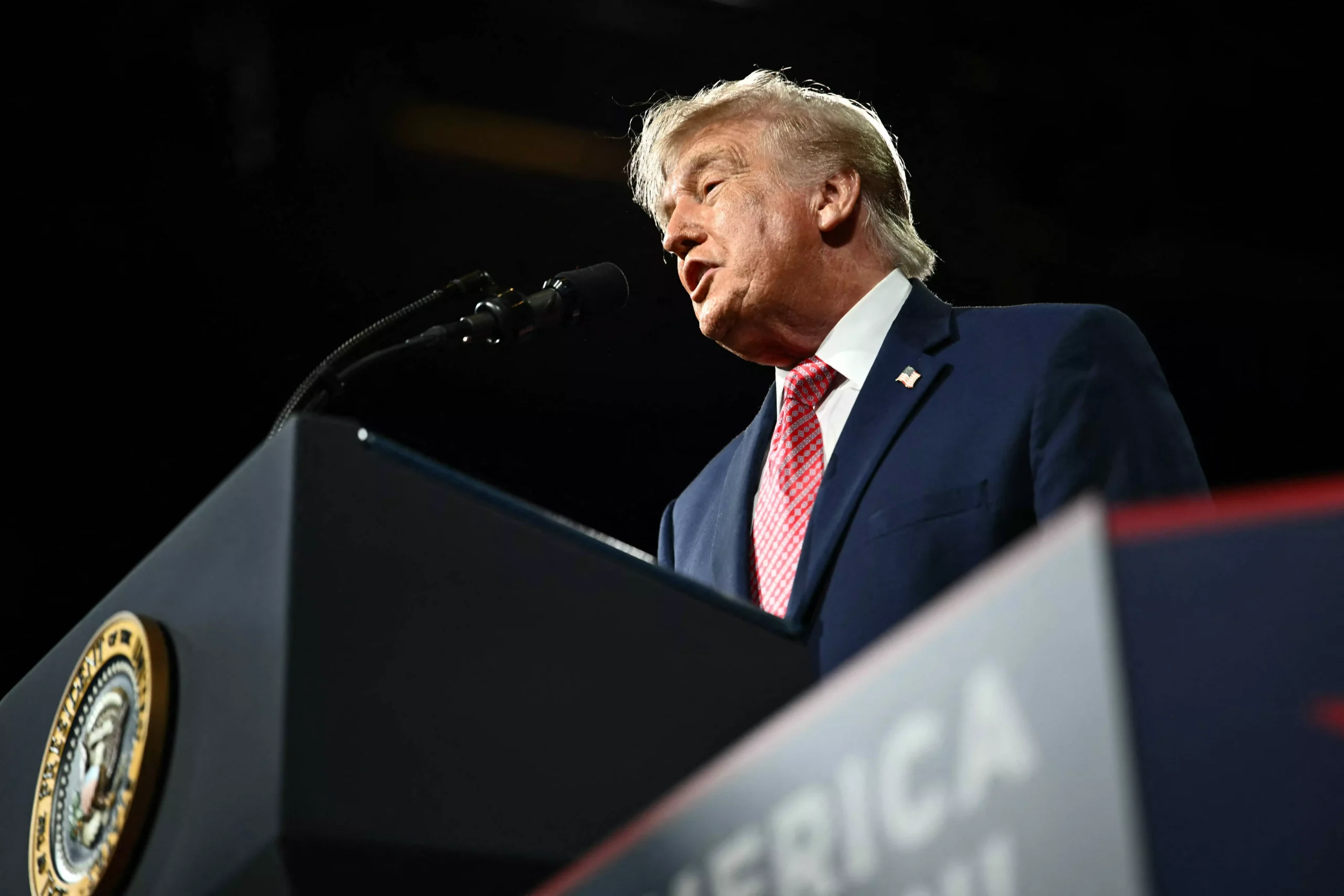
US President Donald Trump addresses an audience from a presidential podium in this photograph. Speaking to reporters in Washington on Monday, October 19, 2026, Trump warned that European countries must tighten border controls and remove foreign criminals, blaming immigration for the violent unrest in France and other parts of Europe. Photo: Reuters
US President Donald Trump blames immigration for escalating unrest in France, urges European leaders to tighten border controls and remove criminal offenders, while French authorities point to economic grievances and public-service concerns behind the demonstrations.
Key Highlights
- President Donald Trump warns that Europe faces a serious threat to its future unless governments strengthen border security and remove foreign criminals.
- Trump attributes the violent protests in France primarily to immigration rather than education or domestic economic policies.
- The US President says he had repeatedly advised French President Emmanuel Macron to tighten immigration controls.
- Trump extends his warning to Italy and other European countries experiencing unrest.
- French authorities impose partial curfews in Paris and several other cities following widespread violence, vandalism and looting.
- More than 2,400 arrests are reported as the French government faces mounting pressure to restore public order.
- Trump’s interpretation of the unrest contrasts with reports identifying rising living costs and declining public services as major causes of the protests.
Trump Issues Stark Warning Over Europe’s Future
Washington: US President Donald Trump on Monday, October 19, 2026, delivered a sweeping warning about Europe’s future, declaring that the continent could face serious consequences unless its governments immediately tighten immigration controls, close vulnerable borders and remove foreign nationals involved in criminal activities. Speaking to reporters outside the White House amid escalating unrest in France, Trump attributed the violence primarily to immigration, rejecting suggestions that dissatisfaction over education, living costs and domestic policies was responsible for the disturbances.
His remarks came as French authorities struggled to restore order following violent demonstrations across several cities, including Paris, where protests over economic conditions and public services had escalated into clashes with police, vandalism and widespread looting.
Trump presented the crisis as evidence of what he considers Europe’s longstanding failure to enforce effective immigration policies.
The American President insisted that European governments must act decisively before the situation deteriorates further.
“If Europe doesn’t close its borders and bring the criminals out, like the people that are protesting, Europe is finished.”
— US President Donald Trump
He further maintained that European nations must remove people who actively oppose the countries in which they reside, warning that failure to act could undermine their long-term stability.
Trump Blames Immigration, Rejects Education and Economic Explanations
Trump directly challenged the suggestion that France’s unrest was rooted primarily in dissatisfaction with schools, economic pressures or domestic government policies.
He argued that immigration was the central issue and accused successive European governments of failing to recognise the consequences of their border policies.
“This isn’t about school; this is about immigration.”
— President Donald Trump
Trump claimed that people entering France without respecting its institutions, cultural heritage or national identity were contributing to the country’s difficulties.
His statements reflected his broader political argument that uncontrolled immigration threatens social cohesion and national security.
However, his explanation differs significantly from accounts of the demonstrations, which originated in public dissatisfaction over education, living costs and declining public services. French officials have also blamed organised violent groups and criminal elements for exploiting the protests.
Trump Says He Warned Macron About Immigration Years Ago
The US President also referred to his previous conversations with French President Emmanuel Macron, claiming that he had warned the French leader during his first presidential term about the consequences of allowing large-scale immigration.
Trump said he had repeatedly advised Macron to strengthen border controls and prevent the entry of individuals who might threaten national stability.
He maintained that France’s present difficulties were consistent with concerns he had raised several years earlier.
Trump contrasted the French government’s approach with his administration’s immigration enforcement measures in the United States.
His remarks represented another public criticism of European immigration policies and reflected the increasingly contentious debate surrounding migration, sovereignty and national identity across Western democracies.
Controversial Remarks About Paris Spark Wider Debate
Trump also made a controversial prediction about the demographic future of the French capital, suggesting that Paris could soon become predominantly Muslim.
The remark formed part of his broader criticism of immigration and cultural change in Europe.
The President’s statement was a political assertion rather than an established demographic projection.
His comments highlighted the increasingly polarised debate over immigration, religious diversity and national identity, issues that have become prominent in political discussions across several European countries.
While supporters of tougher immigration controls argue that governments must prioritise national security and effective border enforcement, critics caution against linking entire migrant or religious communities with criminal behaviour without supporting evidence.
France Imposes Curfews as Protests Turn Violent
Meanwhile, French authorities introduced partial curfews in several cities following a weekend of violent demonstrations.
According to Reuters, restrictions were imposed in parts of Paris, Lille and Nice as the government sought to prevent further disorder.
In Paris, police announced overnight restrictions around Place de la République and Les Halles, while additional measures were introduced elsewhere.
The demonstrations had initially drawn large crowds protesting against deteriorating public services, economic difficulties and government policies.
However, sections of the protests subsequently descended into violence, with shops damaged, businesses looted and public property vandalised.
More than 2,400 people were reported arrested during the disturbances, placing considerable pressure on French authorities to restore security and public confidence.
Macron Government Faces Growing Pressure Over Security Failures
The unrest has also created political difficulties for President Emmanuel Macron’s administration.
French Prime Minister Sébastien Lecornu has emphasised the government’s determination to restore order while favouring targeted restrictions rather than an immediate nationwide emergency response.
The violence prompted Interior Minister Laurent Nuñez to offer his resignation, but Macron declined it and instructed him to address security failures.
Municipal authorities have expressed concern about the extent of the disturbances and the apparent inability of security forces to protect several commercial districts during the violence.
The situation has intensified scrutiny of the French government’s preparedness, intelligence capabilities and handling of public demonstrations.
Trump Extends Immigration Warning to Italy and Other European Nations
Trump’s criticism was not limited to France.
Referring to disturbances in Italy and elsewhere in Europe, he argued that similar immigration-related challenges were affecting several countries.
He warned European leaders that their governments must strengthen border management and take action against individuals involved in criminal activities.
The President presented tighter immigration enforcement as essential to preserving national security, cultural identity and political stability.
His comments also reinforced a recurring theme of his foreign-policy rhetoric: that European governments have been too permissive in their approach to migration.
Nevertheless, the political and economic circumstances surrounding protests differ across European countries, making it difficult to attribute every episode of unrest to a single cause.
Immigration, Public Anger and the Challenge Facing Europe
The developments in France illustrate the complex challenges confronting European governments as they attempt to balance border security, democratic freedoms, economic stability and social integration.
Migration remains a contentious political issue, but the demonstrations have also exposed broader public frustration over the cost of living, educational conditions and the quality of essential services.
The distinction between peaceful demonstrators and individuals engaging in violence has become particularly important as authorities seek to restore public order without undermining legitimate democratic protest.
Trump’s comments have added an international dimension to the crisis, bringing Europe’s immigration policies under renewed scrutiny from Washington.
Europe’s Future at the Centre of a Renewed Political Debate
The American President’s warning comes at a time when European governments face increasing pressure to address economic uncertainty, immigration management and public dissatisfaction.
For Trump, the unrest represents a warning about the consequences of inadequate border enforcement.
For French authorities, the immediate priority remains containing violence, protecting citizens and responding to the economic and social grievances that helped trigger the demonstrations.
Whether Europe’s present difficulties are best addressed through tougher immigration policies, domestic reforms or a combination of both remains a subject of political disagreement.
What is clear, however, is that the violence in France has intensified a debate extending well beyond its national borders, raising difficult questions about security, governance, social cohesion and the future direction of European politics.