Kumar Bahukhandi
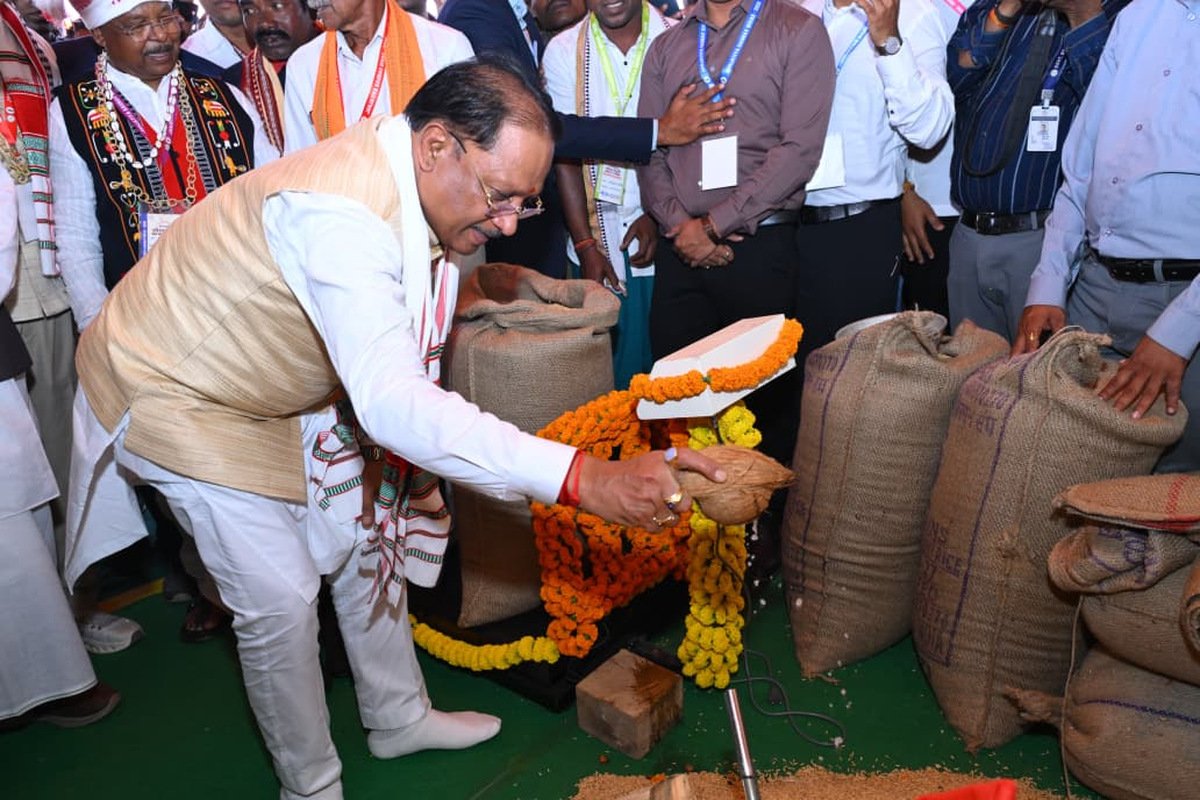
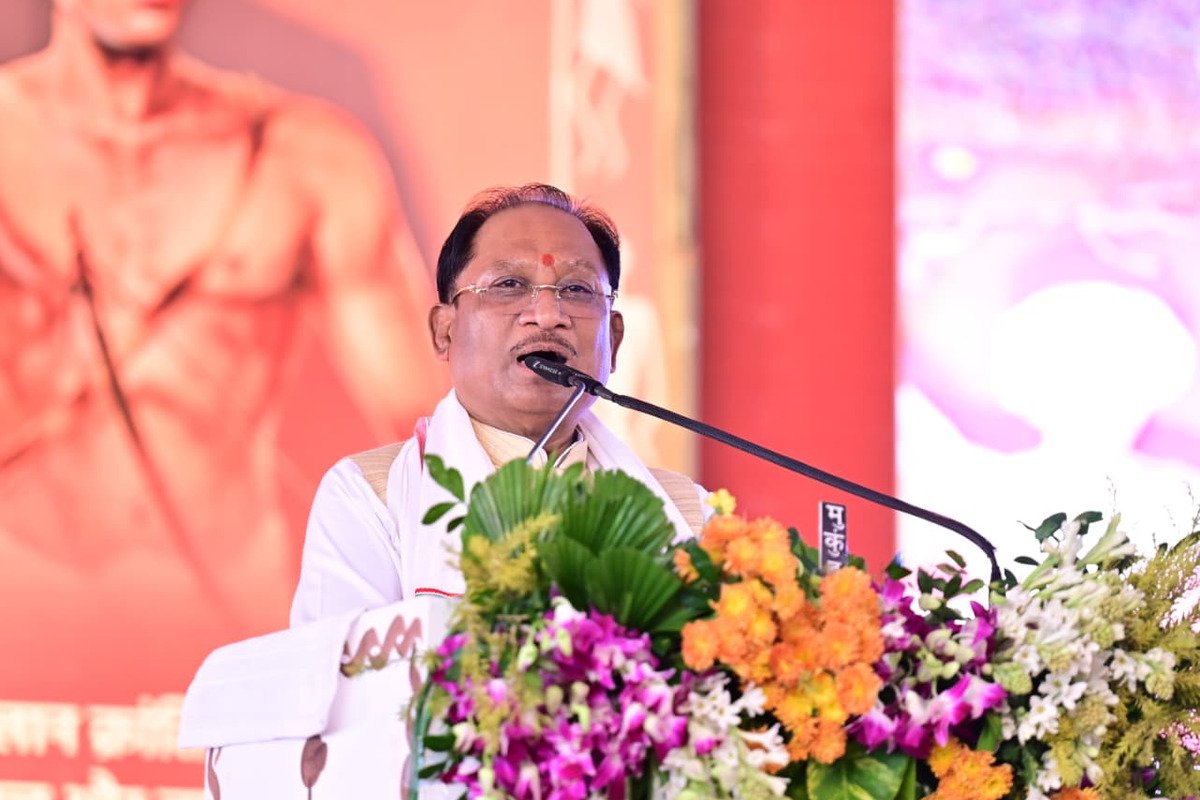
Chief Minister Vishnu Deo Sai performs the ceremonial puja to launch Chhattisgarh’s 2026–27 paddy procurement season at the state-level Janjatiya Gaurav Diwas ceremony in Dharamjaigarh, Raigarh district, on 15 November 2026.Photo:channel24india.com
Chief Minister Vishnu Deo Sai launches the 2026–27 procurement season in Dharamjaigarh and announces full input assistance of ₹13,839 per acre for eligible farmers who sell below the 21-quintal ceiling.
Key Highlights
- Chhattisgarh procured 1,98,364.80 quintals of paddy as of 15 November 2026, with purchases under way at 1,606 centres.
- The state has arranged 3,095 procurement centres across 33 districts for about 27.5 lakh farmers. Of these, 2,805 centres had issued tokens.
- The state has set the purchase rate at ₹3,100 per quintal, with a procurement ceiling of 21 quintals per acre.
- Eligible farmers who sell below the ceiling will receive the full ₹13,839 per acre in input assistance under the Krishak Unnati Yojana, based on their verified acreage.
Raipur: Chhattisgarh bought 1,98,364.80 quintals of paddy as procurement for the 2026–27 kharif marketing season opened on Sunday. Chief Minister Vishnu Deo Sai launched the drive in Dharamjaigarh, Raigarh district, during the state-level Janjatiya Gaurav Diwas ceremony, with Food Minister Dayaldas Baghel in attendance. Purchases had begun at 1,606 centres by the time of the 15 November update
Full input assistance for eligible farmers with lower sales
Sai said the state would procure up to 21 quintals of paddy per acre at ₹3,100 per quintal. He also announced that eligible farmers would receive the full ₹13,839 per acre under the Krishak Unnati Yojana even if lower yields or other circumstances left them with less than 21 quintals per acre to sell. Eligibility for the full assistance will be based on verified acreage.
Explaining the decision, Sai said an eligible farmer who sells 15 quintals per acre will also receive the input assistance corresponding to the remaining six quintals, bringing the total assistance to ₹13,839 per acre. The decision is expected to benefit farmers in lower-yield tribal and forest areas in particular.
Rajnandgaon and Balod lead the reported purchases
The state arranged 3,095 procurement centres across all 33 districts for about 27.5 lakh farmers. By 15 November, 2,805 centres had issued tokens. Statewide purchases comprised 1,10,979.20 quintals of coarse paddy, 80,489.60 quintals of fine paddy and 6,896 quintals of Sarna paddy.
Rajnandgaon recorded 26,464.40 quintals, the highest volume among the districts listed in the update, followed by Balod at 24,676 quintals. Mahasamund purchased 20,444.80 quintals, Dhamtari 19,829.20 quintals and Bemetara 16,320.40 quintals. In Raipur district, 129 of 159 centres had started purchasing paddy, recording 9,365.60 quintals.
Procurement begins in Bastar and Surguja divisions
In Bastar division, Kondagaon reported purchases of 3,888.40 quintals and Kanker 3,220.40 quintals. Purchases had also begun in Bastar, Narayanpur, Bijapur and Dantewada. In Sukma, one centre had issued tokens and purchases were still to begin at the time of the update.
In Surguja division, Balrampur recorded 5,614 quintals, Surajpur 2,006 quintals and Koriya 1,984 quintals. Jashpur had purchased 95.60 quintals at two centres.
Raigarh registers 85,501 farmers and sets up 20 checkposts
Raigarh district increased its procurement centres from 105 to 112 and its service cooperative societies from 69 to 79. A total of 85,501 farmers registered to sell paddy, 860 more than last season, covering 1,21,690.325 hectares. By 15 November, 58 centres had issued tokens and two had started purchases, recording 310.40 quintals.
The district set up 20 checkposts with round-the-clock monitoring in three shifts. Tehsil-level flying squads have also been deployed to check illegal transport, storage and sale of paddy