Kumar Bahukhandi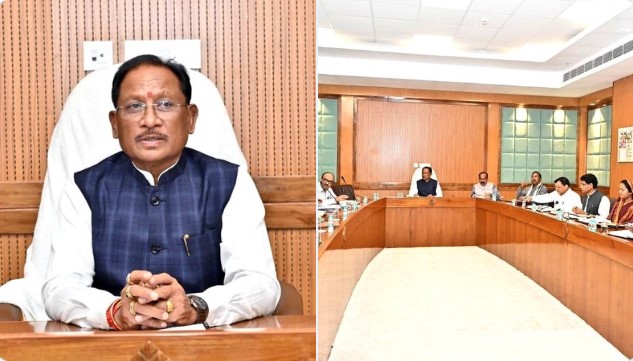
The Chhattisgarh government has approved the draft of the Freedom of Religion Bill, 2026. The decision was taken at a Cabinet meeting held in Raipur recently under the chairmanship of Chief Minister Vishnu Deo Sai. The proposed legislation aims to effectively curb religious conversions carried out through force, inducement, fraudulent means, undue influence or misrepresentation while converting from one religion to another in the state. The Bill will be introduced during the ongoing Budget Session of the Chhattisgarh Legislative Assembly.
In Short
The Bill mandates life imprisonment and fines up to ₹25 lakh in specific cases; Congress MLAs raise objections, call for broader consultations, and seek the handing over of the Bill to a ‘Select Committee’
The government of Chhattisgarh has introduced a new law aimed at curbing religious conversions. It asserts that the legislation includes provisions for strict punishment against those found violating its terms.
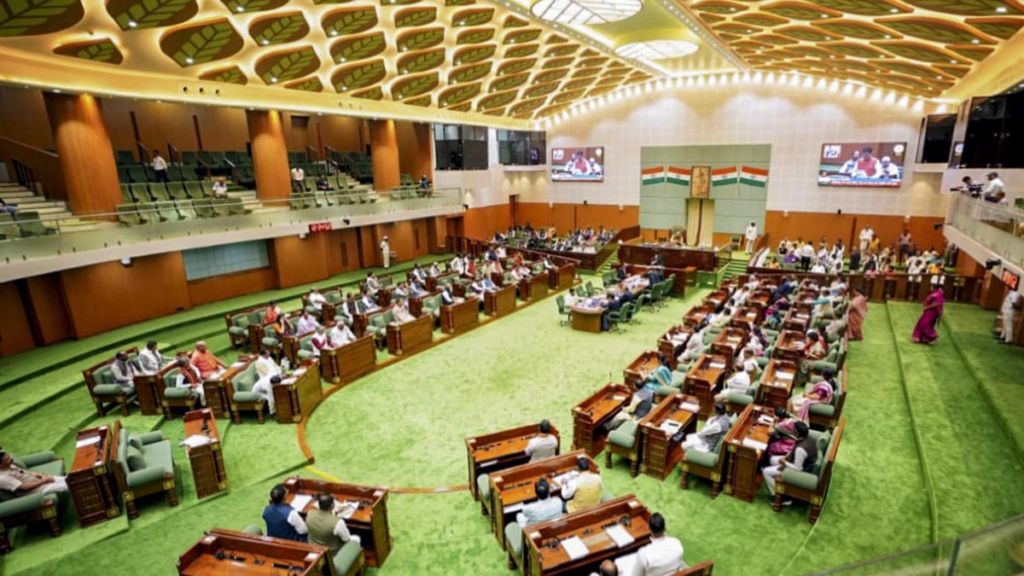
On Thursday March 19, 2026 the Chhattisgarh Legislative Assembly passed the ‘Freedom of Religion Bill by a voice vote , (File Image of Chhattisgarh Assembly)
The state government states that the objective of this law is “to put an end to religious conversions carried out through force, inducement, fraud, or misrepresentation.”
According to the government, the new law—once implemented—stipulates stringent penalties for those facilitating conversions through illicit means; in certain cases, these penalties include life imprisonment.
The Congress party has raised objections regarding the Freedom of Religion Bill in Chhattisgarh. Leader of the Opposition Charan Das Mahant stated that this bill “will have repercussions extending far beyond merely preventing forced conversions” and will, in fact, “create an atmosphere of fear and surveillance surrounding personal faith.”
He further argued that since similar legislation already exists, “there should have been a detailed discussion regarding the necessity of these new provisions and their potential impact.”
Over the past few years, reports have emerged from various parts of Chhattisgarh concerning attacks on churches, violence against Christian-identifying tribal communities, social boycotts, and disputes surrounding funeral rites.
Concurrently, organizations such as the Rashtriya Swayamsevak Sangh (RSS) have increased their activities, advocating a distinct perspective regarding the religious identity of tribal populations.
Against this backdrop, the pertinent question remains: what tangible changes can this new law—soon to be implemented in Chhattisgarh—bring about at the grassroots level?
What is new in the Chhattisgarh Freedom of Religion Act?
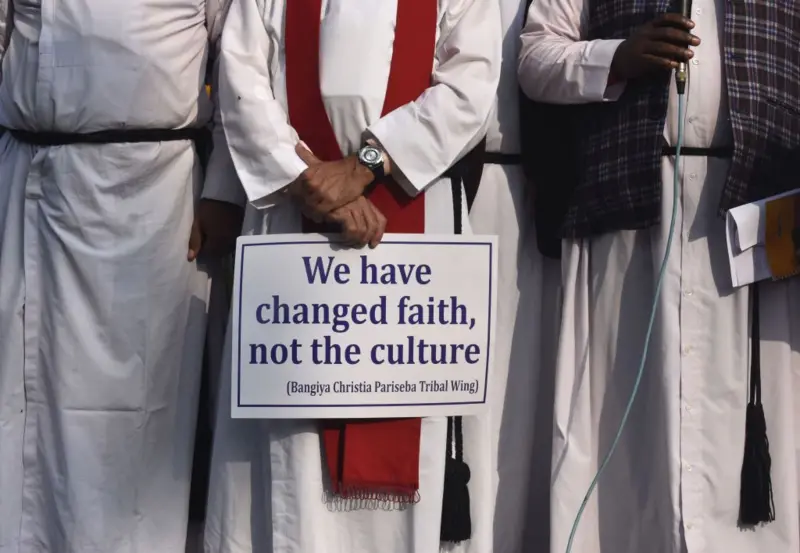
Provisions for punishment extending up to life imprisonment have been included for cases involving mass conversions (Representative Image).
According to the government, “This bill will replace the 1968 law currently in force in Chhattisgarh—a statute adopted from Madhya Pradesh following the formation of the state. Expanding the scope of what constitutes religious conversion, the new legislation now explicitly includes digital mediums and economic inducements.”
As per the bill, the objective of the ‘Chhattisgarh Freedom of Religion Bill, 2026’ is to prevent religious conversions induced through force, inducement, fraud, or misrepresentation.
Under the proposed provisions, prior to any religious conversion, both the individual undergoing the conversion and the religious representative facilitating the process must provide advance notice to the administration. Subsequently, this information will be made public, and objections regarding the conversion may be registered within a period of 30 days.
Under the new law, the obligation to notify administrative officials extends not only to the individual undergoing the conversion but also to the priest, cleric, or other religious figure facilitating it.
All offenses registered under this law shall be non-bailable. Furthermore, a key provision stipulates that the onus of proof lies with the individual facilitating the conversion; they must demonstrate that the religious conversion did not involve any form of coercion, inducement, or fraud.
The bill also introduces stricter penal provisions. Cases of unlawful conversion carry a prescribed punishment ranging from seven to ten years of imprisonment, in addition to fines.
In cases involving women, minors, or individuals belonging to Scheduled Castes, Scheduled Tribes, or Other Backward Classes, the punishment may range from 10 to 20 years of imprisonment.
The penalties are even more severe in cases of mass conversions, for which provisions extending up to life imprisonment have been established.
The government asserts that this legislation has been enacted to curb conversions induced through force or deception. Conversely, the opposition argues that such laws could infringe upon individual liberty and the fundamental right to choose one’s religion.