Kumar Bahukhandi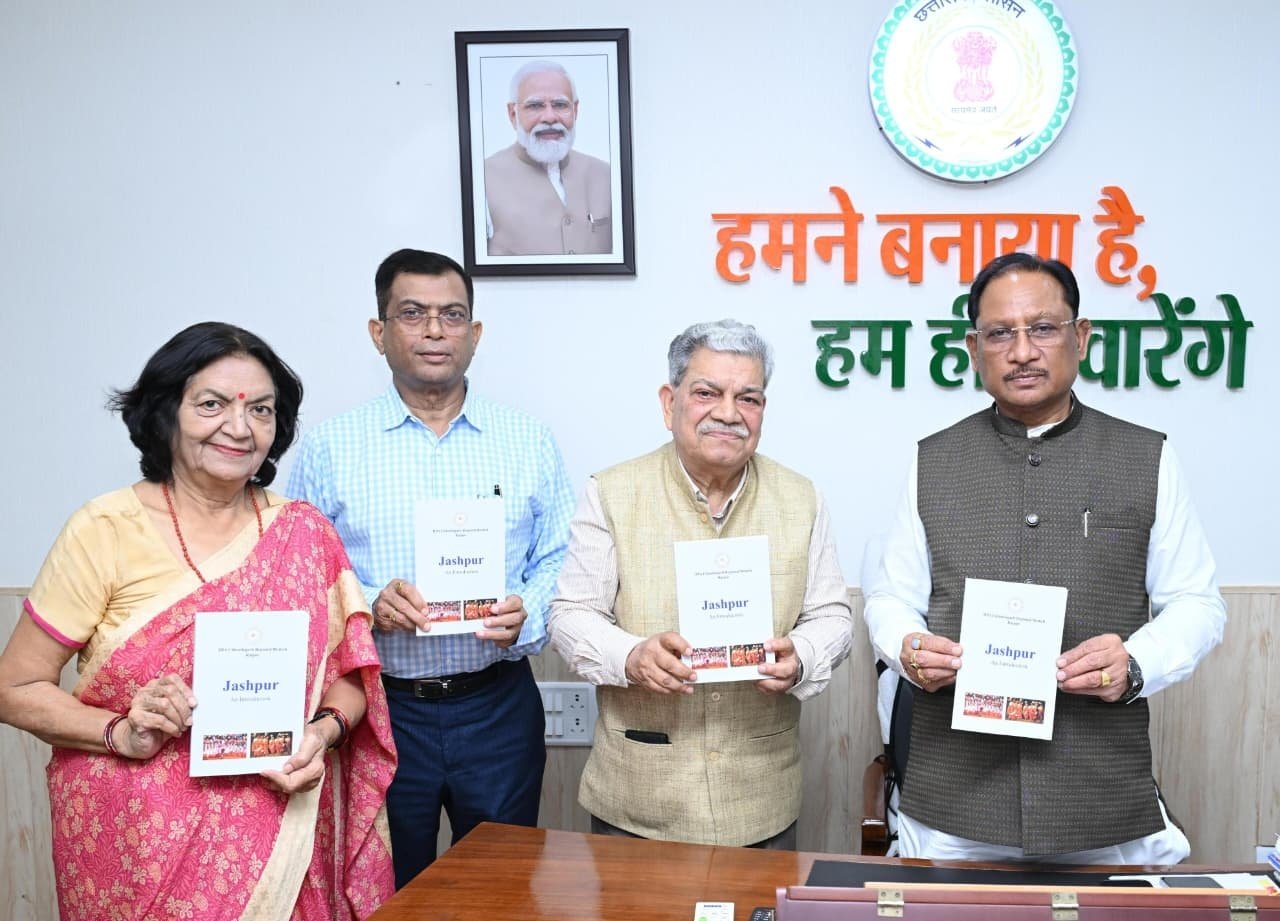
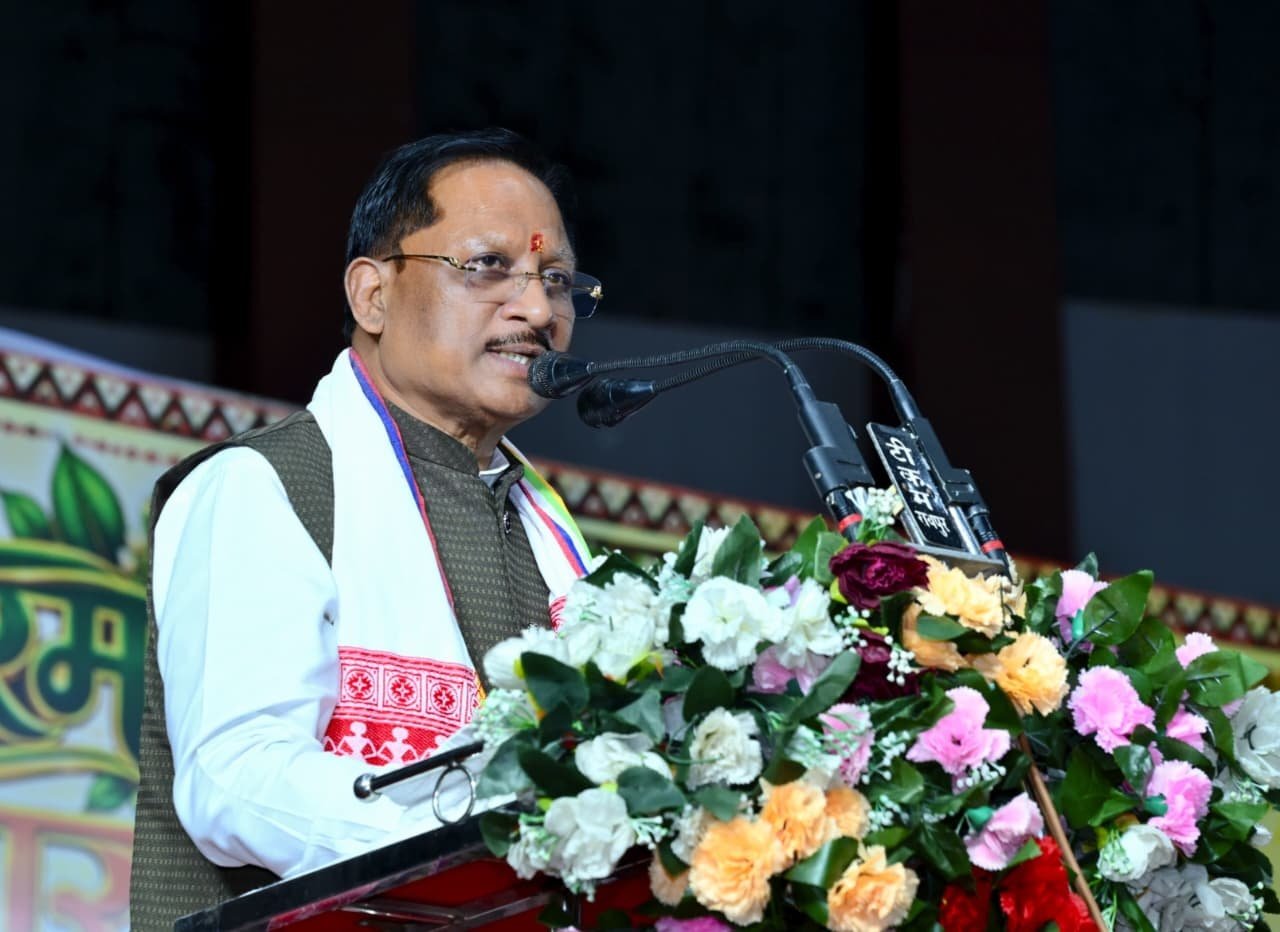
Chief Minister Vishnu Deo Sai (right) releases ‘Jashpur: An Introduction’ in Raipur on Monday, August 24, 2026. Also seen are IIPA Chhattisgarh Regional Branch Chairman and former Chief Secretary Suyogya Kumar Mishra (second from right), Vice-Chairperson and former Additional Chief Secretary Dr Indira Mishra (left), and another participant. The publication documents Jashpur’s administration, tribal heritage, natural resources and development potential-Photo Credit:channel24india.com via CG/DOPR
IIPA study documents Jashpur’s administrative journey, tribal heritage, natural resources and development potential
Key Highlights
- Chief Minister Vishnu Deo Sai released Jashpur: An Introduction in Raipur on Monday.
- Sai said the publication could help take Jashpur’s distinctive identity and development potential to a wider audience.
- The study covers administration, governance, tribal culture, natural resources, socio-economic change and development opportunities.
- Tourism, agriculture, forest produce, local products and entrepreneurship are identified as areas offering future economic potential.
- The publication is intended as a reference for administrators, policymakers, researchers and students.
Raipurr: Chief Minister Vishnu Deo Sai on Monday August 24, 2026 released ‘Jashpur: An Introduction’, a publication documenting the administrative evolution, socio-economic transformation, tribal culture, natural resources and future development possibilities of Jashpur district.
The publication has been brought out under an initiative of the Indian Institute of Public Administration (IIPA) and seeks to provide a consolidated account of a district whose geographical and cultural character differs considerably from Chhattisgarh’s plains and industrial regions.
“Jashpur is distinguished by its natural wealth, tribal heritage and cultural traditions, along with immense possibilities for development. Bringing its development journey and administrative experience together in one publication is a valuable effort that will help take Jashpur’s distinct identity and potential to a wider audience.” — Vishnu Deo Sai
Jashpur’s Development Must Reflect Its Distinct Character
Sai said understanding the development of any region requires examining its history, society, culture, natural resources and administrative systems together.
Located in north-eastern Chhattisgarh and forming part of the extended Chotanagpur Plateau, Jashpur has distinctive terrain, forests and livelihoods, alongside a predominantly tribal population whose traditions remain closely connected with nature.
The Chief Minister said the district has recorded progress in infrastructure, rural development, education, healthcare, livelihood generation and administrative reforms, but future development should continue to reflect local requirements and characteristics.
“Agriculture, forest produce, tourism, local products and entrepreneurship among women and youth offer considerable possibilities for strengthening Jashpur’s economy.” — Vishnu Deo Sai
Sai particularly highlighted the district’s potential for nature and tribal tourism. Its hills, forests, rivers, waterfalls and valleys, combined with tribal traditions, folk culture, traditional arts and local cuisine, could help establish Jashpur as a distinctive tourism destination, he said.
The publication also examines the changing role of district administration since Independence. Sai observed that district administration remains the crucial link between government and citizens, whether in implementing schemes, delivering public services or addressing local problems.
He said documenting administrative experiences, achievements and challenges could provide useful lessons beyond Jashpur itself.
“I am confident that this publication will serve as a useful reference for administrators, policymakers, researchers and students and will encourage further research into Jashpur’s history, administration, society, economy, culture and development possibilities.” — Vishnu Deo Sai
The study forms part of an IIPA initiative asking regional branches to undertake a comprehensive study of at least one district in their respective states. The Chhattisgarh regional branch selected Jashpur from the State’s 33 districts because of its distinctive geographical, social and cultural characteristics.
Rather than functioning as a conventional district gazetteer, the publication brings together information from government documents, Census 2011, departmental reports, published material and the Raigarh District Gazetteer.
The reliance on the Raigarh gazetteer has historical relevance: before becoming a separate district in 1998, Jashpur was a tehsil of Raigarh district, while a separate gazetteer for Jashpur was unavailable for the study.
Former Chief Secretary and Chairman of the IIPA Chhattisgarh Regional Branch Suyogya Kumar Mishra, Vice-Chairperson and former Additional Chief Secretary Dr Indira Mishra, and Vice-Chairperson, former Chief Secretary and present Chhattisgarh State Election Commissioner Ajay Singh were present on the occasion.
For a district whose identity combines tribal heritage, forests, biodiversity and emerging development opportunities, Jashpur: An Introduction could become particularly useful if it succeeds in taking official information beyond administrative records and making the district better understood by researchers, policymakers and the wider public.