Kumar Bahukhandi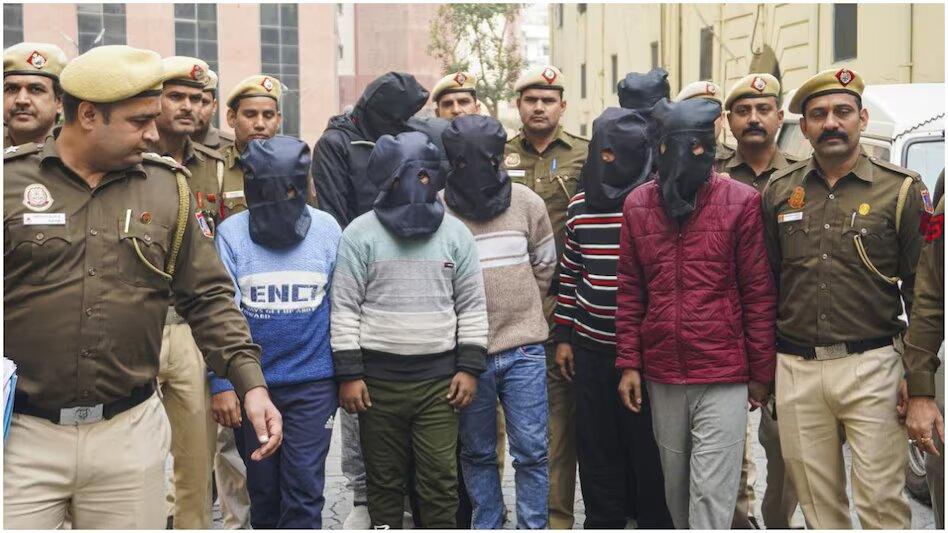
Delhi Police arrested a gang involved in illegal infiltration of Bangladeshis into India. (Photo: X/@DelhiPolice
New Delhi: Delhi Police focused on those areas of Seelampur, Jafrabad, Central Delhi where there was a possibility of illegal Bangladeshis hiding. Apart from this, a large area of Outer Delhi and South West Delhi was also included in the police action. If we talk about the figures so far, then in the last one month, Delhi Police has checked the documents of about 500 suspects. During the investigation, 100 illegal Bangladeshis have been arrested so far.
Mohammad Naushad Anwar Shahid, who lives in Nizamuddin area of Delhi, and some of his companions wrote a letter to Delhi Police on 10 December last year demanding action against illegal Bangladeshis living there. Taking cognizance of Anwar Shahid’s letter, Delhi’s Lieutenant Governor VK Saxena immediately forwarded it to Delhi Police with his noting. The message was clear that immediate and strict action should be taken against illegal Bangladeshis living in Delhi. They should be caught and deported as soon as possible.
Delhi Police also did not waste time and first of all activated the Bangladeshi cell which has been working in Delhi for years. Apart from this, the police of every district started a special drive in their area. It was especially started in South East Delhi, South West Delhi, Shahdara and North East Delhi, Central and Outer Delhi. The message to the police team was clear, stop anyone you suspect, check their documents and if something suspicious is found then take action.
Delhi Police focused on those areas of Seelampur, Jafrabad, Central Delhi where there was a possibility of illegal Bangladeshis hiding. Apart from this, a large area of Outer Delhi and South West Delhi was also included in the police action. If we talk about the figures so far, then in the last one month, Delhi Police has checked the documents of about 500 suspects. During the investigation, 100 illegal Bangladeshis have been arrested so far. Taking action against them, Delhi Police immediately handed them over to FRRO, from where most of them have either been deported or the deportation process is underway.
Three syndicates involved in infiltration in Delhi busted
The search operation of Delhi Police is continuing. Every day Delhi Police is arresting illegal Bangladeshis. During this crackdown, Delhi Police has busted three such networks which were involved in getting illegal Bangladeshis to enter India and settling them here. There is one such network which had direct links to Bangladesh. Police has arrested four people of this gang, including two Bangladeshi citizens.
Among the illegal Bangladeshis caught, there is also an accused named Aneesh Sheikh, who had illegally infiltrated India 15 years ago and settled in Delhi. He was engaged in settling the infiltrators in Delhi. Police has also arrested Aneesh’s wife Sapna and his partner Aminur Islam. According to the police, these people were running this syndicate with Ashish Mehra. This syndicate used to work in two ways. One of its links was in Bangladesh. The Bangladesh module of the syndicate used to talk to those people there who wanted to come to India illegally. Then, after taking commission from them, it used to help them cross the border.
Unit-1 –According to the police, the first module of this syndicate used to work inside Bangladesh. It used to infiltrate Bangladeshis into Meghalaya from Durgapur in Bangladesh through the Bagmara border of India through the Donkey Route inside the forest. The kingpin of this module was Aneesh Sheikh. To reach the next destination, these people used to reach Bagmara by auto rickshaw or a small vehicle, bike or by walking some distance.
Unit -2-When the infiltrators entered from the Baghmara border, they were taken to Krishnai in Assam by minibus. This entire route is about 150 km long. This module was commanded by Aminur Islam.
Unit- 3-After reaching Krishnai, these infiltrators were either taken to Kolkata by train or to Bongaigaon by bus. The route to Bongaigaon was about 75 km, while the route to Kolkata was 100 km. This module was also commanded by Aminur Islam.
Unit-4- This module was commanded by Sapna, wife of Anish Sheikh. Sapna would bring the Bangladeshi infiltrators who reached Kolkata and Bongaigaon to Delhi by train. Once the infiltrators reached Delhi, Ashish Mehra’s work would begin here. He would first get illegal documents made for the infiltrators so that they could be provided work and a place to live in Delhi.
How were fake documents made
Manmohan and Ashish Mehra used to help Aneesh in making fake documents for illegal Bangladeshis. Police have recovered 6 Aadhar cards and 5 PAN cards on the information given by the arrested illegal Bangladeshis. Also, the transaction details of their bank accounts are also being investigated.
How were the three syndicates caught
First of all, Delhi’s South West District Police caught a woman named Sonali Sheikh and on the basis of the information she shared during interrogation, three syndicates that brought illegal Bangladeshis to India and settled there were exposed.
The story of infiltration in the words of illegal Bangladeshis
Sonali Sheikh is a resident of Bangladesh. About 15 years ago, she came to India through the border from the forest area, then reached Mumbai by train. Sonali Sheikh along with her entire family had entered India illegally. After reaching Mumbai, Sonali Sheikh started working as a maid in houses. At the same time, Sonali Sheikh’s father died in an accident, after which Sonali’s mother and brother went back to Bangladesh. According to the police, Sonali had come to Delhi a few days ago in search of work and in this connection, she had a conversation with Sapna.
Delhi Police came to know about Sonali Sheikh through a house mate, after which her documents were checked. Some evidence was found from her mobile which proved that she was a resident of Bangladesh. Then Delhi Police called for her original documents from Bangladesh and with the help of FRRO (Foreigners Regional Registration Office) unit, Sonali was deported back to Bangladesh. Similarly, RK Puram Police caught and deported a person named Firoz Mulla. Firoz was caught and deported in 2002, but once again he succeeded in entering the Indian border through the forest and then came to Delhi by train. Among the illegal Bangladeshis identified by Delhi Police this time, many are those who have infiltrated into India again after being deported.
Delhi Police caught a Bangladeshi named Jahangir living in a slum in Rangpuri area and deported him. He lived with his 6 children and wife. During interrogation, Jahangir told that he first reached Kolkata through the forest and after working there for a few days, went back to Bangladesh. Then after going there, he entered the Indian border illegally with his 6 children and wife and then came to Delhi. He started working as a scrap dealer here. The person who had given Jahangir a house on rent says that from his language he could not guess at all that he was from Bangladesh or Bengal. He speaks the local language of Delhi, although he did not have any documents.
Mother and son were found roaming in Delhi
During the search operation, Delhi Police detained a mother and son from South Campus area and interrogated them, then it was found that both of them are from Bangladesh and have been living illegally in Delhi for many years. Both told that they came to India through the West Bengal border in 2020. Son Naeem and mother Najma were living in Katwaria Sarai, Delhi. Najma told that her son could not go to school due to poverty. After this, both of them came to India in 2020. Najma works as a maid in houses here.
How are illegal Bangladeshis deported?
Whenever the police catches a Bangladeshi on suspicion, his documents are first checked. When it is found to be fake, his Bangladesh address is found out. When the Bangladesh address is confirmed, and it becomes clear that this person is a resident of Bangladesh, then he is handed over to FRRO (Foreigners Regional Registration Office). Here they have to stay in the detention center under IB. Then they are deported to Bangladesh by putting them on a train.