Kumar Bahukhandi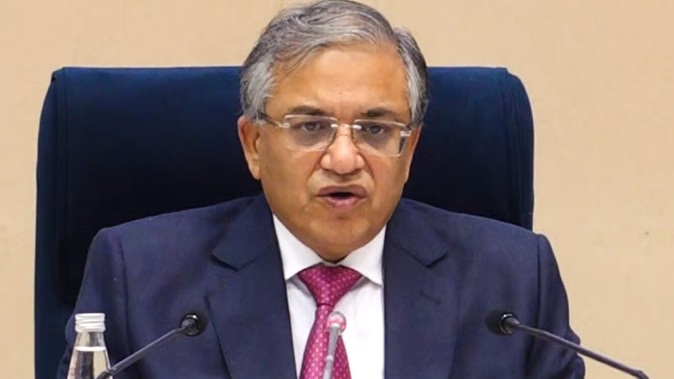
Gyanesh Kumar, Chief Election Commissioner – Photo: PTI
Impeachment Motion: An impeachment motion against Chief Election Commissioner Gyanesh Kumar, moved by 193 Members of Parliament, was rejected on Monday April 6, 2026 . The Speaker of the Lok Sabha declined to accept the motion after examining all its aspects. This marked the first time that such a motion had been brought against a Chief Election Commissioner.
The impeachment motion filed against Chief Election Commissioner Gyanesh Kumar by 193 Members of Parliament (MPs) from the Lok Sabha and Rajya Sabha has been rejected. This motion was introduced by opposition parties with the aim of removing Chief Election Commissioner Gyanesh Kumar from his post. The impeachment motion was signed by 193 MPs—130 from the Lok Sabha and 63 from the Rajya Sabha. The notice regarding this motion was submitted to the Chairman of the Rajya Sabha on March 12, 2026, and was subsequently rejected today by the Lok Sabha Secretariat and the Rajya Sabha Chairman. This marked the first instance in which an impeachment motion was brought against a Chief Election Commissioner.
What did the Lok Sabha Secretary-General say?
Providing information, Lok Sabha Secretary-General Utpal Kumar Singh stated that this decision was taken pursuant to a notice of motion submitted under Article 324(5) of the Constitution of India. This motion sought the removal of Chief Election Commissioner Gyanesh Kumar. Members are hereby informed that a notice of motion, dated March 12, 2026, was received.
He stated that this notice bore the signatures of 130 members of the Lok Sabha. The notice was submitted pursuant to Articles 324(5) and 124(4) of the Constitution, as well as under the 2023 Act and the Judges (Inquiry) Act, 1968. It sought the removal of Chief Election Commissioner Gyanesh.
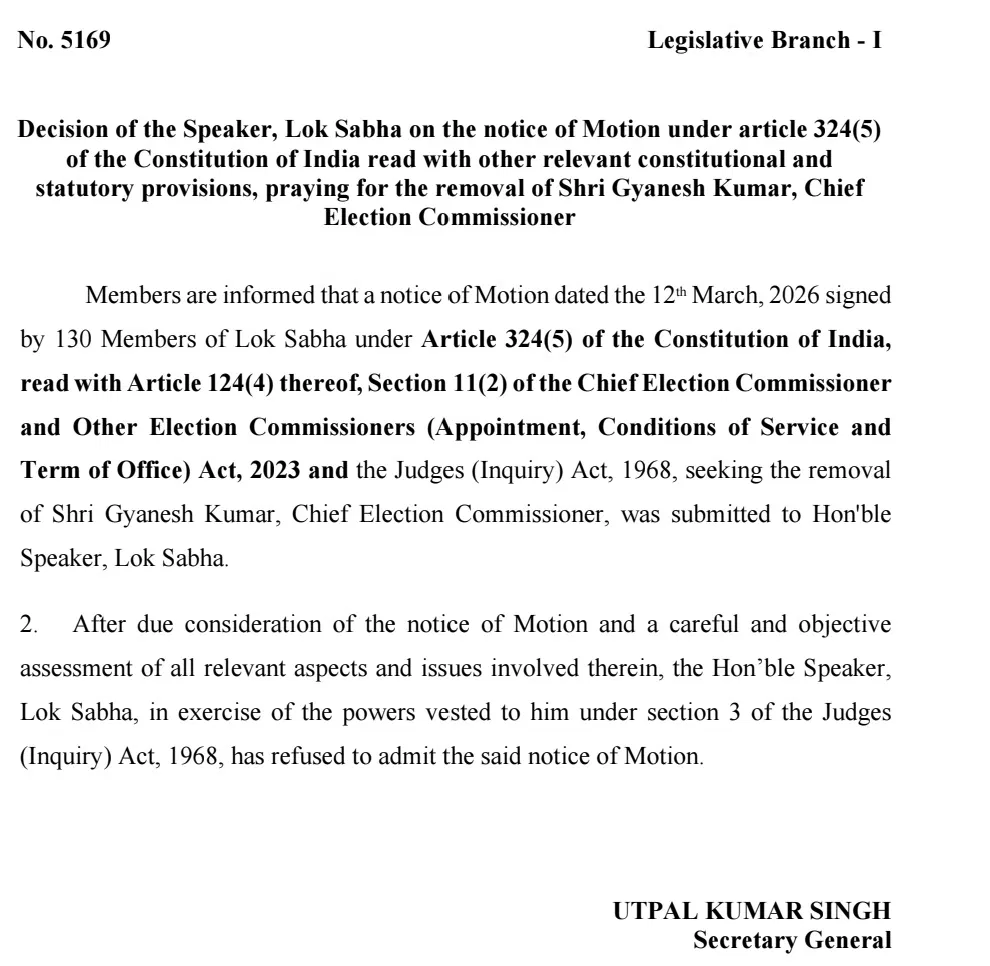
It further noted that this notice of motion was submitted to the Speaker of the Lok Sabha. Subsequently, the proposal was given full consideration. All necessary aspects and issues were examined carefully and impartially. Thereafter, the Speaker of the Lok Sabha exercised the powers vested in him under Section 3 of the Judges (Inquiry) Act, 1968. The Speaker of the Lok Sabha declined to accept the notice of motion.
Rajya Sabha: Chairman Declines to Accept Motion Against CEC
The Chairman of the Rajya Sabha, C.P. Radhakrishnan, has declined to accept the motion (notice) submitted by Members of Parliament seeking the removal of Chief Election Commissioner (CEC) Gyanesh Kumar from his post. According to official information, a notice of motion was submitted by 63 members of the Rajya Sabha on March 12, 2026. This notice was submitted pursuant to Articles 324(5) and 124(4) of the Constitution of India, as well as under Section 11(2) of the Chief Election Commissioner and other Election Commissioners (Appointment, Conditions of Service and Term of Office) Act, 2023, and the provisions of the Judges (Inquiry) Act, 1968. Through this motion, the removal of India’s Chief Election Commissioner, Gyanesh Kumar, from his office was sought.
After considering the notice and carefully and impartially assessing all relevant aspects and issues, the Chairman of the Rajya Sabha declined to accept it. The Chairman took this decision by exercising the powers vested in him under Section 3 of the Judges (Inquiry) Act, 1968. With this decision, the process regarding the demand for the removal of Gyanesh Kumar has, for the time being, come to an end.
What is the Impeachment Process?
The procedure for removing a Chief Election Commissioner (CEC) from office is identical to that of a Supreme Court Judge. It must be based on grounds of ‘proven misbehavior’ or ‘incapacity.’ Such a motion can be introduced in either House of Parliament. To be passed, it requires a majority of the total membership of the House, as well as a two-thirds majority of the members present and voting.
What Did the Notice Contain?
The notice, drafted by the Opposition, alleged that the CEC—acting at the behest of the government and under the pretext of the SIR—had deliberately removed the names of eligible voters from the electoral rolls. The notice further asserted that his partisan actions posed a threat to the credibility of democracy.