Kumar Bahukhandi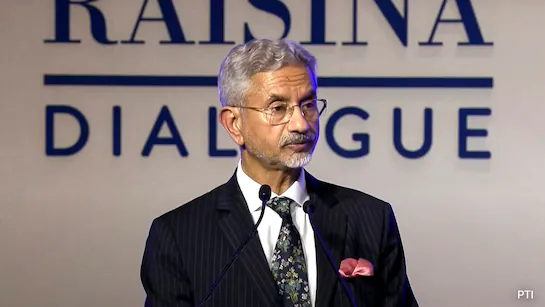
External Affairs Minister Jaishankar – Photo: channel24india.com
During an event, External Affairs Minister S Jaishankar said that there are now multiple centers of power in the world and a natural competition exists among the world’s nations. Jaishankar also stated that Western countries are now lagging behind in this competition, and this has had a global impact.
External Affairs Minister S Jaishankar said in a statement that the global economic and political balance is undergoing a major transformation, and multiple centers of power have emerged. Addressing the 22nd convocation ceremony of Symbiosis International (Deemed University) in Pune, Minister Jaishankar said, “No country, however powerful, can now impose its will on all issues.” He added, “This also means that there is now a natural competition among the countries of the world, and this creates its own balance. Multiple centers of power and influence have emerged.”
Global powers are no longer universal,’ he said.
He stated that the concept of power has multiple definitions, including trade, energy, military strength, resources, technology, and talent, which makes it particularly complex. Jaishankar said, “It is also important to recognize that global powers are no longer capable of being universal. Globalization has fundamentally changed the way we think and operate.” Jaishankar added, “For a large economy like ours to keep pace with technology, it must develop significant and modern manufacturing capabilities.”
‘The world has undergone a major transformation’
The External Affairs Minister said, “When I was your age, the world was different and less complex, but the world has undergone a major transformation, and our society and country have also changed. Now it is the responsibility of the new generation to take charge of a developed India.” Speaking about the situation in Bangladesh, the External Affairs Minister said, “A few years after the formation of Bangladesh, we faced Pakistan, as well as the West and China. In response, India forged a strong strategic relationship with the Soviet Union. This was the pre-reform era, characterized by low economic growth, shortages, licensing controls, and limited foreign trade. Our society and our relationship with the world were very different from what they are today.”
Western countries have stagnated, leading to a global shift
Dr. Jaishankar said, “After independence, many countries achieved progress and prosperity and now control their own destiny. Right decisions and prudent policies have made a huge difference. In India’s case, we have seen how leadership and governance have navigated the ups and downs of our economic growth and social transformation through different phases. The country that has benefited the most during this period is China. But we have also done well, especially in the post-reform era, and even more so in the last decade. In contrast, much of the Western world now feels that it has stagnated, a feeling that is gradually acquiring political significance. Westerners deliberately decided to shift production units elsewhere to maximize profits. This has led to a decline in their competitiveness over the years, further impacted by their lifestyle, but the net result of all these developments is a major shift in the global economic and subsequently political rankings.”