Kumar Bahukhandi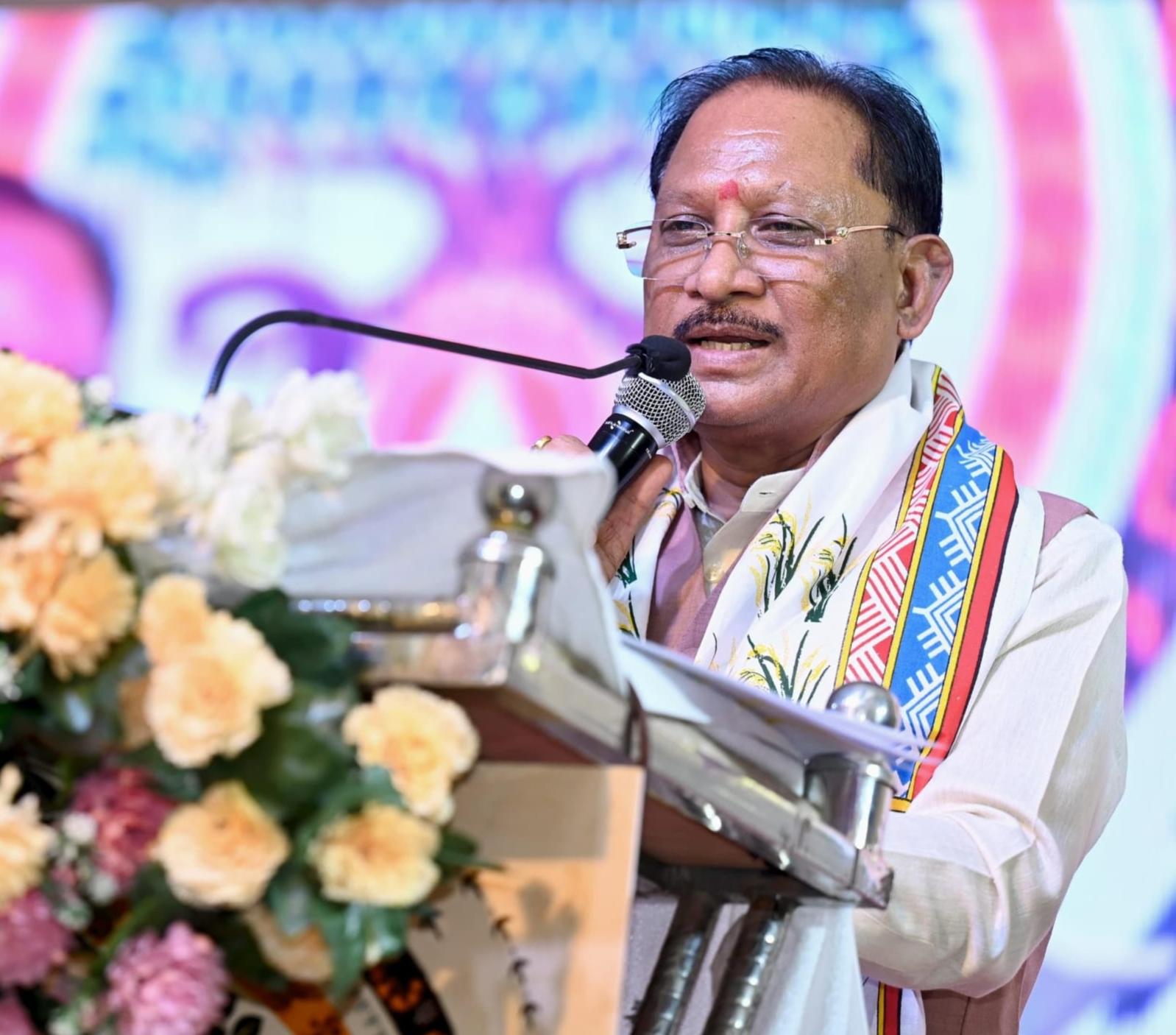
Their Role in Guiding Society Is Crucial
Remarks by Chief Minister Vishnu Deo Sai — In Context and Depth
Executive Summary
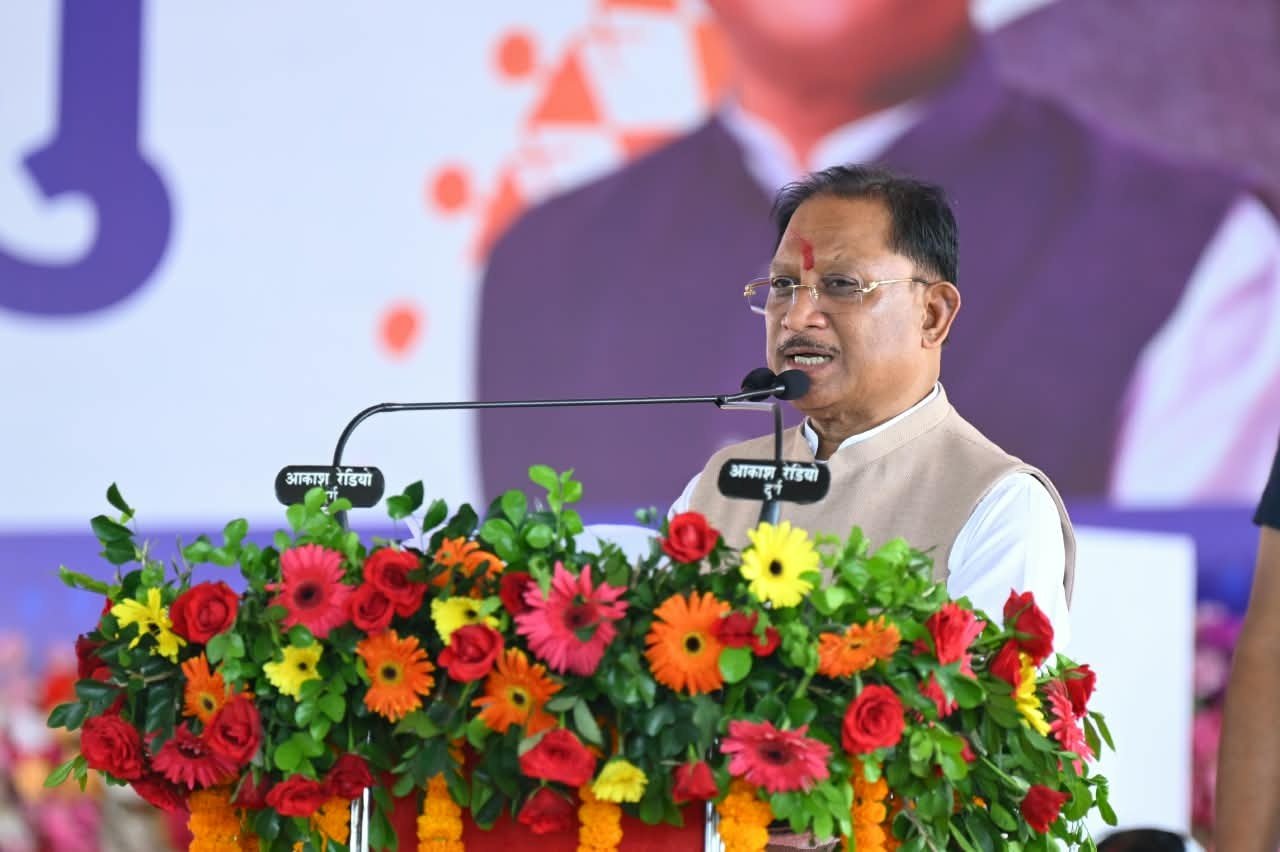
On May 30, 2026, Chhattisgarh Chief Minister Vishnu Deo Sai made a significant public statement affirming that journalists are the true warriors of democracy and that their role in guiding and informing society is crucial. This report provides a comprehensive analysis of that statement within its political, historical, and journalistic context, examining who CM Vishnu Deo Sai is, the current state of press freedom in India, the constitutional foundations supporting a free press, the responsibilities of journalists in a democracy, and the challenges facing media professionals in India today.
KEY THEME
A sitting Chief Minister’s declaration that journalists serve as warriors of democracy carries significant weight—especially when juxtaposed with India’s sliding rank (157th out of 180 countries) on the 2026 RSF World Press Freedom Index.
Part I: Chief Minister Vishnu Deo Sai — Background & Governance
1.1 Political Biography
Vishnu Deo Sai was born on February 21, 1964, in Bagiya village in what is now Chhattisgarh (then Madhya Pradesh). He is a senior politician of the Bharatiya Janata Party (BJP) and was sworn in as the fourth Chief Minister of Chhattisgarh on December 13, 2023, following the BJP’s decisive victory in the state assembly elections. He succeeded Congress leader Bhupesh Baghel.
Sai holds the historic distinction of being the first tribal leader to serve as Chief Minister of Chhattisgarh under the BJP, representing the Kunkuri constituency in the state assembly. His elevation was widely seen as a recognition of the significant tribal population of Chhattisgarh, which constitutes roughly 32% of the state’s demographics.
Indicator
Value / Status
Date of Birth
February 21, 1964
Party
Bharatiya Janata Party (BJP)
Office Assumed
December 13, 2023
Constituency
Kunkuri, Chhattisgarh
Previous Role
Union Minister of State (Steel, Mines, Labour & Employment)
Distinction
First tribal Chief Minister of Chhattisgarh (BJP)
Lok Sabha Tenure
1999–2019, representing Raigarh
1.2 The Sushasan Tihar 2026 Governance Initiative
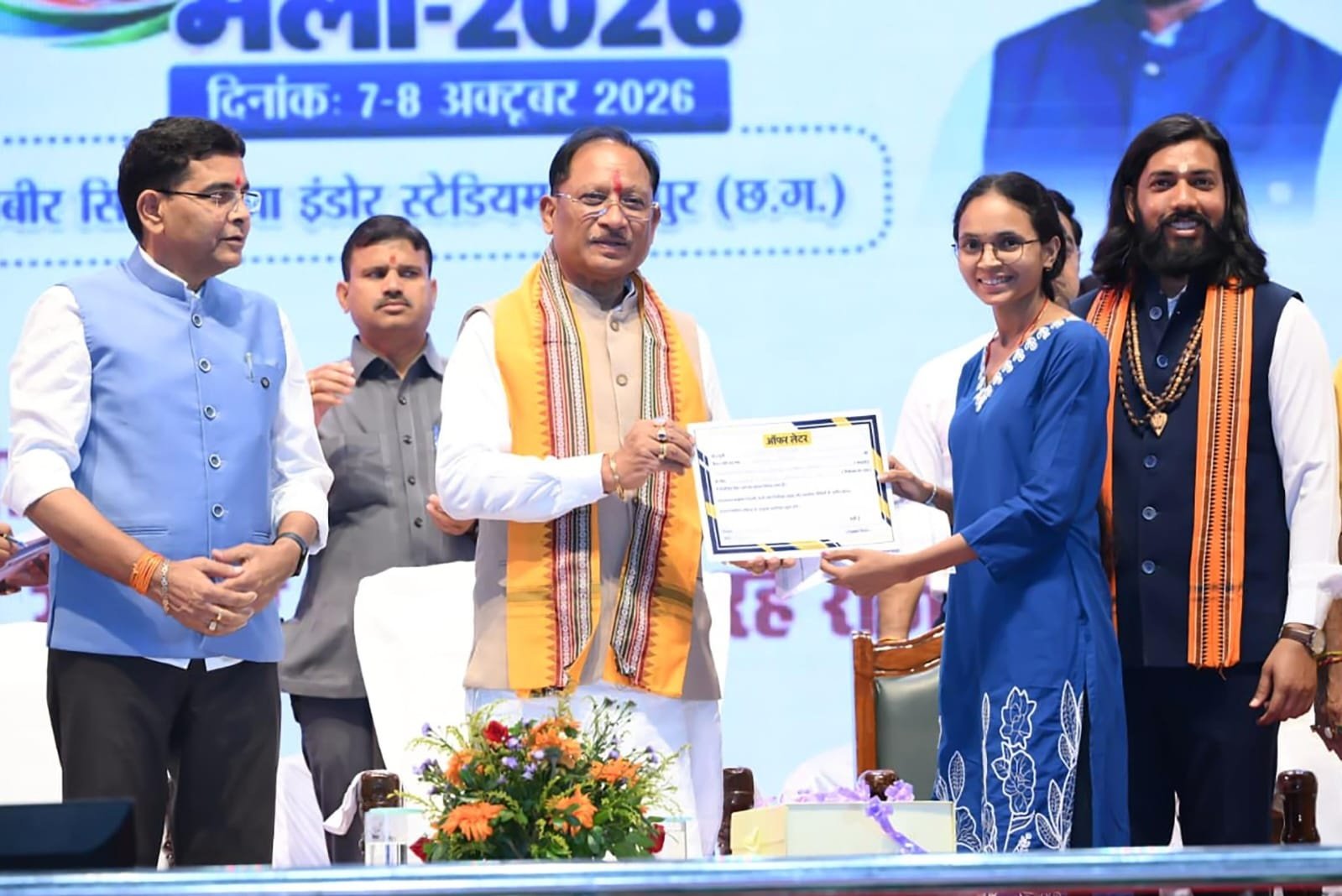
CM Sai’s statement about journalists came in the context of his administration’s Sushasan Tihar (Good Governance Festival) 2026, a statewide campaign running from May 1 to June 10, 2026. The initiative directs all District Collectors to ensure time-bound resolution of public grievances, with camps held in both rural and urban areas.
A defining feature of Sushasan Tihar has been Sai’s unannounced visits to villages — including Lokhan village in Kabirdham district — where he engaged directly with citizens, inspected development projects, and even participated in community activities. This approach of ground-level, real-time governance has drawn wide media attention and forms the backdrop against which his praise of journalism must be understood: a government that values transparency must, logically, value a free press.
QUOTE
“Time-bound resolution of public complaints is the cornerstone of good governance.” — Chief Minister Vishnu Deo Sai, Sushasan Tihar 2026
1.3 Key Governance Achievements Under CM Sai
Since assuming office in December 2023, the Sai government has pursued several flagship initiatives:
- Mahtari Vandan Yojana: Financial assistance of Rs 14,306.33 crores disbursed through 22 instalments to approximately 70 lakh women of Chhattisgarh. The year 2026 was declared ‘Mahtari Gaurav Varsh’ to showcase women’s empowerment.
- Healthcare: 77.2 lakh families are now eligible for free treatment up to Rs 5 lakhs annually under the Shaheed Veer Narayan Singh Health Assistance Scheme, with a budget of Rs 1,500 crores.
- Agriculture: Paddy procurement in 2024–25 reached 149.25 lakh tonnes at Rs 3,100 per quintal, a significant support price for farmers.
- Industrial Investment: Rs 7.83 lakh crores in investment proposals attracted under Vision 2047-aligned Industrial Policy, spanning IT, semiconductors, healthcare, green energy, and logistics.
- Naxal Operations: Large-scale security operations in Maoist zones, including the Karreguttalu Hill Operation in May 2025, supplemented by the Niyad Nellanar (‘Your Good Village’) scheme delivering 25 basic services to previously unreachable areas.
Part II: Deconstructing the Statement — What It Means
2.1 “Journalists Are True Warriors of Democracy”
The metaphor of ‘warrior’ is deliberately powerful. In Indian political culture, it evokes courage, sacrifice, and service to a higher cause. By labelling journalists warriors, CM Sai:
- Elevates journalism from a profession to a civic vocation with moral weight.
- Implies that the pursuit of truth involves struggle, risk, and resistance to pressure.
- Places journalists alongside other protectors of the democratic order — the judiciary, legislature, and executive.
- Acknowledges that holding power accountable is an act requiring bravery, not mere routine.
The word ‘true’ (sachche) adds emphasis — it distinguishes genuine, fearless journalism from those who may compromise editorial independence for commercial or political convenience.
2.2 “Their Role in Guiding Society Is Crucial”
The phrase ‘guiding society’ reveals a particular vision of journalism’s function — not merely reactive (reporting events) but proactive (setting the moral, civic, and informational agenda of a community). This is consistent with the classical Fourth Estate theory articulated by Edmund Burke in the 18th century, which positioned the press as an independent check on the three branches of government.
In the Indian democratic context, this is especially significant given the plurality of languages, communities, and literacy levels across Chhattisgarh. Regional journalists — writing in Hindi, Chhattisgarhi, and local dialects — serve as the primary information conduit for millions of citizens who may not access national English-language media. Their role in translating complex governance decisions into accessible civic knowledge is indeed crucial.
CONCEPT
The ‘Fourth Estate’ concept holds that the press, as the fourth pillar of democracy after the legislature, executive, and judiciary, serves an indispensable watchdog and informational function in any functioning democratic society.
Part III: Press Freedom in India — The 2026 Landscape
3.1 The RSF World Press Freedom Index 2026
The backdrop against which CM Sai’s statement must be evaluated is sobering. On April 30, 2026, Reporters Without Borders (RSF) released its 25th World Press Freedom Index, marking a historic global decline. For the first time in the index’s history, over half the world’s countries were classified under ‘difficult’ or ‘very serious’ categories for press freedom.
India ranked 157th out of 180 countries — a fall of six places from its 151st position in 2025, placing it firmly in the ‘very serious’ category. India now ranks behind both Bangladesh and Pakistan on this index.
The RSF highlighted multiple systemic issues affecting journalism in India in 2026:
- Violence Against Journalists: A documented rise in physical attacks, threats, and harassment of reporters in the field, particularly those covering sensitive topics.
- Concentrated Media Ownership: Highly concentrated ownership of major media outlets, with outlets increasingly displaying overt political alignment, reducing editorial diversity.
- Judicial Harassment: Rising use of legal mechanisms — including sedition laws, defamation suits, and national security legislation — against investigative journalists.
- Digital Censorship: The November 2025 rules published under the Digital Personal Data Protection Act (2023) have raised serious concerns about online press freedom.
- Online Abuse Campaigns: Coordinated digital harassment targeting journalists, particularly women journalists, creating a chilling effect on reporting.
- Independent Journalism Under Pressure: The journalists doing democracy’s most important work — covering the voiceless, rural communities, and holding both business and government to account — are largely independent reporters who lack institutional protection.
RSF NOTE
The average score of all 180 countries on the RSF Index has never been so low in 25 years, signalling a global crisis for press freedom that extends well beyond India’s borders.
3.3 The Government’s Response to the Index
The Indian government has historically dismissed such international rankings as biased or politically motivated. However, many independent journalists within India acknowledge operating under significant self-censorship. The RSF specifically notes that major publications sometimes back away from defending their reporters when those journalists face legal action from ruling party functionaries.
This tension — between official rhetoric celebrating journalism (as in CM Sai’s statement) and the structural realities documented by watchdogs — forms the central paradox that any serious analysis of this topic must confront.
Part IV: Constitutional Framework for Press Freedom in India
4.1 Article 19(1)(a) — Freedom of Speech and Expression
The Indian Constitution does not explicitly mention ‘press freedom,’ but the Supreme Court of India has consistently held that freedom of the press is included within the fundamental right to freedom of speech and expression under Article 19(1)(a). This right, however, is subject to reasonable restrictions under Article 19(2), which allows the State to impose limitations in the interests of sovereignty, security, public order, decency, or contempt of court.
The balancing act between these provisions has been the subject of landmark judicial decisions. In Romesh Thappar v. State of Madras (1950), the Supreme Court affirmed that freedom of the press was essential to political liberty and the democratic form of governance. In Brij Bhushan v. State of Delhi (1950), the Court struck down prior restraint on publications.
4.2 Directive Principles and the Press
Article 51A of the Constitution lists Fundamental Duties, one of which (Article 51A(h)) requires citizens to ‘develop the scientific temper, humanism, and the spirit of inquiry and reform.’ This is consistent with the role of journalism as an engine of public inquiry. Additionally, Directive Principles of State Policy encourage the State to promote conditions under which citizens can exercise their fundamental rights effectively — including the right to access information.
4.3 The Right to Information Act, 2005
Complementing press freedom is the Right to Information Act (RTI), 2005, which empowers journalists (and all citizens) to formally request information from government bodies. RTI has been a transformative tool for investigative reporting in India, enabling the exposure of corruption, governance failures, and public fund misappropriation. However, activists and journalists using RTI have also faced harassment and, in several documented cases, violence.
Part V: The Role of Journalists in a Democracy
5.1 The Watchdog Function
Across democratic theory, the press’s primary role is to act as a watchdog — scrutinising the exercise of public power and exposing misuse, corruption, or incompetence. CM Sai’s characterisation of journalists as warriors directly invokes this function: the watchdog must be willing to bark, even when doing so invites retaliation.
In Chhattisgarh specifically, investigative journalism has historically played a critical role in documenting tribal land rights violations, corruption in welfare schemes, and the human costs of Naxal-related security operations. This kind of reporting is dangerous work — and calling such journalists warriors is not rhetorical excess.
5.2 The Agenda-Setting Function
Beyond watchdog journalism, media also shapes the public agenda — determining which issues citizens see as important. In a state as linguistically and geographically diverse as Chhattisgarh, with vast rural populations spread across dense forests, regional journalists perform the irreplaceable function of connecting distant communities to the democratic process.
Studies in media theory consistently show that what the press covers shapes what government prioritises. CM Sai’s governance model — which explicitly includes press briefings and seeking suggestions from civil society — acknowledges this agenda-setting power.
5.3 The Information Bridge
Perhaps the most practical function of journalism in a democratic developing-country context is as an information bridge — translating government policies and schemes into accessible knowledge for ordinary citizens. For millions of Chhattisgarh residents, a local journalist is their primary source of information about:
- Welfare entitlements and how to access them (e.g., Mahtari Vandan Yojana)
- Legal rights and protections
- Health advisories and public safety information
- Electoral processes and civic participation
- Economic opportunities and government schemes for farmers and entrepreneurs
Without this bridge function, government schemes remain unimplemented not due to lack of resources, but lack of awareness among their intended beneficiaries.
5.4 Platform for Public Discourse
Democratic governance requires a public sphere where competing ideas, values, and interests can be debated. Journalism creates and maintains this sphere. In a state with significant ethnic, religious, and socioeconomic diversity, the media’s role in providing a platform for multiple voices — including marginalized communities — is foundational to social cohesion and democratic legitimacy.
Part VI: Challenges Facing Journalists in Chhattisgarh and India
6.1 Physical Safety
Chhattisgarh has historically been one of India’s most challenging regions for journalists, given the ongoing conflict between security forces and Maoist insurgents in the Bastar region. Reporters covering these areas — often local, poorly resourced, and without institutional backing — face risks from multiple directions: accusations of Maoist sympathy from security forces, and targeting by armed groups suspicious of state ties.
6.2 Legal Vulnerabilities
Across India, including Chhattisgarh, journalists face increasing use of legal tools to silence coverage:
- Defamation cases (both civil and criminal) filed by powerful individuals or corporations.
- First Information Reports (FIRs) under sedition provisions, national security laws, or the IT Act.
- Contempt of court proceedings for reporting on judicial matters.
- The Digital Personal Data Protection Act (2023) rules of November 2025, which observers fear could be used to limit digital reporting and access to government data.
6.3 Economic Pressures
The economics of journalism in India have deteriorated significantly. Advertising revenues — particularly for regional print and broadcast media — have declined with the shift to digital platforms. This economic fragility makes media organisations susceptible to advertiser pressure (particularly from government advertising, which is a major revenue source for regional outlets), creating structural incentives for self-censorship.
As one observer noted in 2026: the ‘labour reporter’ — once a staple of major newspapers like The Hindu and the Times of India — has largely disappeared. The working class, the rural poor, and other marginalised groups remain systematically underreported in mainstream media, which is increasingly oriented toward audiences with purchasing power.
6.4 Digital and Online Threats
The digital transformation of media has brought both new freedoms and new dangers. On one hand, independent journalists and citizen journalists can now publish and reach audiences without relying on institutional backing. On the other hand:
- Coordinated online harassment campaigns — particularly targeting women journalists — create serious chilling effects.
- The spread of disinformation erodes public trust in all journalism, making it harder for credible reporters to perform their democratic function.
- Platform dependence means that changes in social media algorithms can effectively silence independent voices.
- Doxxing and cyberstalking of journalists have become documented threats.
Part VII: Analysis — The Significance of CM Sai’s Statement
7.1 Political Context
CM Sai’s remarks were made in the context of World Press Freedom Day 2026 (observed May 3) and the broader Sushasan Tihar governance campaign. His government’s emphasis on transparency — public camps, surprise inspections, direct citizen feedback — creates a rhetorical alignment with press freedom values. Whether this alignment translates into structural protections for journalists in Chhattisgarh is a question that observers will continue to assess.
7.2 The Gap Between Rhetoric and Reality
India’s 157th ranking on the RSF Index demonstrates that official celebrations of journalism coexist with systematic pressures on independent media. This is not unique to any one party or state — it reflects a deeper structural tension in Indian democracy between the rhetoric of press freedom and the practice of governance.
For CM Sai’s statement to be more than ceremonial, it would need to be accompanied by:
- Robust legal protections for journalists in Chhattisgarh — including expedited resolution of cases filed against reporters.
- Transparent and equitable distribution of government advertising to media organisations, rather than using it as leverage over editorial content.
- Active protection of journalists covering conflict zones, particularly in the Bastar region.
- Institutional support for independent and freelance journalists who lack the protection of large media houses.
7.3 The Enduring Truth
Regardless of the political context in which it was made, CM Sai’s core assertion — that journalists are warriors of democracy and that their role in guiding society is crucial — reflects a truth affirmed by democratic theory, constitutional law, and the lived experience of communities that have benefited from fearless reporting.
The journalist who exposes a corrupt official, the reporter who documents the plight of displaced tribal families, the editor who publishes uncomfortable truths about governance failures — these individuals serve the democratic system in ways that are as important as any formal institution. They deserve not just rhetorical celebration, but structural protection, economic sustainability, and the freedom to perform their function without fear.
Conclusion
Chief Minister Vishnu Deo Sai’s declaration on May 30, 2026 — that journalists are true warriors of democracy and that their role in guiding society is crucial — is both a recognition and a challenge. It recognises the irreplaceable democratic function of journalism in a diverse, complex, and developing democracy like India. It challenges the political establishment — including his own government — to match its celebration of the press with concrete protections and structural support.
As India confronts its 157th global ranking on the 2026 RSF Press Freedom Index, statements from senior political leaders affirming the value of journalism take on heightened importance. They matter not merely as ceremonial acknowledgment, but as public commitments that the political class, civil society, and the journalistic community itself can hold leaders accountable to.
In a democracy, the warriors of the press and the warriors of governance ultimately serve the same sovereign: the people. The health of democracy depends on both doing their jobs with courage, integrity, and independence.
— END OF REPORT —
Source: Channel24India.com | Kumar Bahukhandi | Chhattisgarh Current Affairs | May 30, 2026