Kumar Bahukhandi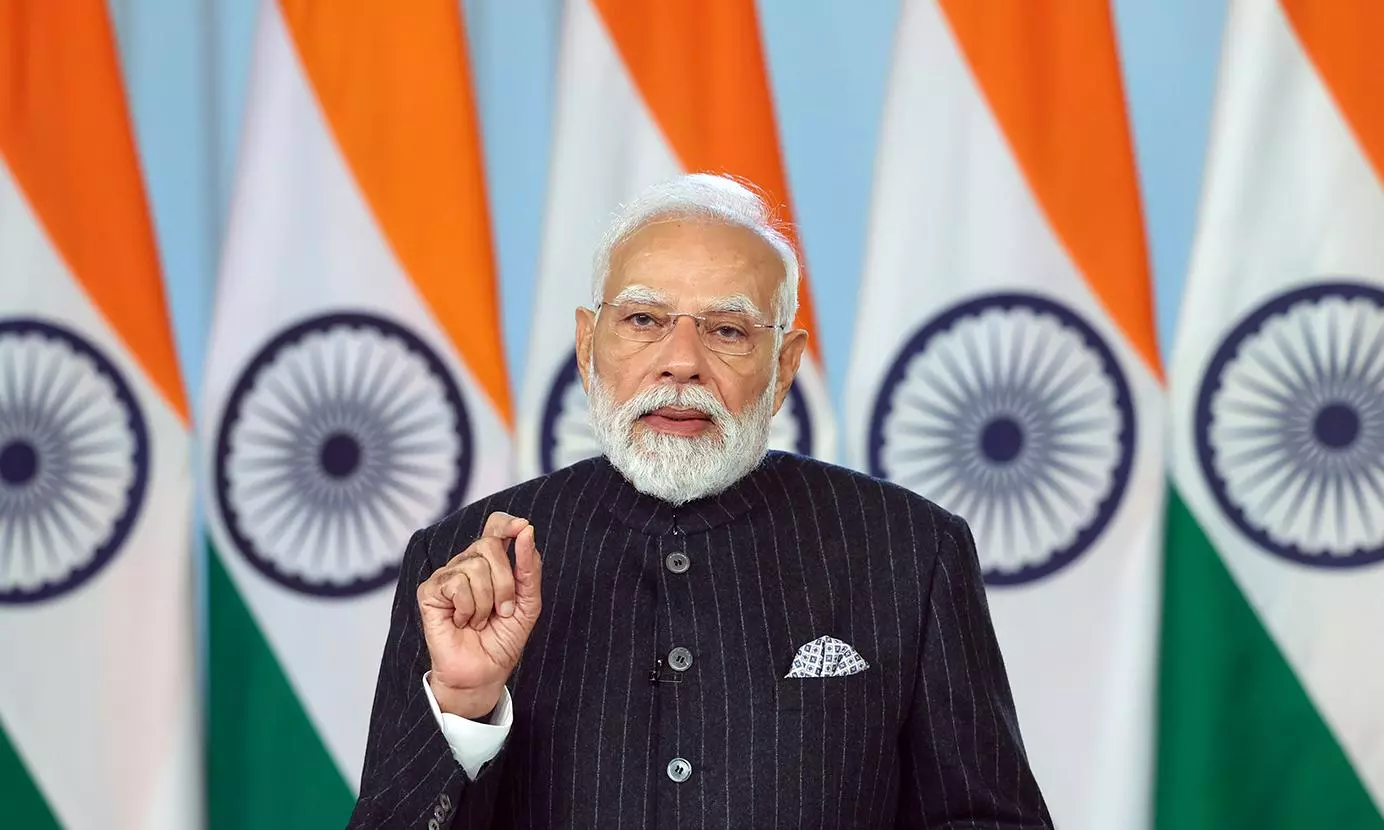
Prime Minister Narendra Modi (File image)
PM said the projects would enhance connectivity, improve operational efficiency, and increase access to tourist destinations across the country
New Delhi: Prime Minister Narendra Modi on Wednesday May 6, 2026 lauded the Union Cabinet’s approval of major railway projects spanning 19 districts across six states, calling it a significant step toward boosting infrastructure and economic growth.
In a post on X, the Prime Minister said the projects would enhance connectivity, improve operational efficiency, and increase access to tourist destinations across the country. He emphasized that the initiatives reflect India’s continued focus on infrastructure development.
The Cabinet Committee on Economic Affairs (CCEA), chaired by the Prime Minister, approved three projects under the Ministry of Railways with an estimated cost of ₹23,437 crore. These include the Nagda–Mathura 3rd and 4th Line, Guntakal–Wadi 3rd and 4th Line, and Burhwal–Sitapur 3rd and 4th Line projects.
According to an official release, the expansion in line capacity will significantly improve mobility, operational efficiency, and service reliability for Indian Railways. The multi-tracking proposals aim to reduce congestion and streamline railway operations.
The projects align with the PM Gati Shakti National Master Plan, focusing on integrated planning and enhanced multi-modal connectivity. They are expected to facilitate seamless movement of passengers, goods, and services across regions.
Covering districts in Madhya Pradesh, Rajasthan, Uttar Pradesh, Karnataka, Andhra Pradesh, and Telangana, the projects will add approximately 901 kilometers to the existing railway network. Around 4,161 villages, with a population of nearly 83 lakh people, are expected to benefit from improved connectivity.
The enhanced railway network will also improve access to major tourist destinations such as Mahakaleshwar, Ranthambore National Park, Kuno National Park, Keoladeo National Park, Mathura, Vrindavan, and Naimisharanya, among others.
Additionally, these routes are vital for transporting key commodities including coal, food grains, cement, petroleum products, iron, steel, and fertilizers. The capacity expansion is projected to enable additional freight traffic of 60 million tonnes annually.
The government noted that the projects will contribute to environmental sustainability by reducing logistics costs, lowering oil imports by 37 crore litres, and cutting CO₂ emissions by 185 crore kilograms—equivalent to planting seven crore trees.
( Source : ANI )