Kumar Bahukhandi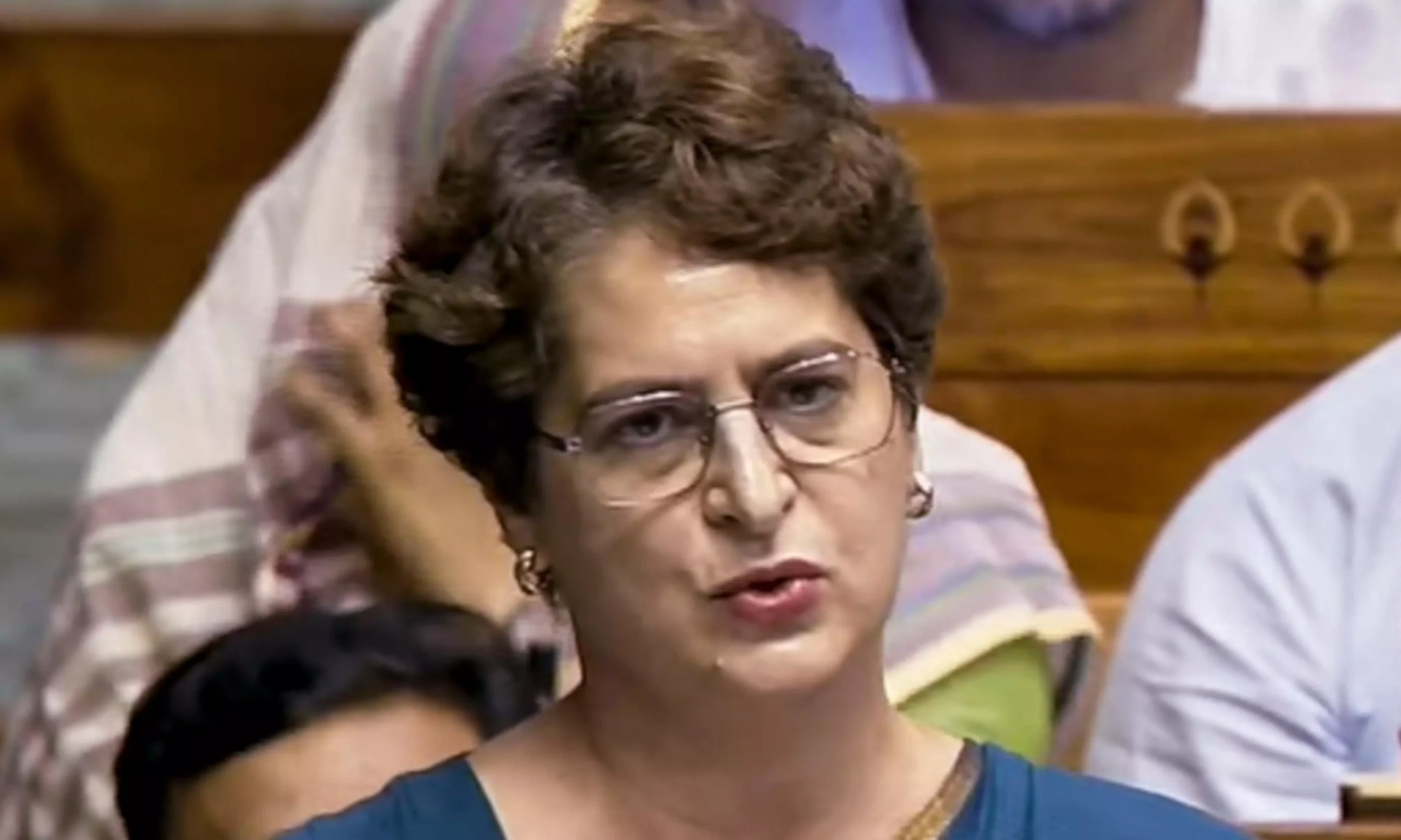
Congress MP Priyanka Gandhi Vadra speaks during the Lok Sabha debate on the Public Examination (Prevention of Unfair Means) Amendment Bill, 2026, where she questioned the police response to student protests over the alleged NEET paper leak and called for greater accountability and reforms in the examination system-Photo Credit-channel24india.com
Priyanka Gandhi questions use of force against CJP-led protesters; Treasury benches defend reforms and accuse Opposition of selective outrage
New Delhi :The Lok Sabha on Tuesday July 28, 2026 witnessed a sharp political exchange over the handling of student protests and the future of India’s examination system as members debated The Public Examination (Prevention of Unfair Means) Amendment Bill, 2026.
Leading the Opposition’s attack, Congress MP Priyanka Gandhi Vadra questioned the police action against students protesting the alleged NEET paper leak under the banner of the Cockroach Janta Party (CJP). She demanded accountability for the reported use of force during the demonstrations and urged the government to explain the decisions taken during the protests.
“Why was it necessary to fire tear gas shells at students, rain lathis on them, or use water cannons against them?”
— Priyanka Gandhi Vadra
The Congress leader alleged that the police action had undermined public confidence and questioned reports regarding the use of pellet guns during the protests. She asked whether the decisions had been authorised at the highest levels of government and said the country deserved clear answers.
She also criticised the alleged use of facial recognition technology against protesters, claiming that students were being subjected to strict policing while those responsible for examination paper leaks had not faced comparable action.
Questioning the newly constituted committee on examination reforms, Vadra argued that it should include a wider range of education and pedagogy experts. She also took aim at the Prime Minister’s outreach to young people, remarking that meaningful engagement with students required substantive policy changes rather than presentation.
“To connect with Gen Z, the Prime Minister needs to change the angle of his thinking, not just the camera angle.”
— Priyanka Gandhi Vadra
Several Opposition leaders, including Gaurav Gogoi (Congress), Akhilesh Yadav (Samajwadi Party), Dayanidhi Maran (DMK), Abhishek Banerjee (TMC) and Supriya Sule (NCP-SP), also criticised the government’s handling of the protests. They alleged that lapses in the examination system had placed enormous psychological and financial pressure on students and called for greater accountability and structural reforms.
Gaurav Gogoi argued that the amendment bill was introduced only after sustained public pressure from students, while Akhilesh Yadav criticised the reported police response, comparing it to measures associated with the Emergency period.
On the other hand, members of the ruling BJP defended the government’s record and highlighted the reforms already undertaken to strengthen public examinations.
Bansuri Swaraj, Tejasvi Surya and Anurag Thakur accused the Opposition of displaying “selective outrage,” arguing that examination paper leaks had also occurred during previous governments. They maintained that the present administration had introduced significant legislative and institutional measures to improve transparency and integrity in the examination system.
Despite the political confrontation, both the Treasury benches and the Opposition broadly agreed that India’s public examination system requires comprehensive reforms to restore credibility and protect the interests of students.
The debate reflected rare bipartisan consensus on the need to strengthen examination processes while exposing sharp divisions over how recent student protests were handled and who should be held accountable for lapses in the system.