Kumar Bahukhandi
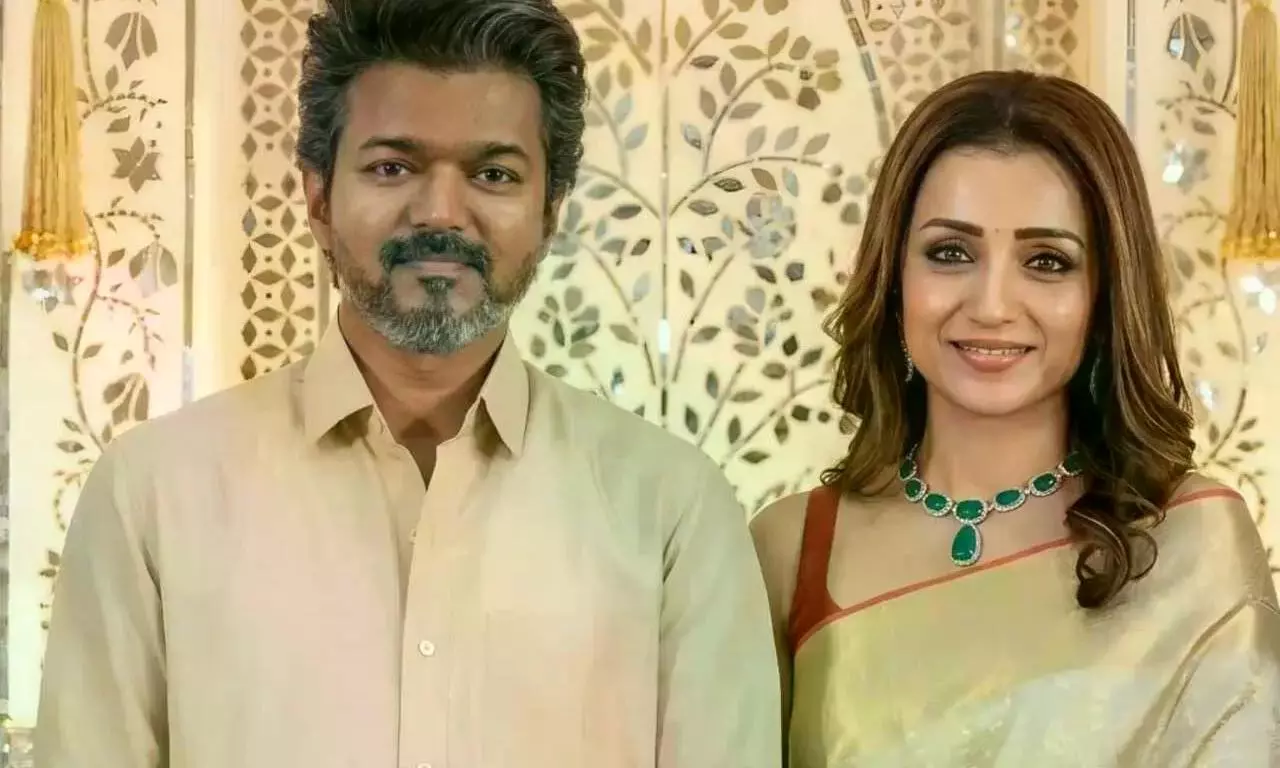
Tamil Nadu Chief Minister C Joseph Vijay with actor Trisha (R) in an undated photograph. Trisha has been drawn into a political controversy after AIADMK leader R B Udayakumar sarcastically asked when the Chief Minister would appoint her as his Deputy CM while questioning appointments made by the Vijay government-Photo Source :Internet
AIADMK leader R B Udayakumar’s “When will Trisha be Deputy CM?” jibe may have been intended as an attack on alleged political patronage, but dragging an actor into the argument raises a larger question about the boundaries of political discourse.
Politics thrives on criticism. Governments must be questioned over appointments, favouritism, conflicts of interest and the use of public office. Opposition parties not only have the right to raise such issues; in a democracy, they have a responsibility to do so.
But there is a difference between political criticism and personal insinuation.
That distinction has again come into focus in Tamil Nadu after AIADMK leader R B Udayakumar reportedly took a swipe at Chief Minister C Joseph Vijay by asking when actor Trisha, who has worked with Vijay in several films, would be made Deputy Chief Minister.
Udayakumar’s broader argument deserves political scrutiny. In a video that went viral, the former minister questioned appointments allegedly given to individuals professionally associated with Vijay during his film career. He referred to appointments ranging from government advisers and a special representative in New Delhi to positions connected with temples and the state film training institute.
If an opposition leader believes such appointments demonstrate favouritism, there is nothing improper about demanding answers. Who was appointed? What qualifications did they possess? What procedure was followed? Was there transparency? These are legitimate questions.
The problem begins when the argument shifts from appointments that can be examined on facts to a sarcastic reference involving a woman who is not shown to have anything to do with those decisions.
Why Bring Trisha Into It?
Trisha is a public figure and a prominent actor. That does not automatically make her personal or professional association with another actor legitimate ammunition in every political battle involving that person.
Asking sarcastically when she would become Deputy Chief Minister does little to establish whether the government’s appointments were justified. Instead, it risks reducing a serious allegation about governance to a personal taunt.
This is particularly troubling because women in public life and entertainment are frequently pulled into political controversies through insinuations about their relationships with powerful men. Such references attract attention, but they rarely contribute evidence to the argument being made.
If there is evidence that Trisha has been considered for public office, politicians are entitled to question it. If there is none, her name should not become shorthand for an allegation of political favouritism.
Criticise the Chief Minister, Not an Uninvolved Individual
Vijay, as Chief Minister, cannot expect immunity from sharp criticism. His government’s appointments, policies and administrative decisions belong in the public domain and should withstand opposition scrutiny.
If people from his cinema career have received important government positions, the opposition can place the entire list before the public and ask the government to explain the criteria behind every appointment.
That would be powerful political criticism because it would be based on facts.
A personal jibe involving Trisha actually risks weakening that argument. Instead of forcing a discussion about transparency in appointments, the controversy shifts towards whether the remark itself crossed a line.
The episode comes against an already charged political background, following controversy over alleged insulting remarks concerning the actor. That makes restraint even more important. One objectionable personal comment cannot become justification for another.
Political Speech Needs Boundaries
Freedom of political expression must remain wide. Satire, sarcasm and even uncomfortable criticism are part of democratic politics. Politicians should not be shielded merely because criticism is harsh.
But freedom of expression does not require abandoning judgment.
There is a simple test political leaders could apply: Is the person being named directly relevant to the public issue being questioned?
If yes, ask the toughest questions possible.
If not, particularly when the reference relies on speculation about personal relationships, leave that person out of the political crossfire.
Tamil Nadu’s political parties have enough substantive issues to debate — governance, employment, welfare, investment, law and order, public finances and administrative appointments among them. None requires turning a woman actor into a political punchline.
The strongest opposition is not the one that delivers the sharpest personal insult. It is the one that asks the hardest question and backs it with evidence.