Kumar Bahukhandi
Delhi : Rajya Sabha Cash Row: A case of finding bundles of notes has come to light in the upper house of Parliament, Rajya Sabha. This bundle was recovered during the investigation of the House after the proceedings on Thursday. Union Ministers Kiren Rijiju and Piyush Goyal have now said that this matter will be investigated.
There is continuous uproar in the winter session of Parliament. The uproar intensified on Friday when information about finding a bundle of notes in the Rajya Sabha came to light. During the investigation of the House after the proceedings on Thursday, a bundle of notes was found from the seat allotted to Congress MP Abhishek Manu Singhvi. However, Singhvi denied the allegations and said that he goes to Parliament with only one note of Rs 500.
At present, there is a demand for an investigation into the discovery of bundles of notes. Union Minister and Rajya Sabha BJP MP JP Nadda said that this incident is not normal and it is an attack on the dignity of the House. The Chairman should investigate the incident. Union Ministers Kiren Rijiju and Piyush Goyal also talked about investigating the matter. This is not the first controversy related to money in the House. Earlier also, different cases related to this money have come up. Sometimes MPs were accused of taking money to vote, sometimes they were accused of asking questions in exchange for money. Sometimes the MPs themselves waved bundles of notes in the House, sometimes an MLA was accused of taking money to vote in the Rajya Sabha elections.
Let us know when did the ruckus happen in the Parliament regarding currency notes? What came out in the investigation of these cases?
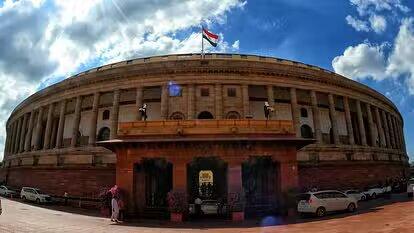
Old Parliament House – Photo: ANI
JMM leaders accused of taking bribe
Congress won the 1991 Lok Sabha elections and PV Narasimha Rao was made the Prime Minister of the country. Nearly two years after the elections, in July 1993, the Narasimha Rao government faced a no-confidence vote. However, the no-confidence motion against the government fell by 14 votes when 251 votes were cast in favor and 265 against. According to news agency PTI, Shibu Soren and his four MPs took bribe to vote against the no-confidence motion against the then PV Narasimha Rao government. The Narasimha Rao government, which was in minority, survived the no-confidence motion with their support. After this, a complaint was filed under the Prevention of Corruption Act, 1988 (PCA) alleging that some MPs were bribed to vote against the no-confidence motion.
Later this matter reached the Supreme Court of the country. In the court, the MPs accused of taking bribe gave two important arguments in their defense. The first argument was that they were immune under Article 105 of the Constitution for any vote cast by them in Parliament and any act connected with the casting of such vote. The second argument was that MPs do not hold public office and hence cannot be brought under the ambit of the PCA. The court agreed with these arguments and delivered the verdict in April 1998 by a majority of three to two. It said that MPs are immune from prosecution not only for the votes cast by them in Parliament but also for any act connected with the voting.
However, in 2024, a seven-judge Constitution Bench of the Supreme Court headed by then Chief Justice DY Chandrachud overturned the 1998 verdict. The court refused to grant immunity to MPs-MLAs from criminal prosecution in the cash-for-vote case and said that bribery cannot be exempted under parliamentary privilege.
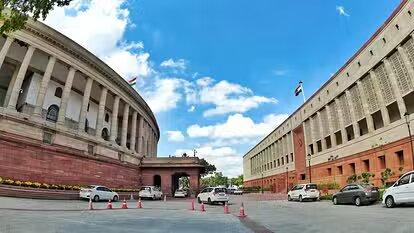
Old Parliament House – Photo: ANI
Notes were waved in the Parliament, many leaders even went to jail
The note scandal of 2008 was also in the news when allegations of note for vote were made. Actually, on 22 July 2008, during the trust vote in the Lok Sabha, BJP MPs waved bundles of notes. BJP MPs alleged that this amount was given to them to vote in favour of the trust vote. This incident happened at the time when the Left Front withdrew its support from the UPA-1 government on the issue of India-US nuclear deal. Seven people were accused in this case, including former SP leader Amar Singh, BJP leader LK Advani’s former aide Sudheendra Kulkarni, BJP worker Sohail Hindustani and three BJP MPs Ashok Argal, Faggan Singh Kulaste and Mahavir Bhagora. In this case, Amar Singh and Sudheendra Kulkarni had to spend 49 and 52 days in jail, while Faggan Kulaste, Mahavir Bhagora and Sohail Hindustani were jailed for two-three months each.
However, in 2013, in a major relief to three BJP leaders, including Amar Singh, Sudheendra Kulkarni and two MPs, the court gave them a clean chit in the 2008 cash-for-vote case. The court said the facts on record did not constitute sufficient grounds for proceeding against them. However, only one of the seven accused, Amar Singh’s former aide Sanjeev Saxena, was ordered to be proceeded against under Section 12 (abetment of offence relating to illegal gain to public servant) of the Prevention of Corruption Act. He was acquitted of criminal conspiracy.
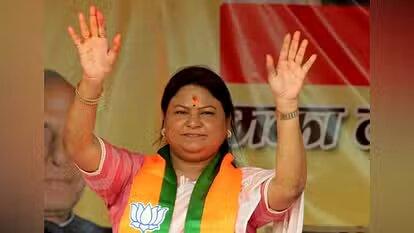
Sita Soren (File) – Photo: ANI
Sita Soren accused of taking bribe
In 2012, Sita Soren, the then MLA of Jharkhand Mukti Morcha, was accused of taking bribe to vote for a candidate in the Rajya Sabha elections 2012. Later, when the Election Commission found that the Rajya Sabha elections were compromised, the elections were canceled. A criminal case was registered against her in this case. However, Sita Soren approached the Jharkhand High Court claiming legislative immunity. During the hearing, Sita Soren defended herself by citing the Narasimha Rao case. However, the Jharkhand High Court rejected Sita Soren’s petition claiming legislative immunity.
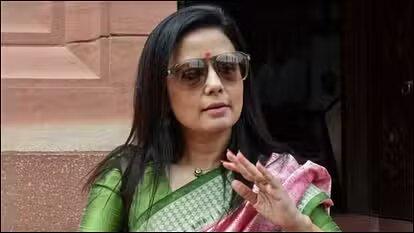
Mahua Moitra (File) – Photo: ANI
Mahua Moitra’s membership of Parliament was taken away on the charge of taking bribe in exchange for questions
In 2023, Trinamool Congress MP Mahua Moitra was accused of asking questions in Parliament at the behest of businessman Darshan Hiranandani. In October 2023, BJP MP Nishikant Dubey filed a complaint against Trinamool Congress leader Mahua Moitra. After this, Mahua Moitra’s Lok Sabha membership was canceled in December 2023. This decision was taken in the Lok Sabha after the Parliamentary Ethics Committee, which was investigating the allegations of asking questions in Parliament for money, submitted its report. In this report, it was recommended to end Mahua’s membership of Parliament. Later, the CBI and ED also registered separate cases in this matter and the investigation is going on.