Kumar Bahukhandi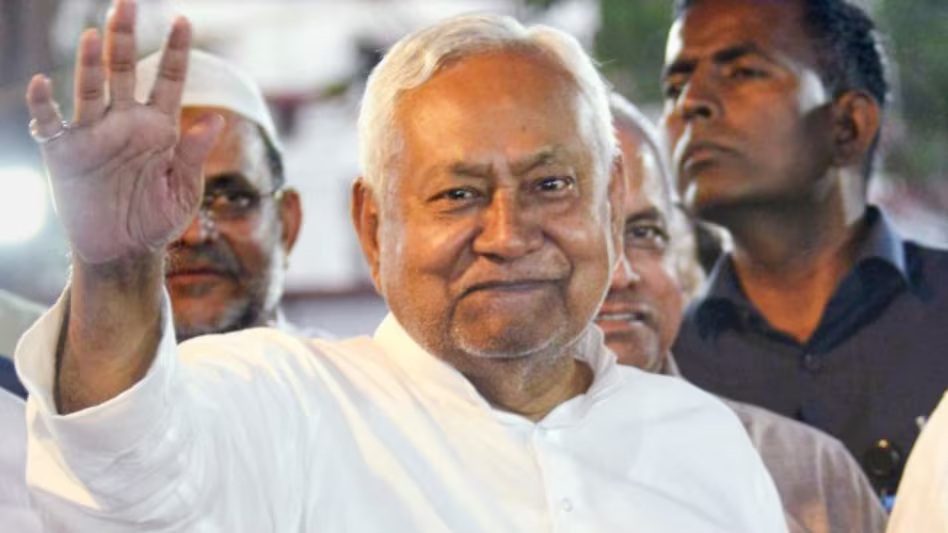
In the Bihar Rajya Sabha elections, all five NDA candidates—including Nitish Kumar and Nitin Navin—emerged victorious. (File Photo )
The results of the elections held for 37 Rajya Sabha seats across 10 states—including Bihar—revealed several interesting developments. In Bihar, Odisha, and Haryana, 26 candidates were elected unopposed. Meanwhile, the NDA won all five seats in Bihar, while in Odisha, the BJP secured two seats due to cross-voting by BJD and Congress MLAs. In Haryana, vote counting was stalled for nearly five hours amidst a dispute regarding the secrecy of the ballot, and the results were declared late at night.
Elections for 37 Rajya Sabha seats were held across 10 states on Monday. In seven of these states—Assam, West Bengal, Chhattisgarh, Tamil Nadu, Maharashtra, Himachal Pradesh, and Telangana—26 candidates were elected unopposed. Voting was required for the remaining 11 seats in Bihar, Odisha, and Haryana. Of these, Bihar accounted for 5 seats, Odisha for 4, and Haryana for 2. In Haryana, both the BJP and the Congress lodged objections with the Election Commission regarding an alleged violation of ballot secrecy; this caused the vote counting to be halted for five hours, leading to the results being announced late at night.
The Rajya Sabha elections in Bihar garnered the most attention. From this state, Chief Minister Nitish Kumar, BJP National President Nitin Navin, Upendra Kushwaha, Ramnath Thakur, and Shivesh Kumar were in the electoral fray as candidates representing the National Democratic Alliance (NDA). Conversely, the Mahagathbandhan (Grand Alliance) had fielded Amarendra Dhari Singh as its candidate. The NDA achieved victory in all five Rajya Sabha seats in Bihar. All 202 of its MLAs participated in the voting process. Nitish Kumar received the votes of 44 MLAs, while Nitin Navin also secured the support of 44 MLAs.
Rashtriya Lok Morcha leader Upendra Kushwaha received the votes of 42 MLAs, and Ramnath Thakur, too, garnered the support of 42 MLAs. A neck-and-neck contest was witnessed between the NDA and Mahagathbandhan candidates for the fifth seat. However, four MLAs from the Mahagathbandhan abstained from voting, a situation that ultimately benefited the NDA candidate, Shivesh Kumar. He defeated the Mahagathbandhan (Grand Alliance) candidate, Amarendra Dhari Singh, based on second-preference votes. Shivyesh Kumar secured a total vote value of 4,202, while Amarendra Dhari Singh received a total vote value of 3,700. In terms of first-preference votes, the Mahagathbandhan candidate, Amarendra Dhari Singh, led the NDA’s Shivyesh Kumar with 37 votes.
4 Mahagathbandhan MLAs Did Not Cast Their Votes; NDA Wins
Shivyesh Kumar received 30 first-preference votes. However, following the counting of second-preference votes, Shivyesh Kumar’s total vote tally increased, whereas Amarendra Dhari Singh did not receive a single second-preference vote. The Mahagathbandhan legislators who abstained from voting included the Congress party’s Manohar Prasad, Surendra Kushwaha, and Manoj Vishwas, as well as the RJD’s Faisal Rahman. In Bihar, the National Democratic Alliance (NDA) comprises Nitish Kumar’s JD(U), the Chirag Paswan-led Lok Janshakti Party (Ram Vilas), the Jitan Ram Manjhi-led Hindustani Awam Morcha (Secular), and Upendra Kushwaha’s Rashtriya Lok Morcha.
Conversely, the Mahagathbandhan consists of the Rashtriya Janata Dal (RJD), the Congress, and various Left parties. However, 5 MLAs from Asaduddin Owaisi’s party, AIMIM, and 1 MLA from the BSP cast their votes in favor of the Mahagathbandhan candidate. Had the 3 Congress MLAs and the 1 RJD MLA not abstained from voting, the Mahagathbandhan candidate, Amarendra Dhari Singh, would have won easily. According to the formula for Rajya Sabha elections in Bihar, had all 243 legislators participated in the voting process, each candidate would have required a minimum of 41 votes to secure a victory.
BJP Wins Two of Four Rajya Sabha Seats in Odisha
In a fiercely contested election in Odisha—marked by cross-voting among some legislators from the Biju Janata Dal (BJD) and Congress, as well as intense political maneuvering—the BJP successfully secured two Rajya Sabha seats. The election held for the four Rajya Sabha seats in the state witnessed considerable drama and tension. The voting process was briefly disrupted amidst allegations of violations regarding the secrecy of the ballot and attempts to influence the voting. Senior BJP leader and President of the party’s Odisha unit, Manmohan Samal, successfully won his seat.
Another BJP candidate and incumbent Rajya Sabha member, Sujit Kumar, was also re-elected to the Upper House. In a significant development, former Union Minister Dilip Ray emerged victorious as a BJP-backed independent candidate. Cross-voting by several BJD and Congress legislators paved the way for his victory. According to BJD sources, approximately eight party legislators cross-voted in favor of Dilip Ray, thereby influencing the outcome of the Rajya Sabha election. From the Biju Janata Dal, Santrupt Mishra secured a victory.
Fate of Haryana Rajya Sabha Election Decided Late at Night
Prior to the vote counting for the Haryana Rajya Sabha election, both the Congress and the BJP raised objections regarding the secrecy of votes cast by certain legislators. These objections alleged that during the voting process, ballot papers were displayed to unauthorized individuals, thereby violating secrecy norms. The Congress party lodged an objection concerning the secrecy of the ballot cast by BJP MLA and Cabinet Minister Anil Vij. Conversely, the BJP raised objections regarding the secrecy of the ballots cast by Congress MLAs Paramvir Singh and Bharat Beniwal. Both parties alleged that the secrecy of the vote was not properly maintained while displaying the ballot papers to authorized agents, and that the marked ballots were visible to individuals other than the authorized agents.
Congress President Mallikarjun Kharge wrote to the Election Commission, alleging “interference” in the Haryana Rajya Sabha election. Late at night, the Election Commission disposed of two out of the three objections raised collectively by the Congress and the BJP. The Commission rejected the Congress party’s petition seeking to invalidate the vote cast by BJP MLA and Cabinet Minister Anil Vij; consequently, Anil Vij’s vote was declared valid. Additionally, the Election Commission upheld the validity of the vote cast by Congress MLA Bharat Beniwal. However, the Commission accepted the BJP’s petition to invalidate the vote cast by another Congress MLA, Paramvir Singh; his vote was subsequently declared invalid. Following these rulings, the counting of votes for the Haryana Rajya Sabha election commenced. Three candidates were in the fray for the two Rajya Sabha seats in Haryana: the BJP fielded Sanjay Bhatia as its official candidate and extended its support to independent candidate Satish Nandal, while the Congress party nominated Karamvir Singh Bidhuri as its candidate.
Due to the dispute between the Congress and the BJP, the final outcome was delayed until late into the night. Ultimately, Karamvir Singh Bidhuri of the Congress and Sanjay Bhatia of the BJP emerged victorious. Rajya Sabha Election Results in 7 Other States
Himachal Pradesh (1 Seat)
Anurag Sharma – Congress – Elected Uncontested
Telangana (2 Seats)
Abhishek Manu Singhvi – Congress – Elected Uncontested
Vem Narender Reddy – Congress – Elected Uncontested
Chhattisgarh (2 Seats)
Lakshmi Verma – BJP – Elected Uncontested
Phulo Devi Netam – BJP – Elected Uncontested
Assam (3 Seats)
Jogen Mohan – BJP – Elected Uncontested
Terash Gowalla – BJP – Elected Uncontested
Pramod Boro – UPPL – Elected Uncontested
Tamil Nadu (6 Seats)
Tiruchi Siva – DMK – Elected Uncontested
J. Constantine Ravindran – DMK – Elected Uncontested
M. Thambidurai – AIADMK – Elected Uncontested
Anbumani Ramadoss – PMK – Elected Uncontested
M. Christopher Tilak – Congress – Elected Uncontested
L. K. Sudheesh – DMDK – Elected Uncontested
West Bengal (5 Seats)
Babul Supriyo – TMC – Elected Uncontested
Rajiv Kumar – TMC – Elected Uncontested
Menaka Guruswamy – TMC – Elected Uncontested
Koel Mallick – TMC – Elected Uncontested
Rahul Sinha – BJP – Elected Uncontested
Maharashtra (7 Seats)
Vinod Tawde – BJP – Elected Uncontested
Ramrao Wadkute – BJP – Elected Uncontested
Maya Ivnate – BJP – Elected Uncontested
Ramdas Athawale – RPI – Elected Uncontested
Jyoti Waghmare – Shiv Sena – Elected Uncontested
Parth Pawar – NCP – Elected Uncontested
Sharad Pawar – NCP (SP) – Elected Uncontested
Haryana
Karamvir Singh Baudh – Congress
Sanjay Bhatia – BJP