Kumar Bahukhandi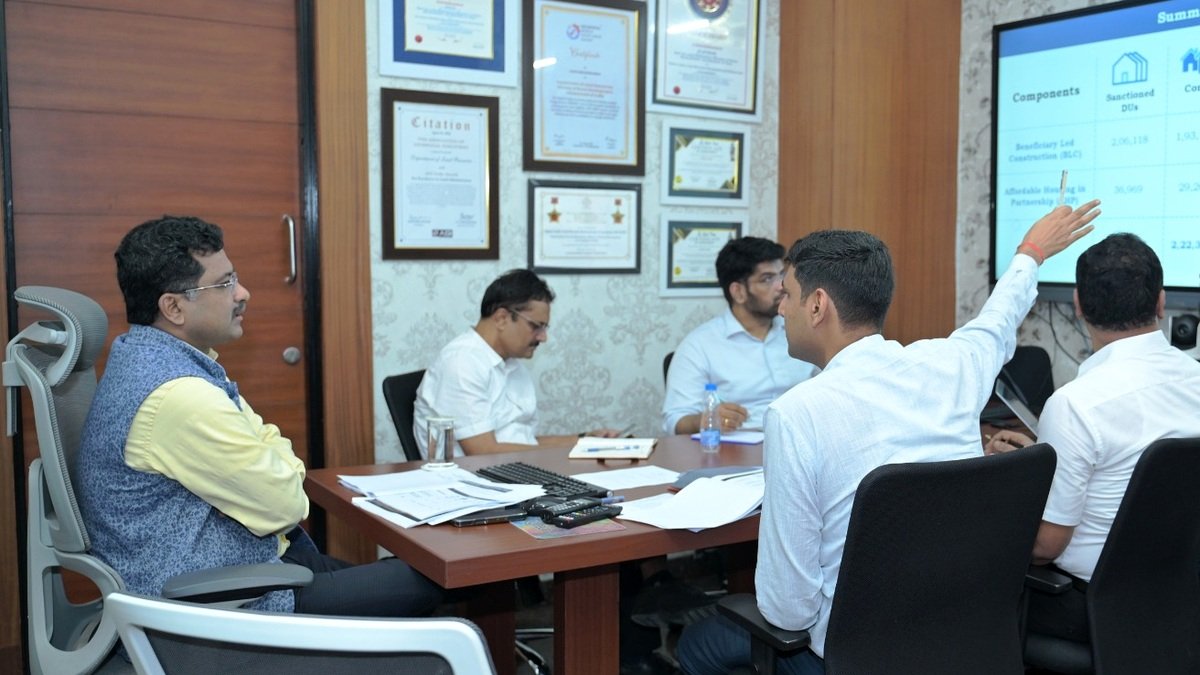
Urban Administration and Development Department Principal Secretary Sonmoni Borah instructs senior officials during a meeting at the Mantralaya in Raipur on Monday, August 24, 2026. Borah set priorities and timelines for the proposed e-bus network, PMAY-Urban housing, waste-to-energy projects and works under the 15th Finance Commission-channel24india.com via CG/DPR
Urban Administration Principal Secretary directs citizen-friendly e-bus routes, completion of ongoing PMAY-U houses by September 30 and a financially sustainable model for waste-to-energy projects
Key Factors
- Raipur’s proposed e-bus routes to connect schools, colleges, hospitals, tourist spots and other important destinations
- PMAY-Urban 1.0 houses under construction to be completed by September 30, 2026
- Weekly targets and special drives to accelerate completion of pending urban houses
- Waste-to-energy projects to undergo detailed technical and financial viability assessment
- Urban bodies asked to identify infrastructure gaps before planning works under the 15th Finance Commission
Urban Administration and Development Department Principal Secretary Sonmoni Borah on Monday, August 24, 2026, held a meeting with senior officials at the Mantralaya in Raipur, setting timelines and priorities for major urban development initiatives, including the proposed e-bus network, PMAY-Urban housing, waste-to-energy projects and works under the 15th Finance Commission.
Borah emphasised that public convenience, realistic planning, timely implementation, financial viability and long-term sustainability should remain central to the execution of urban development schemes.
“Implementation of urban development schemes must give priority to public convenience, comprehensive planning, timelines, financial viability and long-term sustainability.” — Sonmoni Borah
He directed officials to regularly monitor progress and ensure that targets are achieved within the prescribed timelines. SUDA Chief Executive Officer Sumit Agrawal was among the officials present at the meeting.
On the proposed e-bus network in Raipur, Borah called for a comprehensive route plan designed around the everyday requirements of citizens rather than merely operating buses between selected points.
He directed officials to consider schools, colleges, hospitals, major tourist attractions and other important destinations while designing routes so that different parts of the city receive better public transport connectivity.
Officials have also been asked to prepare a detailed survey plan assessing passenger movement, route feasibility and connectivity before finalising the network.
Borah directed that bus stops should be identified according to passenger requirements and convenience, while possibilities under the public-private partnership model should also be examined.
The fare structure, he said, should take into account both passenger convenience and the paying capacity of ordinary citizens.
Technology is also expected to form an important part of the proposed system. Borah asked officials to develop technology-based arrangements covering routes, bus stops, bus availability and passenger services to make public transport easier, safer and more accessible.
September 30 Deadline for PMAY-U Houses
A major focus of the meeting was the completion of houses still under construction under Pradhan Mantri Awas Yojana-Urban (PMAY-U) 1.0.
Borah directed officials to complete the ongoing houses by September 30, 2026, the stipulated final date of the mission period.
“Weekly targets should be fixed and a special drive undertaken to ensure that the remaining houses are completed within the mission period.” — Sonmoni Borah
Urban local bodies have been asked to set weekly targets according to the number of remaining and under-construction houses and complete them in mission mode.
District Collectors have also been asked to set clear targets for the remaining houses in their respective districts and continuously monitor progress. Borah stressed better coordination between district administrations and urban local bodies, particularly where construction has been delayed.
Technical, administrative and other obstacles affecting construction are to be identified and resolved within specified timelines.
Importantly for beneficiaries, Borah directed that instalments under the housing scheme should be released on time in accordance with the actual progress of construction and provisions of the scheme so that shortage of funds does not slow work.
The meeting also examined proposed waste-to-energy projects under Swachh Bharat Mission-Urban 2.0. Borah sought detailed assessment of the identified clusters, technical feasibility and financial implications of the projects.
He stressed that converting municipal waste into energy could contribute to scientific waste management, but projects must also remain financially viable over the long term.
Officials were therefore asked to assess the possible financial liabilities for both the state government and urban local bodies, as well as the resources that would be required for future operation of the projects.
Potential participation of experienced private players under the PPP model will also be assessed, including their investment interest and expectations. Responsibilities and financial participation among the state government, urban bodies and private partners are to be clearly defined before proposals move forward.
The Principal Secretary also called for more systematic use of funds received under the 15th Finance Commission.
Instead of taking up scattered road and infrastructure works, he directed urban bodies to plan them as part of the overall requirements and future development of cities. Road projects should be prioritised after assessing traffic pressure, connectivity, existing conditions and actual need.
Borah also emphasised gap analysis to identify areas where basic urban services remain inadequate.
Urban bodies have been asked to assess deficiencies in roads, drains, drinking water, street lighting and other essential infrastructure and prepare priority-based plans accordingly.
The approach, according to the directions issued at the meeting, is intended to ensure that limited financial resources are directed towards areas where infrastructure deficiencies are greatest and can produce measurable benefits for residents.