Kumar Bahukhandi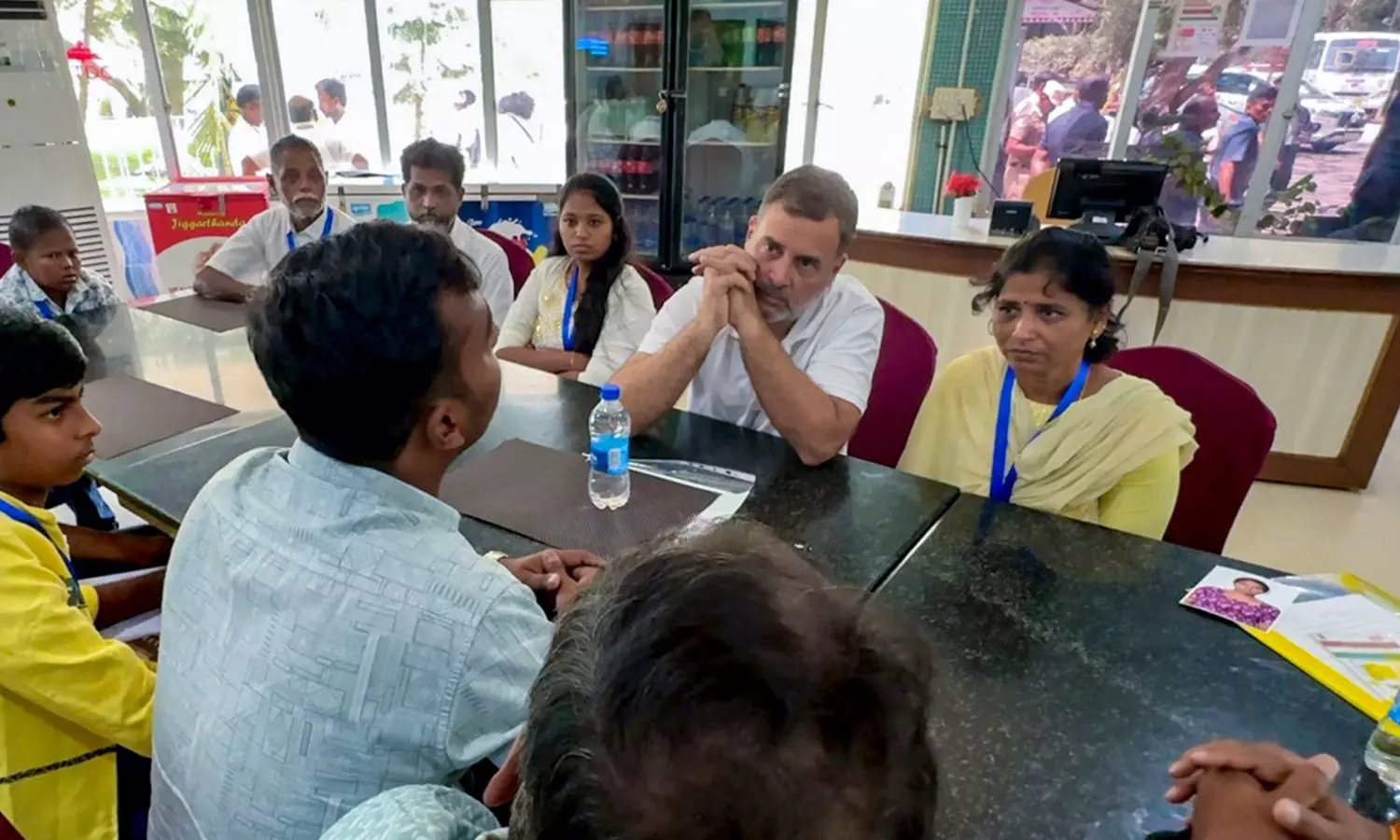
Congress leader Rahul Gandhi interacts with family members of students who died by suicide following the NEET controversy during his visit to Mamallapuram, Tamil Nadu, on Saturday August 1, 2026 -Photo Credit – Social media pages of Rahul Gandhi
Meeting bereaved NEET families may send a message, but can it heal their pain—or does it risk reopening wounds?
The death of a young student is perhaps the greatest tragedy any family can endure. When those deaths are linked to an examination system that millions of students depend upon, the tragedy becomes a national concern. Every political leader has the right—and arguably the responsibility—to raise questions about such a system.
Congress leader Rahul Gandhi’s meeting with families of students who died by suicide in the wake of the NEET controversy has once again brought this debate into the spotlight. He criticised Prime Minister Narendra Modi, saying students do not need the Prime Minister’s “forgiveness” but an apology for what he described as a corrupt examination system.
His criticism is politically expected. The Opposition’s role is to question the government. But another question deserves equal attention.
Does meeting grieving families truly help them, or does it place them back in the centre of political conflict?
No one can deny that bereaved parents deserve compassion. Listening to them is important. Standing with them is important. But when such meetings are accompanied by political messaging, television cameras and social media campaigns, the line between empathy and political strategy becomes blurred.
One may ask whether a private meeting, away from cameras, would have served the families better. Grief is deeply personal. It is difficult to measure whether repeated public attention helps people recover or compels them to relive their worst memories.
Rahul Gandhi argued that the Prime Minister did not visit a single grieving family.
“India’s students do not need his forgiveness; they need his apology,” he said.
That statement is now part of the political debate. But another perspective also exists.
Should national leaders personally visit every victim’s family after every tragedy? If they do not, does it automatically imply indifference? Governance is often judged through institutional response, investigations, policy reforms and accountability rather than only symbolic visits.
Similarly, the Prime Minister’s appeal that “misguided children should be forgiven and guided on the right path” was interpreted differently across the political spectrum. Supporters viewed it as a call for compassion, while critics argued it overlooked the larger issue of examination integrity.
The real issue, however, remains the examination system itself.
Students invest years preparing for competitive examinations. Every paper leak, cancellation or irregularity shakes their confidence. Political arguments may dominate headlines for a few days, but parents want something far more permanent—an examination system they can trust.
If politicians visit grieving families, the purpose should extend beyond expressing sympathy. Such meetings should translate into concrete reforms, stronger anti-paper leak mechanisms, transparent investigations and accountability.
Otherwise, every visit risks becoming another political event while the fundamental problems remain unresolved.
In the end, there is no political victory in a parent’s grief.
Whether it is the government or the Opposition, every leader should remember that these families are not campaign platforms. They are people whose lives have changed forever.
The country certainly needs accountability.
It also needs sensitivity.
And above all, it needs an examination system where no student ever feels that years of honest hard work can be destroyed overnight.
My Views
Political leaders have every right to question governments and demand accountability. But when engaging with grieving families, empathy should never become a backdrop for political messaging. The true tribute to students who lost their lives will not be speeches or photo opportunities—it will be lasting reforms that restore trust in India’s examination system.