Kumar Bahukhandi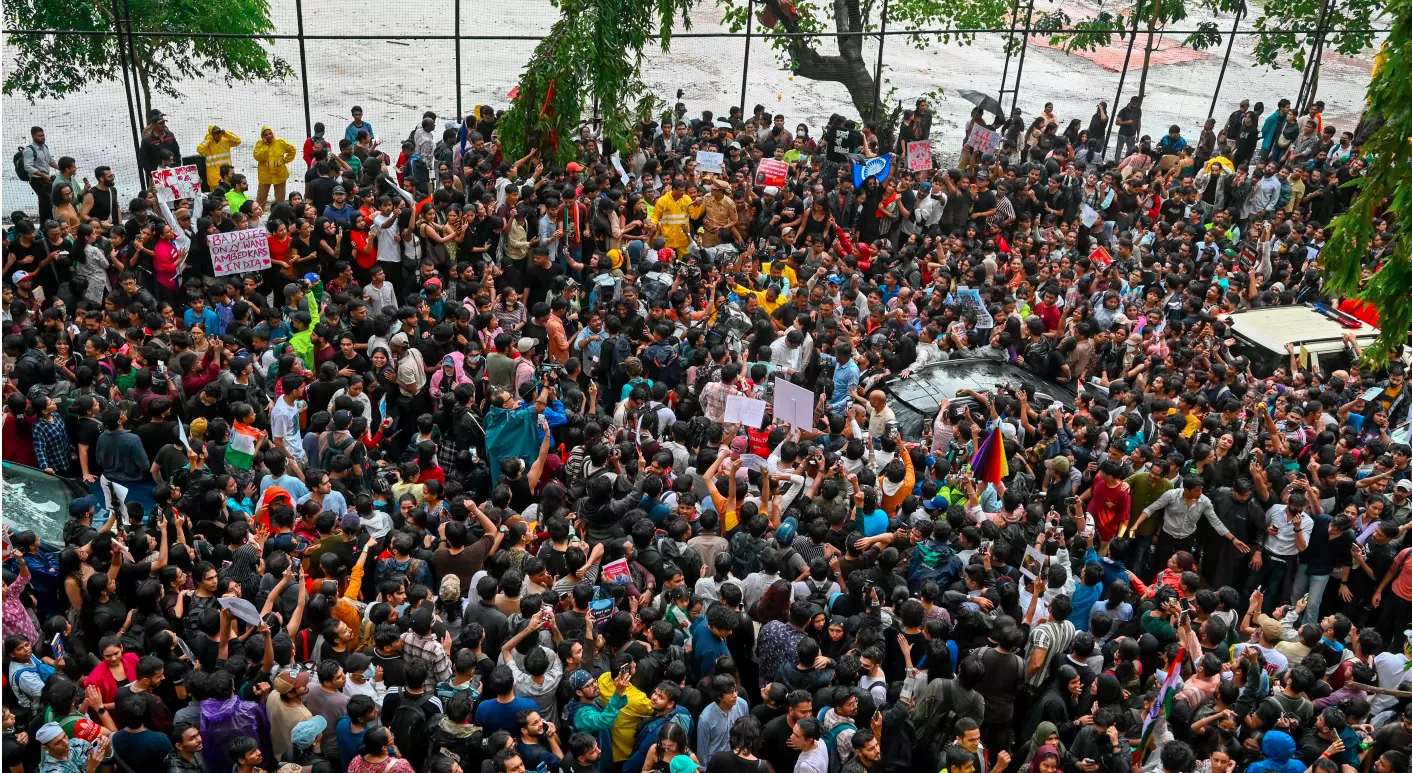
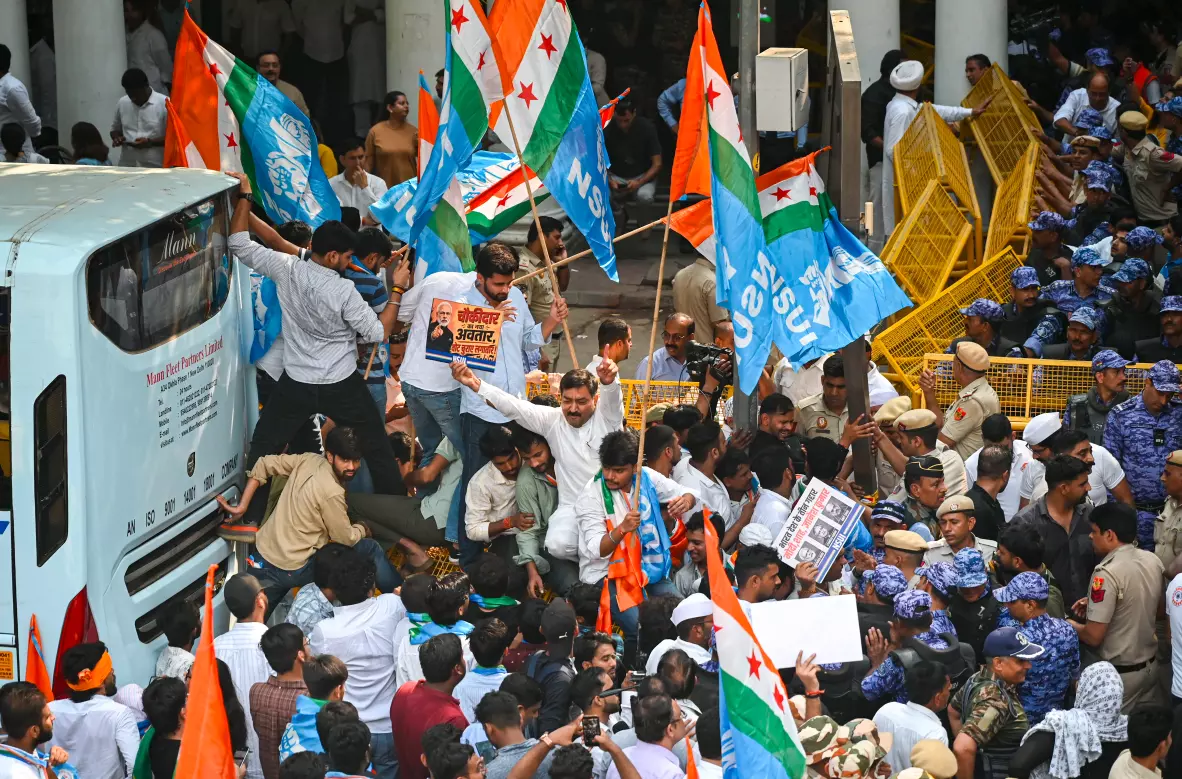
Thousands of demonstrators gather during the ‘Sansad Chalo’ march in New Delhi as protests over alleged examination irregularities intensify, with subsequent reports of serious injuries raising questions about crowd-control measures and the need for an impartial investigation-Photo Credit-channel24india.com (File Photo)
IN Short
- Dozens of protesters reportedly sustained injuries during the “Sansad Chalo” demonstration.
- A 19-year-old student preparing for police service is reportedly fighting to save his eyesight after suffering a severe eye injury.
- Delhi Police has denied allegations that pellet guns were used during crowd control.
- Serious allegations involving permanent injuries warrant an independent, transparent investigation.
- Police have a legitimate duty to maintain public order, but any use of force must remain lawful, proportionate and accountable.
- Protest organizers also share responsibility for ensuring demonstrations remain peaceful.
- Public confidence depends on establishing the facts through evidence rather than competing political claims.
Questions Over Alleged Pellet Gun Injuries Demand Transparency, Accountability and Justice
The disturbing images emerging from Delhi’s “Sansad Chalo” protest have shifted the national conversation from examination reforms to something even more fundamental—the safety of citizens exercising their democratic rights.
A 19-year-old student reportedly preparing for a career in the police force is now fighting to save the vision in one eye. Another young protester has allegedly suffered multiple pellet injuries to his face. Others remain hospitalized after a stampede-like situation that unfolded during the demonstrations. Whether every allegation ultimately stands judicial scrutiny is a matter for investigation. What is beyond dispute, however, is that dozens of young people were seriously injured during a protest that began with demands for accountability over examination irregularities.
That alone should concern every democracy.
The Delhi Police has categorically denied using pellet guns during the protest. If that is indeed the case, the government must establish the facts quickly and transparently. If pellet injuries have occurred, the public deserves to know how they happened, what weapons or projectiles were used, and under whose authority force was employed.
In matters involving serious bodily injury, silence creates speculation, and speculation weakens public confidence.
The story of Sahil Lochab is particularly heartbreaking. By all accounts, he aspired to wear the same police uniform that now symbolizes the tragedy surrounding his injuries. His dream was to serve the nation through law enforcement. Today, his family waits outside a hospital hoping doctors can save his eyesight.
No democratic society should ignore the irony.
Law enforcement officers perform an extraordinarily difficult task. Maintaining order during large demonstrations often requires split-second decisions in tense circumstances. Police personnel themselves are frequently injured while protecting public property and preventing violence. Their responsibility deserves recognition.
Yet professionalism in policing is measured not only by restoring order but by ensuring that force remains lawful, proportionate and accountable.
If protesters become violent, the State has every legal authority to intervene. Public property must be protected. Lives must be safeguarded. But force should always remain the last resort, and whenever serious injuries occur, every action must withstand public and judicial scrutiny.
The use of pellet-firing weapons has long remained controversial in India because of their potential to cause irreversible eye injuries and permanent disability. Even when deployed under strict operational guidelines, they carry significant human consequences. That is precisely why every allegation involving such injuries deserves an independent and credible examination.
Equally important is the responsibility of protest organizers.
Peaceful demonstrations carry constitutional protection, but organizers also bear a moral and civic duty to ensure that gatherings do not descend into confrontation. Encouraging restraint, cooperating with lawful instructions and preventing violence are essential responsibilities alongside the right to protest.
Democracy functions best when both the State and citizens exercise restraint.
The NEET controversy has already shaken the confidence of millions of students. It would be a profound tragedy if demands for educational accountability now became remembered for hospital wards, eye surgeries and lifelong disabilities.
The debate should no longer revolve around competing narratives alone. It must revolve around evidence.
Were pellet guns or similar projectiles used?
If not, what caused injuries consistent with pellet wounds?
Were standard operating procedures followed?
Could better crowd management have prevented the violence altogether?
These questions deserve answers based on forensic evidence, medical records, independent investigation and judicial oversight—not political rhetoric.
Governments earn public trust not by insisting that nothing went wrong, but by demonstrating the courage to investigate when questions arise.
Justice requires facts.
Compassion requires action.
Democracy requires both.