Kumar Bahukhandi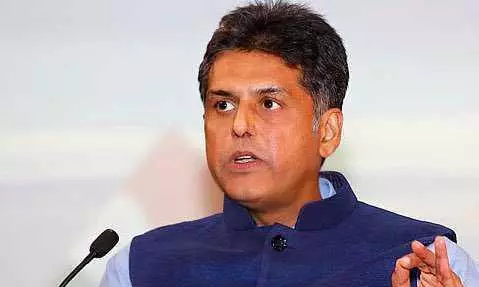
A second administrative commission was constituted on August 31, 2005, under the chairpersonship of M. Veerappa Moily. It also had an extensive 13-point mandate-.Manish Tewari
The government has set up two administrative commissions, the first on January 5, 1966, under the chairpersonship of former Prime Minister Morarji Desai
Having had the honour of being elected to the Lok Sabha from three different Parliamentary constituencies with very diverse topographies, demographics and aspirations, the one common thread that runs through all of them is the absolute ramshackle state of our administrative and governance system.
The Ludhiana parliamentary constituency in Punjab, once famously called the Manchester of India, is home to a myriad number of small and medium enterprises embraced by a hard-core rural periphery where agriculture is the principal occupation.
Sri Anandpur Sahib, again in the Punjab, is predominantly a rural constituency with 1,499 villages, 15 odd municipal councils and one municipal corporation. Chandigarh that I am currently representing, is the capital of both the states of Punjab and Haryana, and is a 114-square-kilometre urban agglomeration.
The case of Chandigarh is unique. While the two adjoining districts of Mohali in Punjab and Panchkula in Haryana are run by one deputy commissioner and one senior superintendent of police, Chandigarh has 11 IAS officers and seven IPS officers to boot. This top-heavy bureaucratic structure institutionalises a paralysis of decision making due to the multi layering of babudom.
As an elected representative, it falls to your remit to interact with the administration for both developmental and administrative reasons.
On both counts the experience is far from satisfactory for a variety of reasons.
My experience across all these three geographical expanses leaves me absolutely convinced that if we do not carry out urgent governance and administrative reforms, we will never be able to punch to our true national potential.
However, before getting into the reasons let us broaden the canvas to encompass the entire nation.
India has a population of 146 crores with a child being born every 2.35 seconds. It hosts 17.7 per cent of the world’s population on 2.4 per cent of its area. Of the 146 crore Indians, 95 crores approximately live in rural areas while 51 odd crores stay in urban areas.
For a substantive bulk of these 95-crore people living in the countryside their contact with the Indian state is primarily with a patwari, at best a kanungo, and rarely a tehsildar on the civil or revenue side. On the law and order or criminal side the bulk of the interface of these people is with either a beat constable, police havildar or at best an assistant sub-inspector in charge of a thana (police station).
Whenever the Indian administration interfaces with the populace, it is not a pleasant occurrence. It is an autocratic, usually extractive and definitely authoritarian experience, to put it mildly. If you happen to live in conflict-prone areas, especially those that are declared as disturbed areas and come within the purview of the Armed Forces (Special Powers) Act (AFSPA), then maybe the only face of the Indian State you would perhaps come across would be one wearing olive green or khaki carrying an AK-47.
The situation is identical in the urban settings, too. The contact of a mass of the people with the government is limited to rent-seeking civic authorities and an exploitive police apparatus. The only saving grace being that people are more easily able to access the instruments of grievance redressal, especially social media, these days.
What is the solution to this problem? One remedy that the political right suggests is mass privatisation of public services. From the late 1970s to the great economic meltdown in 2008, the world witnessed the denationalisation of public services from sewage to railways as the state withdrew from its fundamental role of providing public goods. This phenomenon obtained a fresh push after the collapse of the Soviet instituted command economic model in 1989-90. However, privatisation of public services is a model unsuited to India for the delivery of public services. Where then do we then go from here?
On an average a deputy commissioner/collector (DC) of a district administers a budget of over a 1,000 odd crores for revenue, capital and developmental work. This is a rough and ready back of the envelope estimate as no authentic data seems to exist as to what is the average size of the budget of a district in India. This money flows in both from the Central and state government budgets under different revenue, capital, development and discretionary spending heads.
The DC has a workforce of 1,000 odd people at his disposal The DC’s core team consists of two additional deputy collectors, one looking after general administration and the other development. He is further assisted by sub-divisional magistrates, revenue and civic officials down the line.
Not only is the administrative footprint very light on the ground per capita of population, contrary to popular perception, but even the quality of human resource is very poor to put it politely. There is only one way, bottoms-up administrative re-engineering of both the administrative and law enforcement apparatus.
The government has set up two administrative commissions, the first on January 5, 1966, under the chairpersonship of former Prime Minister Morarji Desai. It had an expansive 10-point remit: The machinery of the Government of India and its procedures or work; the machinery for planning at all levels; Centre-state relationships; financial administration; personnel administration; economic administration; administration at the state level; district administration; agricultural administration and problems of redress of citizens’ grievances.
A second administrative commission was constituted on August 31, 2005, under the chairpersonship of M. Veerappa Moily. It also had an extensive 13-point mandate: Organisational structure of the Government of India; ethics in governance; refurbishing of personnel administration; strengthening of financial management systems; steps to ensure effective administration at the state level; steps to ensure effective district administration; local self-government/panchayati raj institutions; social capital, trust and participative public service delivery; citizen-centric administration; promoting e-governance; issues of federal polity; crisis management and public order.
Both commissions submitted voluminous tomes as reports. However, the bureaucracy ably led in this case by the Indian Administrative Service buried both these reports 10 fathoms deep. Even the political executive has come up short in dismantling colonial era structures of the Mai-Baap Sarkar put in place by the British to oppress Indians.
The one thing that stands out is that no government irrespective of its political colour and character would do any cosmetic administrative reform as well.
It therefore is incumbent on the legislature to step in. The Parliament must constitute a permanent financial committee like the public accounts committee or estimates committee to study, update, recommend and legislate through even the private member bill process a comprehensive across the board administrative reform in the country.
Since the Parliament was elected barely a year ago it has a full 48 months to complete the single most important task confronting the nation.
Manish Tewari is a prominent Indian lawyer and politician, currently serving as a Member of Parliament (MP) in the 18th Lok Sabha, representing Chandigarh. He is a member of the Indian National Congress (INC) and a National Spokesperson for the party