Kumar Bahukhandi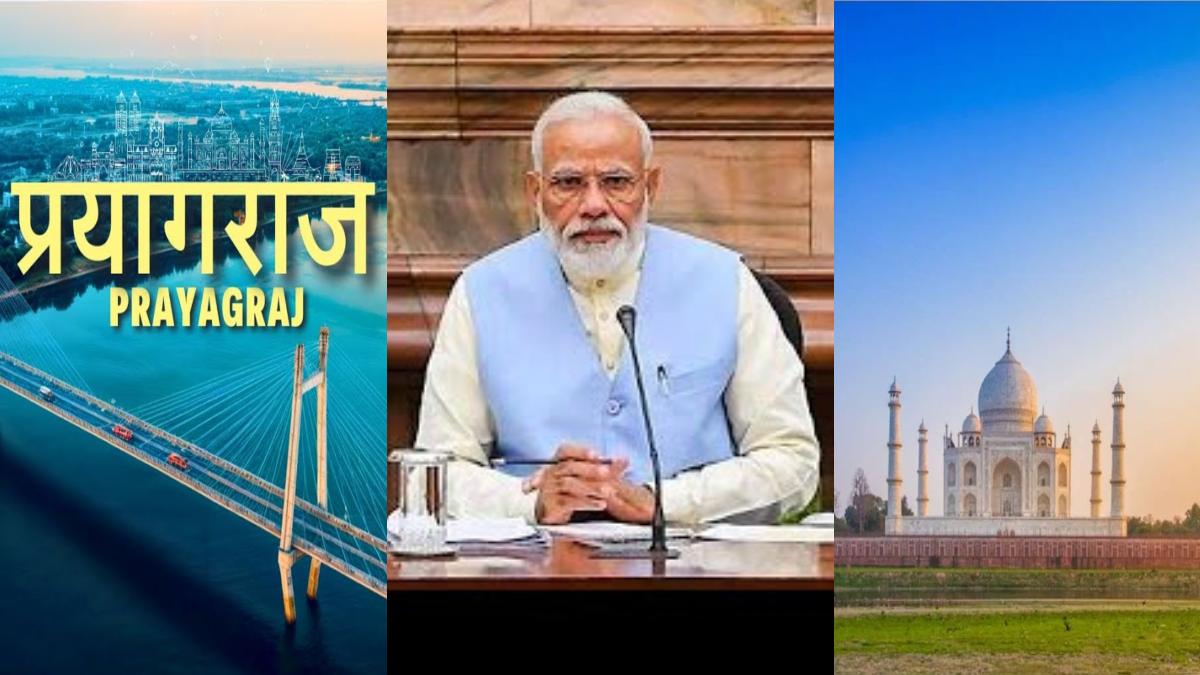
UP: In a landmark decision, the Cabinet Committee on Economic Affairs, chaired by Prime Minister Narendra Modi on Wednesday August 28 approved 12 new project proposals with an estimated investment of Rs 28,602 crore under the National Industrial Corridor Development Programme (NICDP). The move is set to transform the country’s industrial landscape by creating a robust network of industrial nodes and cities that will boost economic growth and global competitiveness.
Spread across 10 states and strategically planned along 6 major corridors, these projects will take a significant leap towards enhancing India’s manufacturing capabilities and economic growth. These industrial areas are located at Khurpiya in Uttarakhand, Rajpura-Patiala in Punjab, Dighi in Maharashtra, Palakkad in Kerala, Agra and Prayagraj in Uttar Pradesh, Gaya in Bihar, Zaheerabad in Telangana, Orvakal and Kopparthi in Andhra Pradesh and Jodhpur-Pali in Rajasthan.
Key Features
Strategic Investment- NICDP is designed to promote a vibrant industrial ecosystem by facilitating investments from both large anchor industries and micro, small and medium enterprises (MSMEs). These industrial nodes will act as catalysts to achieve $2 trillion exports by 2030, reflecting the government’s vision of a self-reliant and globally competitive India.
Also read: Employment fair held in UP: CM Yogi inaugurated the fair in Aligarh, said- the government is reaching the doorstep of the people to provide jobs
Smart cities and modern infrastructure-
The new industrial cities will be developed as greenfield smart cities of global standards, built “before demand” on ‘plug-n-play’ and ‘walk-to-work’ concepts. This approach ensures that cities are equipped with advanced infrastructure that supports sustainable and efficient industrial operations.
Sectoral Outlook on PM Gatishakti-
The projects in line with the PM Gatishakti National Master Plan will have multi-modal connectivity infrastructure, ensuring seamless movement of people, goods and services. Industrial cities are envisaged to become growth hubs for the transformation of the entire region.
Vision of a ‘Developed India’-
The approval of these projects is a step towards realising the vision of ‘Developed India’ – a developed India. By establishing India as a strong competitor in global value chains (GVCs), NICDP will provide advanced developed land immediately available for allocation. This will make it easier for domestic and international investors to set up manufacturing units in India. This is in line with the broader objective of creating an ‘Aatmanirbhar Bharat’ or self-reliant India, which promotes economic growth through increased industrial production and employment.
Economic impact and employment generation-
NICDP is expected to create significant employment opportunities. Which will create an estimated 1 million direct jobs and up to 3 million indirect jobs through planned industrialization. This will not only provide livelihood opportunities but will also contribute to the socio-economic upliftment of the areas where these projects are being implemented.
Commitment to sustainable development-
Projects under NICDP have been designed with a focus on sustainability, incorporating ICT-enabled utilities and green technologies to reduce environmental impact. By providing quality, reliable and sustainable infrastructure, the government aims to create industrial cities that are not only centers of economic activity but also models of environmental protection.
The approval of 12 new industrial nodes under NICDP is an important achievement in India’s journey to become a global manufacturing power. With a strategic focus on integrated development, sustainable infrastructure and seamless connectivity, these projects are set to redefine India’s industrial landscape and drive the country’s economic growth in the years to come.
In addition to these new approvals, NICDP has already seen four projects completed and four others are currently under implementation. This continued progress reflects the government’s commitment to transform India’s industrial sector and promote a vibrant, sustainable and inclusive economic environment.