Kumar Bahukhandi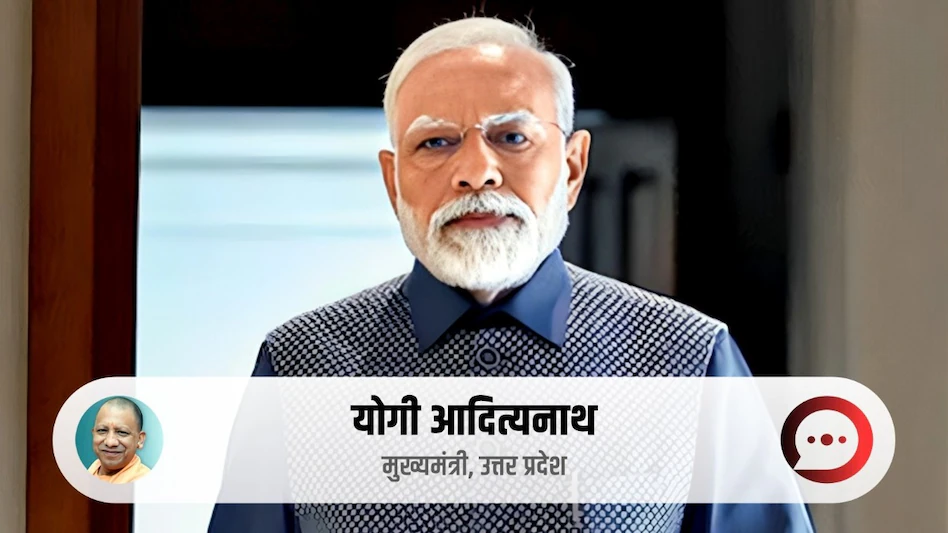
Yogi Adityanath wishes PM Modi on his birthday (Photo: ITG)
Prime Minister Narendra Modi’s 75 years of life are a unique journey of struggle, determination, and accomplishment. Overcoming adversity, he gave India a new identity on the global stage. His policies fostered cultural renaissance, empowering the poor, women, and youth. A self-reliant and developed India is his vision.
History bears witness that whenever this country faced challenges, it produced great men who changed the course of time. At the end of the twentieth century and the beginning of the twenty-first century, when India was grappling with transition and imbalance, a child from an ordinary family emerged from Vadnagar, transforming struggle into strength and opportunity. He valorized Indian values and public sentiment in politics and instilled new dignity and self-confidence in India on the global stage. Today, the entire country is celebrating the 75th anniversary of this illustrious leader. In fact, his seventy-five years of life are not merely the journey of an individual, but the awakening of India’s collective consciousness.
Modi’s life is a unique saga of struggle leading to determination, and from determination to accomplishment. The hardships and deprivations of his childhood forged within him such self-confidence, sensitivity, and unwavering resolve that prepared him for the great journey of nation-building.
Educated by life’s struggles and initiated into the Rashtriya Swayamsevak Sangh’s school, Narendra Modi learned the lessons of patience, discipline, and dedication to society in difficult circumstances. His life journey is not merely a story of political success, but an inspiring saga, in which every experience served as a lesson in serving the nation. In his long social career, Modi has emerged as a synonym for purity, transparency, and commitment. “Rashtraya Swaha, Idam Rashtraya, Idam Na Mam” (Idam is the nation, Idam is not my own) lies at the core of his every action.
‘Experience of struggles…’
In 2014, India elected him Prime Minister. This election was not merely a change of government, but a symbol of the rise of public consciousness. The people entrusted the reins of the nation to a leader who had personally experienced struggles and understood the pain of the lives of ordinary people. After becoming Prime Minister, Modi redefined governance. He instilled the spirit of “priority for the deprived” into the very core of his policies and programs.
This spirit was reflected in the mantra of “Sabka Saath, Sabka Vikas, Sabka Vishwas, Sabka Prayas.” Providing respect and opportunity to those deprived of schemes for decades became the core of his governance. This is why facilities like housing, toilets, gas, electricity, and health insurance became a reality for millions of poor families.
“Improving the quality of life of every citizen…”
Prime Minister Modi has incorporated Deendayal Upadhyaya’s philosophy of “Integral Humanism” into his policymaking.
He believes that development should be not just economic, but also social, cultural, and humanitarian. In line with this vision, schemes reach the poor and marginalized, empower women and youth, and ensure benefits reach the last citizen. Initiatives like the Pradhan Mantri Awas Yojana, Ujjwala Yojana, Ayushman Bharat, the Digital Revolution, and Startup India are living examples of this philosophy. Modi’s leadership ensures that economic reforms are not just statistics and policies, but bring about real improvements in the quality of life for every citizen.
Prime Minister Narendra Modi’s vision has paved the way for historic transformation in the Indian economy. The implementation of GST, which freed the country from the maze of taxes, not only realized the concept of “One Nation, One Tax” but also brought a new culture of economic unity, transparency, and competition across the country. It integrated India’s national market, allowing local products and industries to compete at global standards. It became not only a vehicle for economic reform but also a means for socially and culturally inclusive development. And now, GST—the next generation reform—has introduced a simple and easy tax structure for businesses, balancing state and central revenues, and boosting investor confidence. The common Indian is a direct beneficiary of these tax reforms.
“India is meeting itself…”
Modi’s contributions are not limited to development projects. With the mantra of “Development as well as Heritage,” under Modi’s leadership, the entire country is witnessing and participating in a new cultural renaissance. India is meeting itself. The eternal faith, forced to endure the pangs of neglect and appeasement in its own country due to nefarious politics, is being honored. Who can forget the historic occasion of January 22, 2024, when, after a five-century wait, the resolve to build a grand temple for Lord Shri Ram in Ayodhya was fulfilled? After all, India had been waiting for this day. The credit for fulfilling this long-cherished wait goes to respected Modi. Similarly, the revival of Kashi Vishwanath Dham, the integration of cultural streams from the North and South through events like Mahakal Lok, Kedarnath Temple, the Kashi-Tamil Sangamam, and bringing the Northeast, which had suffered systematic neglect and scorn, into the mainstream of development, have all become symbols of the renaissance of India’s integral consciousness.
With Modi’s swearing-in as Prime Minister in 2014, the world has witnessed and appreciated the revolutionary change in India’s foreign policy. With the resolve of “Nation First,” India has adopted a multilateral approach to foreign relations. Decisive actions like the surgical strikes, air strikes, and recently, Operation Sindoor, have made it clear that India is steadfast in its sovereignty and security.
Under Modi’s leadership, economic policies within the country are also writing a new narrative. The trinity of Aadhaar, Jan Dhan, and mobile phones has given birth to the digital revolution. Today, UPI is redefining transactions in India. The Make in India, Startup India, and Atmanirbhar Bharat campaigns have given new impetus to the youth. Women’s self-help groups in rural India have written a new chapter of self-reliance. India has achieved unprecedented progress in all sectors, including agriculture, industry, science, and technology. India has created history through space missions like Chandrayaan and Gaganyaan. Under Digital India, India has become the world’s largest mobile data consumer. India is moving towards global leadership in areas like deep tech, artificial intelligence, 5G, quantum computing, and green technology. This is all a result of the Prime Minister’s clear vision and innovative policies.
Modi’s leadership is unique in that he transformed governance into a mass movement. Children picked up brooms under the Swachh Bharat Abhiyan, the poor opened bank accounts under the Jan Dhan Yojana, and even ordinary shopkeepers became participants in digital transactions. The eradication of encephalitis, which was a cause of premature death for innocent children in Uttar Pradesh for 40 years, is now possible thanks to the inspiration of the Prime Minister’s Swachh Bharat Mission. All this shows that he did not allow governance to remain merely a policy document, but transformed it into a social movement.
Modi has placed special emphasis on women’s empowerment. Numerous schemes have been developed for the education, health, and safety of girls. The “Beti Bachao, Beti Padhao” campaign has fostered positive thinking in society. Women’s political and economic participation has increased. Reservation in Parliament and Legislative Assemblies is a historic step in this direction. Financial assistance and training to self-help groups has given new strength to the rural economy.
Prime Minister Modi’s vision is not limited to current challenges but extends to the coming centennial year, 2047. Today’s India is aligned with the great resolutions of the Amritkaal. The “Panch Pranas” (five vows) proclaimed from the ramparts of the Red Fort are the soul of these resolutions, and the entire nation is ready to play its role in fulfilling them with unified voice and unwavering commitment. “Developed India @ 2047” extends to the future. Today’s India is aligned with the great resolutions of the Amritkaal. The “Panch Pranas” (five vows) proclaimed from the ramparts of the Red Fort are the soul of these resolutions, and the entire nation is ready to fulfill its role with unified voice and unwavering commitment.
His dream of a “developed India @ 2047” is not merely about economic prosperity, but also about cultural leadership, advancement in knowledge and science, and a leading role in green energy and technology. He wants India to be free from poverty, illiteracy, and backwardness and re-establish itself as a global leader. He is engaging youth, women, and the workforce to achieve this goal. This is why he has given the mantra of “everyone’s effort,” not just a government program. The dream of a “self-reliant India” and a “developed India” is now moving towards becoming a reality.
Modi’s greatest strength is that he has instilled self-confidence in the people of India. Previously, Indian citizens considered themselves inferior, but now they proudly declare themselves Indians. This self-confidence is the nation’s greatest asset. This self-confidence is propelling India forward towards a united India, a better India. This stream of cultural unity is flowing from north to south and east to west.
What a beautiful coincidence it is that the birth anniversary of the architect of the universe, Lord Vishwakarma, and the birthday of the architect of a united India, the illustrious Prime Minister Narendra Modi, fall on the same day. Both are pioneers of creation, both are harbingers of new construction. It is Prime Minister Modi who has made every Indian understand the importance of the confluence of India’s demography, democracy, and diversity. He has introduced India to its potential.
The creation of a ‘New India’ was made possible as a result of this yagya of national awakening. Today, as Modi enters the Amritkaal (the elixir of life), this occasion is not just a celebration of his life, but a celebration of India’s self-confidence. This is the moment when we pay homage to the austerities of the past, remember the achievements of the present, and envision the dreams of the future. On the inauguration of this new festival of the Prime Minister’s Amritkaal, on behalf of the 25 crore people of Uttar Pradesh, we extend our best wishes for a long and successful life. We wish that we continue to receive his leadership and guidance.