Kumar Bahukhandi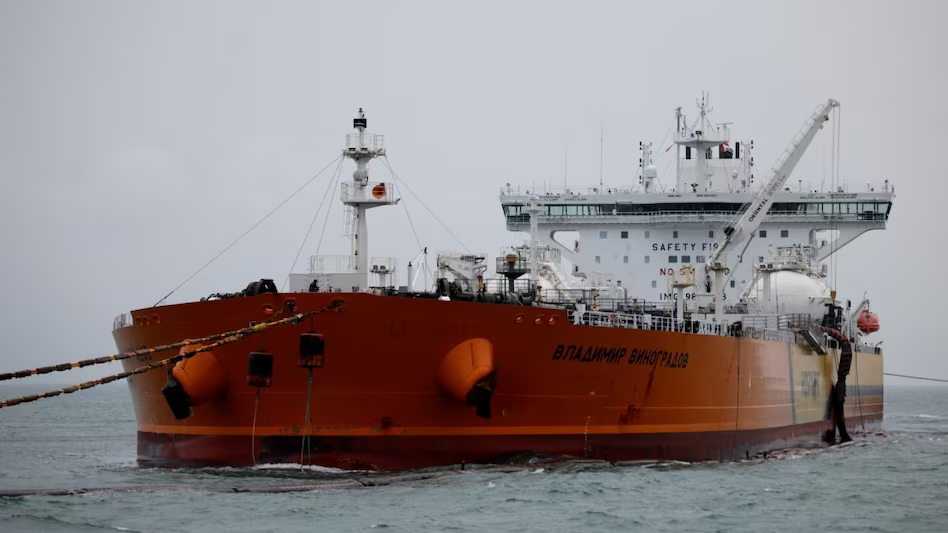
Oil tankers and refinery infrastructure symbolize India’s growing dependence on discounted Russian crude as imports reached a record high in June despite escalating geopolitical tensions. (Representative Image)
In Short
- India’s imports of Russian crude oil surged 34% month-on-month in June, reaching a record high.
- Russian crude accounted for 83% of India’s €5.5 billion fossil fuel imports from Russia.
- India purchased €4.5 billion worth of Russian crude during the month.
- Despite Russia’s declining overall oil export revenue, India remains one of Moscow’s largest energy customers.
- The buying spree comes amid growing concerns over supply disruptions linked to escalating tensions in the Middle East and fears surrounding the Strait of Hormuz.
Strategic energy diversification helps New Delhi cushion global supply shocks amid rising Middle East tensions
India’s Energy Strategy Pays Off as Russian Oil Imports Soar
India has significantly expanded its purchases of Russian crude oil, with imports reaching an all-time high in June as the country continues to strengthen its energy security strategy against mounting geopolitical uncertainty.
According to data cited by the Centre for Research on Energy and Clean Air (CREA), India’s Russian crude imports jumped 34% compared to May, highlighting New Delhi’s continued reliance on discounted Russian supplies despite ongoing international sanctions and shifting global energy dynamics.
The surge comes at a time when tensions between the United States and Iran have once again raised fears of supply disruptions in the Gulf region. Concerns over the possible closure or disruption of shipping through the Strait of Hormuz—one of the world’s most critical oil transit routes—have prompted many importing nations to reassess their sourcing strategies.
Russia Remains India’s Largest Oil Supplier
Data shows that India imported €4.5 billion worth of Russian crude oil in June, accounting for nearly 83% of its total €5.5 billion fossil fuel imports from Russia.
The figures also reinforce India’s position as Russia’s second-largest energy customer after China. During the same period, China imported approximately €7.3 billion worth of Russian fossil fuels, maintaining its position as Moscow’s biggest buyer.
Balancing Economics with Energy Security
While Russia’s total export earnings from oil have declined due to international price caps and sanctions, India’s purchases have continued to rise, driven largely by competitive pricing and the country’s growing energy demand.
Indian refiners have increasingly diversified their crude basket over the past two years, reducing excessive dependence on traditional Middle Eastern suppliers while taking advantage of discounted Russian cargoes. Analysts believe this diversified procurement strategy has helped India maintain fuel availability and moderate import costs despite heightened global volatility.
Middle East Crisis Reinforces India’s ‘Plan B’
The latest escalation in the Middle East has underscored the importance of India’s diversified energy procurement policy.
With uncertainty surrounding oil shipments through the Gulf, Russia has become an increasingly important supplier capable of ensuring uninterrupted crude availability. Energy experts note that diversification not only strengthens India’s bargaining position but also reduces vulnerability to regional geopolitical crises.
However, economists caution that prolonged instability in global energy markets could still push international crude prices higher, affecting import bills regardless of the source.
What Lies Ahead
As geopolitical tensions continue to reshape global energy trade, India’s record purchases of Russian crude reflect a pragmatic approach focused on energy security and economic stability. Whether this trend continues will depend on future oil prices, global sanctions, freight costs, and developments in the Middle East.