Kumar Bahukhandi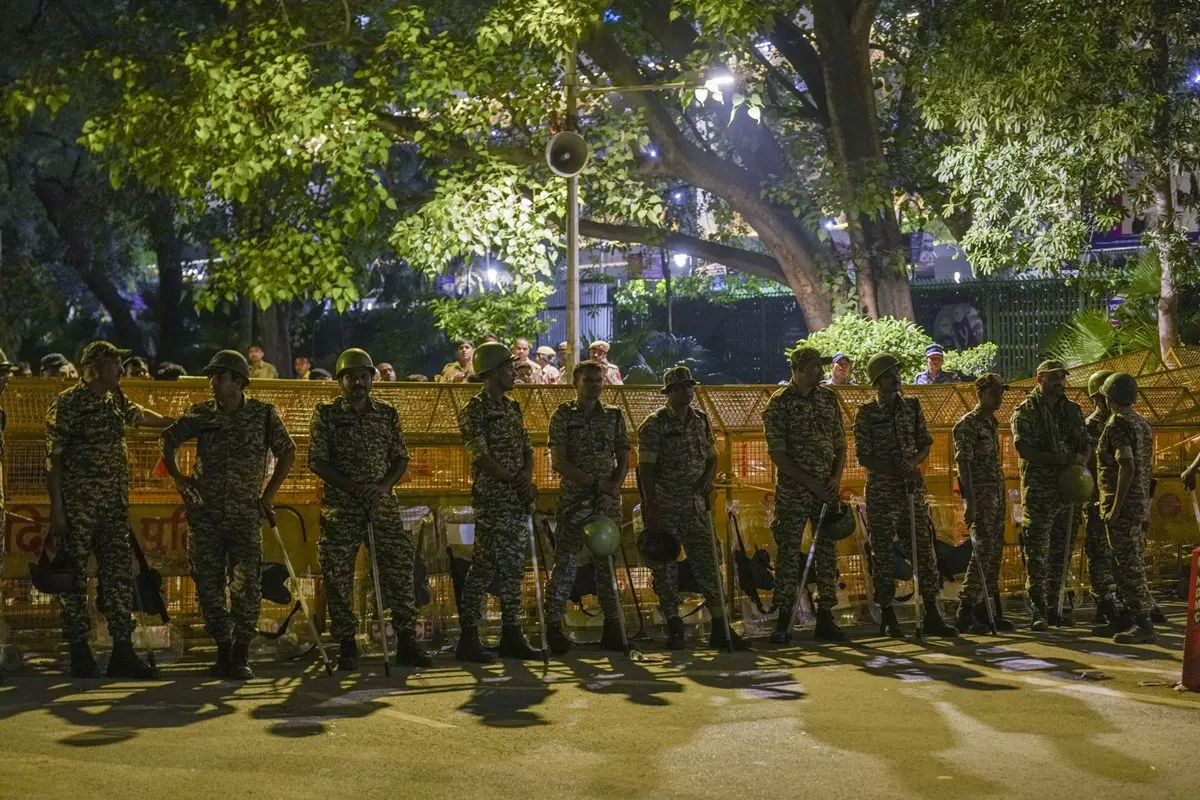
Security personnel stand guard at Jantar Mantar as Delhi Police deploys Facial Recognition System (FRS) units at key entry points to identify wanted criminals and strengthen security during the ongoing protests-Photo Credit-PTI
In Short
- Delhi Police has installed four Facial Recognition System (FRS) units around Jantar Mantar.
- The AI-enabled system is linked directly to the Delhi Police criminal database.
- Authorities say the technology is intended to identify wanted criminals, absconders and history-sheeters.
- Police have clarified that the surveillance system is not meant for peaceful protesters.
- FRS units have been placed at strategic entry and exit points around the protest venue.
- Enhanced security follows recent protests over alleged NEET examination irregularities.
- The deployment has renewed debate over balancing security requirements with privacy and civil liberties.
Authorities Say AI-Based Surveillance Aims to Identify Wanted Criminals, Not Monitor Peaceful Demonstrators
New Delhi : Delhi Police has installed four Facial Recognition System (FRS) units around the Jantar Mantar protest site as part of enhanced security arrangements during the ongoing demonstrations over alleged NEET examination irregularities.
According to police sources, the AI-enabled surveillance system has been deployed to identify wanted criminals, absconders and history-sheeters who may attempt to enter the protest venue and disrupt law and order. Officials clarified that the technology is not intended to monitor ordinary protesters or peaceful participants exercising their democratic right to protest.
The facial recognition units have been strategically positioned at key entry and exit points surrounding Jantar Mantar and are directly integrated with the Delhi Police’s criminal database, enabling real-time identification of individuals with criminal records.
Police officials said the move is part of a broader security strategy aimed at ensuring that peaceful protests are not exploited by anti-social elements. Authorities maintain that the deployment is preventive in nature and designed to strengthen public safety while facilitating lawful demonstrations.
The decision comes amid heightened security measures following recent protests that witnessed clashes, injuries and concerns over crowd management. Additional police personnel, barricading and surveillance systems have been deployed across sensitive locations in central Delhi.
The use of facial recognition technology, however, has once again brought attention to the growing debate over balancing public security with privacy and civil liberties. While law enforcement agencies argue that such systems improve policing and help prevent criminal activity, privacy advocates have consistently called for greater transparency, legal safeguards and accountability regarding the collection and use of biometric data.
As demonstrations continue, the effectiveness of the system and its adherence to legal and constitutional safeguards are likely to remain under public and judicial scrutiny.