Kumar Bahukhandi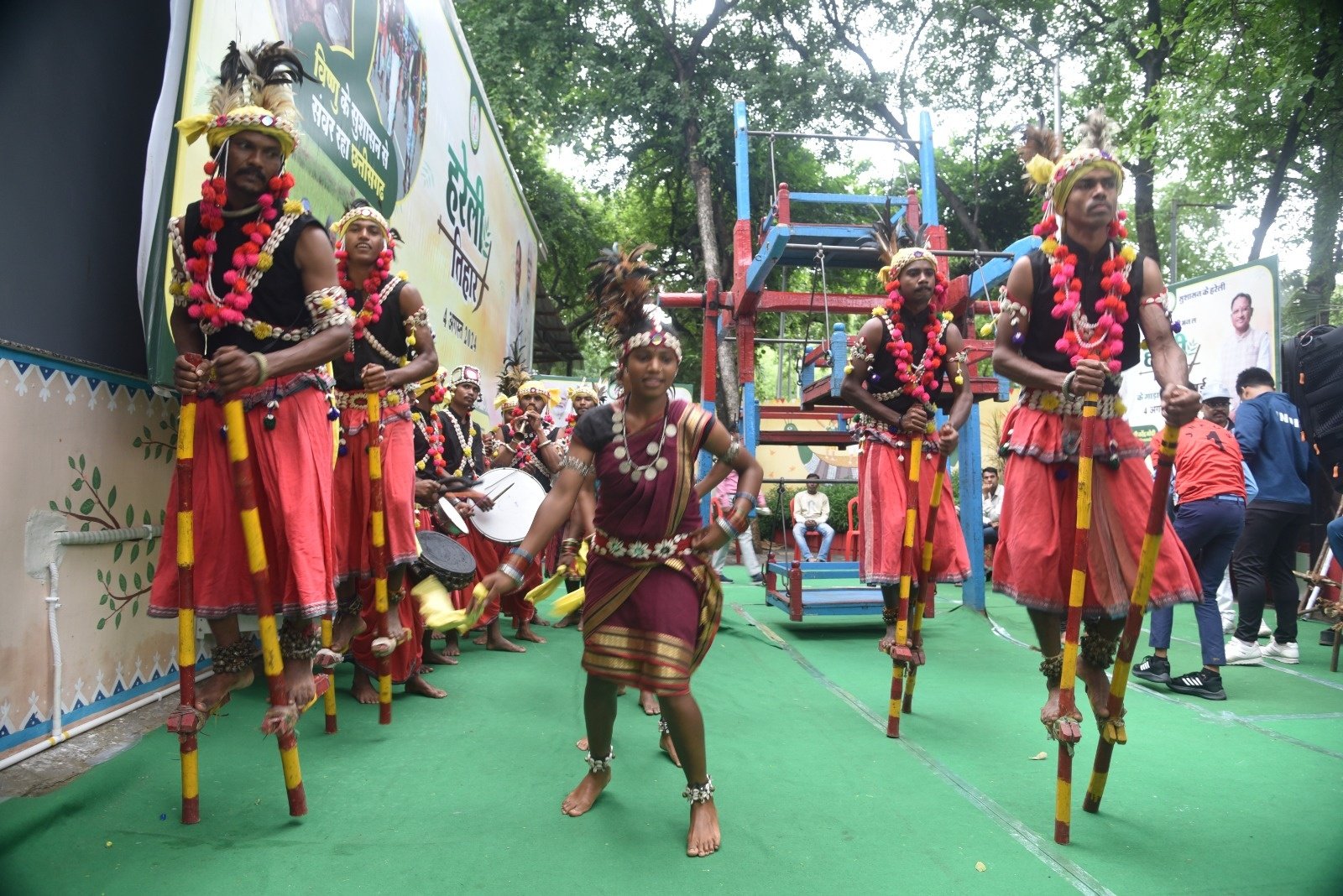
Traditional artistes perform on Gedi, the distinctive bamboo stilts closely associated with Hareli Tihar, showcasing one of Chhattisgarh’s most recognisable folk traditions. Photo Credit: channel24india.com via CG/PR
From worshipping agricultural implements and cattle to Gedi races and traditional cuisine, Hareli reflects the deep relationship between Chhattisgarh’s people, land and nature
Chhattisgarh’s cultural identity is deeply rooted in its villages, forests, agricultural traditions and relationship with nature. Its numerous folk festivals reflect this connection, but among them Hareli Tihar occupies a special place. Celebrated on the Amavasya of the month of Sawan, also known as Hariyali Amavasya, Hareli is traditionally regarded as the first major festival in Chhattisgarh’s annual cycle of folk celebrations.
The word Hareli itself derives from hariyali, or greenery. Its timing is significant. By this stage of the monsoon, fields and countryside have acquired their characteristic green cover, crops are growing and agricultural activity has transformed the rural landscape.
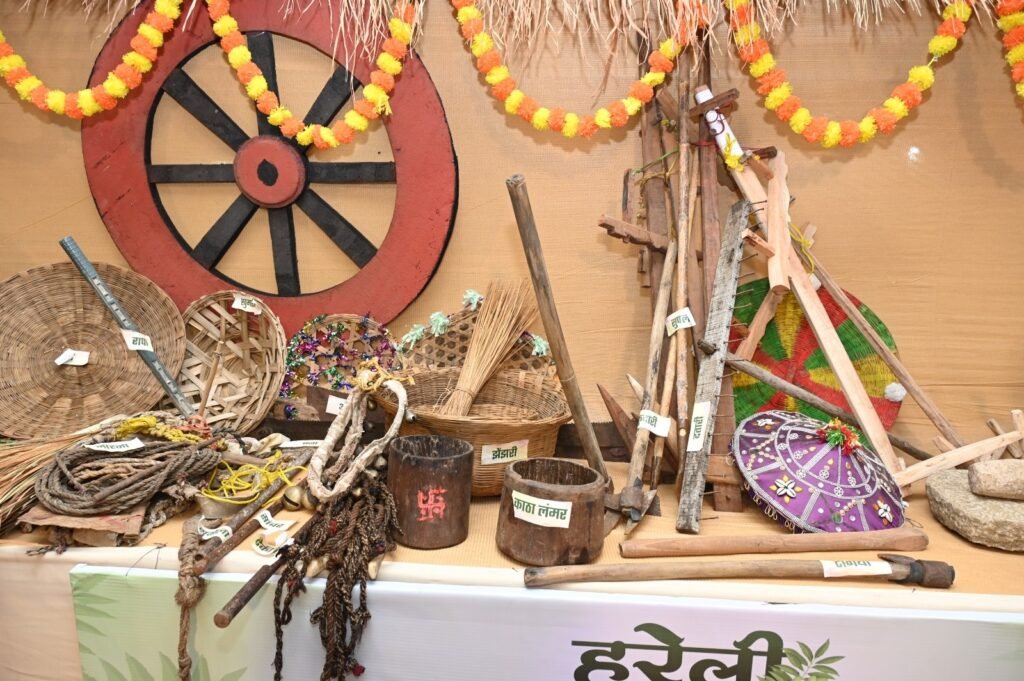
Traditional agricultural implements, baskets and everyday rural objects displayed as part of Hareli celebrations, reflecting the festival’s deep association with farming and Chhattisgarh’s agrarian heritage. Photo Credit: channel24india.com via CG/PR
Hareli is therefore more than an occasion for celebration. It expresses gratitude towards the land, agricultural implements, livestock and natural forces on which rural life depends.
Chhattisgarh has a rich calendar of festivals. Hareli, Bhojali, Jawara and Basant Panchami, among others, carry distinctive cultural meanings while sharing a close association with nature. Folk songs, traditional games, food and community gatherings ensure that these celebrations remain part of everyday social life rather than merely ceremonial occasions.
The greenery associated with Hareli can, in that sense, also be seen as symbolic — representing prosperity, renewal and the hope that traditions rooted in the soil continue to survive despite rapid social change.
When Farmers Worship Their Tools
One of Hareli’s most distinctive traditions is the worship of agricultural implements.
Farmers clean the tools that have accompanied them through agricultural operations — ploughs, spades, sickles, axes, hammers and other implements — and arrange them carefully for worship.
Flowers, sandalwood, incense, lamps, rice preparations, cheela and coconut are traditionally offered.
Behind the ritual lies a simple but profound idea: the farmer acknowledges that the implements through which the land is cultivated are not merely objects but indispensable companions in securing the family’s livelihood.
After the demanding stages of sowing and other agricultural operations, Hareli provides an occasion to symbolically allow these implements to “rest” while farmers express gratitude for their service.
Cattle at the Heart of the Celebration
The relationship between farmers and livestock is equally important.
Cows and bullocks have historically played an integral role in Chhattisgarh’s rural economy. Bullocks, in particular, have supported ploughing, transportation and several other agricultural activities, especially for small and marginal farmers.
Hareli therefore includes special attention to cattle.
Animals are traditionally bathed and cared for, and rural practices include feeding them preparations made from locally available ingredients and herbs. Traditional knowledge associated with plants such as castor and khamhar also forms part of customary animal-care practices followed in some areas.
These practices illustrate how agriculture, livestock management and traditional knowledge developed together within village life.
Gedi: The Most Recognisable Symbol of Hareli
Perhaps no image captures Hareli as vividly as young people walking high above the ground on Gedi, traditional bamboo stilts.
Gedi are made by fastening footrests to long bamboo poles. What may once have had a practical connection with moving through muddy and waterlogged terrain during the monsoon gradually became one of Chhattisgarh’s most popular traditional recreational activities.
Children and young people climb onto the stilts, balance themselves and compete with one another.
Gedi races form an important part of Hareli festivities, alongside indigenous games such as fugdi, kho-kho, billas, atti-patti and danda pachranga. Coconut-throwing competitions are another familiar feature in several villages.
Village squares, school grounds and open spaces consequently become centres of celebration, bringing together different generations.
The games are important for another reason. In an age dominated increasingly by screens and digital entertainment, Hareli keeps alive forms of physical recreation that require balance, stamina, coordination and community participation.
Folk Beliefs and Traditional Practices
Hareli also carries several traditional beliefs associated with protection and well-being.
Neem leaves and branches are traditionally placed near entrances in some communities. Iron nails or other objects may also be attached to door frames as part of customary beliefs intended to protect households from negative influences and illness.
While such practices have their roots in folk belief, neem itself has long been valued in Indian traditional knowledge for its properties and household uses.
Hareli thus brings together ritual, inherited wisdom and community customs that have been transmitted across generations.
A Festival Is Incomplete Without Chhattisgarhi Food
Food forms another colourful part of the celebration.
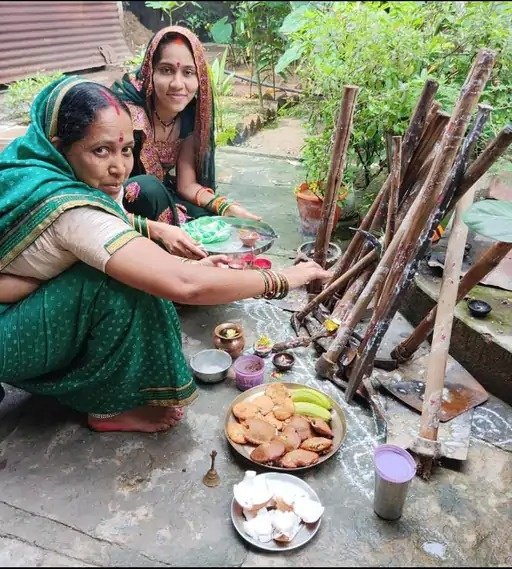
Women perform the traditional Hareli ritual associated with agricultural implements, reflecting the reverence accorded to farming tools and rural traditions in Chhattisgarh. Photo Credit: channel24india.com via CG/PR
Traditional preparations such as gud cheela, airsa, chausela, bobra, gulgula bhajiya, sohاري, bada, thethri and khurmi are prepared in households and shared among family members and neighbours.
Some preparations are first offered during the worship of agricultural implements and cattle before being consumed by families.
These dishes add another dimension to Hareli: preserving not only rituals and games but also Chhattisgarh’s distinctive culinary heritage.
More Than a Festival
At its core, Hareli communicates a remarkably contemporary message.
Human beings cannot separate their prosperity from the health of the land, water, vegetation and animals around them.
For generations, rural communities may not have described this relationship using modern terms such as environmental sustainability or ecological conservation. Yet the principle is embedded naturally within festivals such as Hareli.
A farmer thanking his implements, caring for cattle, celebrating the arrival of greenery and gathering with the community represents an entire philosophy of coexistence.
This is what gives Hareli its enduring relevance.
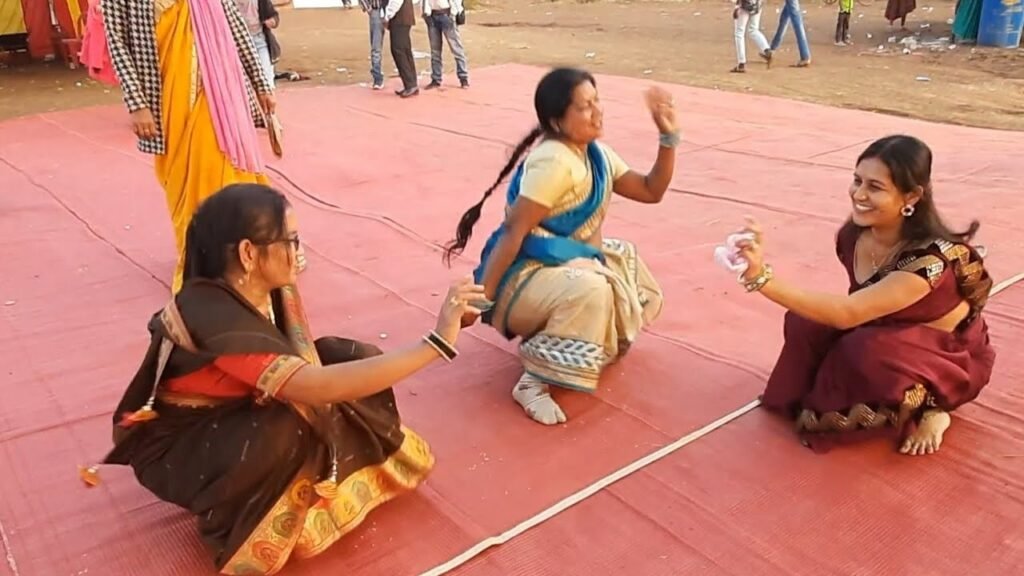
Women participate in a traditional folk activity during Hareli festivities, highlighting the community participation and indigenous games that remain an integral part of Chhattisgarh’s cultural celebrations. Photo Credit: channel24india.com via CG/PR
Modernisation will inevitably transform rural life and agricultural practices. Machines may replace some traditional implements and new forms of entertainment may compete with indigenous games. Yet preserving traditions does not require society to remain frozen in the past.
Rather, their underlying values can continue to be carried forward.
Keeping Gedi and other traditional games alive connects younger generations with their cultural inheritance. Preserving folk songs keeps the language and memories of rural Chhattisgarh alive. Respecting livestock, land and natural resources reinforces an environmental consciousness that is increasingly important in contemporary life.
The enduring wish associated with Hareli is therefore beautifully simple: may its greenery spread through everyone’s life, and may the fragrance of Chhattisgarh’s soil continue to live through its songs, games, food and traditions.
Dhananjay Rathore is Joint Director, Department of Public Relations, Government of Chhattisgarh.