Kumar Bahukhandi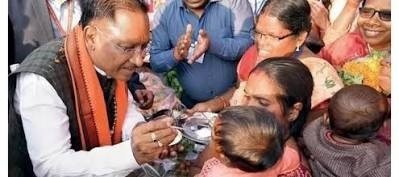
Chhattisgarh Chief Minister Vishnu Deo Sai administers a dose of medicine to a child during a public-health programme. Infant Protection Month promotes nutrition, immunisation and preventive healthcare for infants and young children across the state-Photo Credit:channel24india.com via CG/DPR
Chhattisgarh launches a new phase of its child-health campaign, focusing on nutrition, immunisation, anaemia prevention and early identification of developmental concerns
Key Factors
- Special healthcare support for children from nine months to five years of age
- Vitamin A supplementation, anaemia prevention and completion of missed vaccinations
- Screening and treatment support for moderate and severe malnutrition
- Counselling for mothers on breastfeeding, complementary feeding, hygiene and responsive childcare
- Joint participation of health workers, Mitanins, Anganwadi workers and parents
Infancy is among the most sensitive stages of human life. The nutrition, healthcare, affection and protection received during the early years influence not only a child’s immediate wellbeing but also physical growth, intellectual development and overall quality of life in adulthood.
The first few years after birth are particularly important for brain development, immunity and the formation of healthy physical and behavioural patterns. Nutritional deficiencies or inadequate healthcare during this period can have consequences that may continue throughout a person’s life.
In a vast and developing country such as India, protecting children below five years of age from malnutrition, anaemia and infectious diseases remains an important public-health responsibility. Infant Protection Month is organised by the Health Department in coordination with the Women and Child Development Department to address these concerns through an integrated campaign.
The initiative is not restricted to distributing medicines or conducting medical examinations. It brings together nutrition, immunisation, disease prevention, developmental monitoring and parental awareness to create a comprehensive protective framework for infants and young children.
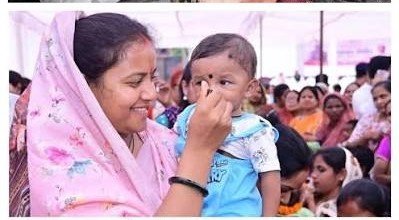
Chhattisgarh Women and Child Development Minister Laxmi Rajwade administers a prescribed dose to a child during the Infant Protection Month campaign. The programme focuses on nutrition, immunisation and preventive healthcare for infants and young children across the state-Photo Credit:channel24india.com via CG/DPR
A new phase of Infant Protection Month commenced in Chhattisgarh on August 18, 2026. The campaign provides special healthcare support to children between nine months and five years of age, while also reviewing the incidence of anaemia and malnutrition and identifying children whose routine vaccinations may have been missed.
Services are being delivered through health institutions and Anganwadi centres in rural as well as urban areas. Families are also being counselled on nutrition, hygiene and safe childcare practices.
The principal objective of the campaign is to reduce infant mortality and deaths among children below five years of age. Early identification of illnesses and nutritional deficiencies, timely referral for treatment and the provision of essential micronutrients constitute important parts of the initiative.
Another major objective is to make mothers and other family members aware that a child’s health depends on a combination of adequate nutrition, timely immunisation, cleanliness, emotional care and regular monitoring of growth and development.
Vitamin A supplementation is one of the principal services provided during the campaign. Children between nine months and five years of age are administered the prescribed dose at recommended intervals. Vitamin A supports normal vision, immunity and healthy growth, and its supplementation helps prevent deficiency-related conditions, including night blindness.
Preventing anaemia is another important component. Iron and folic acid syrup is provided to eligible children between six months and five years of age. Parents are advised about the correct dosage and the importance of administering it regularly under the guidance of health workers.
Anaemia can affect a child’s physical growth, energy levels, immunity and ability to learn. Timely identification and proper nutritional support are therefore essential to prevent its long-term effects.
During the campaign, health and Anganwadi workers also identify children who may have missed one or more doses under the routine immunisation schedule. Necessary arrangements are made to administer eligible vaccinations in accordance with the prescribed programme.
Timely immunisation protects children from several serious and potentially fatal diseases, including measles, rubella, polio, whooping cough and tetanus. Parents are encouraged to preserve the child’s vaccination card and ensure that every scheduled dose is received.
Growth monitoring is undertaken at Anganwadi centres by measuring the weight and height of children. These measurements help workers assess whether a child is growing appropriately for his or her age.
Children identified as moderately or severely malnourished are provided appropriate nutritional counselling and follow-up support. Those requiring specialised care may be referred to a Nutrition Rehabilitation Centre for medical examination, therapeutic feeding and continued monitoring.
Diarrhoea remains a serious threat to young children because it can lead rapidly to dehydration. Mothers and caregivers are therefore taught how to prepare and administer oral rehydration solution correctly. ORS packets and zinc supplements are provided wherever required.
Families are also advised not to stop breastfeeding or feeding a child during an episode of diarrhoea. Continued fluids, breastfeeding and age-appropriate food are necessary to prevent weakness and support recovery. Medical advice should be sought immediately if the child becomes unusually drowsy, is unable to drink, develops persistent vomiting or shows signs of severe dehydration.
Protection Requires Nutrition, Hygiene and Responsive Care
The success of Infant Protection Month cannot be measured only by the number of medicines distributed or health examinations conducted. Sustainable improvement requires families to adopt safe and scientifically appropriate childcare practices in everyday life.
Breastfeeding should ideally begin within the first hour after birth. The thick yellowish first milk, known as colostrum, is rich in nutrients and protective elements that help strengthen the newborn’s immunity. It should not be discarded.
For the first six months, a baby should ordinarily be exclusively breastfed, without being given water or other food and drinks. Breast milk provides the nutrition and hydration needed by most infants during this period while also helping protect them from several infections.
Once the child completes six months, breast milk alone is no longer sufficient to meet all nutritional requirements. Safe, nutritious and age-appropriate complementary food should therefore be introduced while breastfeeding continues.
Complementary feeding should begin with small quantities of soft, mashed and easily swallowed food. The quantity, consistency and diversity of food should be increased gradually as the child grows and develops the ability to chew.
Children between six and eight months of age may be offered complementary food two or three times a day. The frequency can be increased as they grow, depending on their age, appetite and nutritional requirements.
Breast milk continues to remain an important source of nutrition even after complementary feeding begins. Breastfeeding may be continued up to two years of age or beyond, alongside an increasingly varied and balanced diet.
Children should be introduced gradually to different flavours and food groups. Grains, pulses, vegetables, fruits, milk products, eggs and other locally available nutritious foods may be included in age-appropriate forms according to the family’s dietary practices and professional health advice.
Feeding should be patient and responsive. A child should be encouraged to eat but must not be force-fed. If the child rejects a particular food, caregivers may try again later or offer it in a different safe combination.
Food should be cut, mashed or prepared in a manner appropriate to the child’s age so that it can be swallowed safely. Hard foods and items that may become lodged in the throat should be avoided. Whole grapes, raw pieces of carrot, hard nuts and similarly shaped foods may present a choking hazard to small children.
Cleanliness is equally important. Caregivers should wash their hands with soap before preparing food, before feeding the child and after using the toilet or cleaning the child. Safe drinking water and properly cleaned utensils should always be used.
A child’s development, however, depends on much more than food and medicine. Talking to infants, singing to them, reading aloud and responding to their sounds and expressions support brain development, language acquisition and emotional security.
Adequate sleep is also essential for healthy development. Children require regular opportunities to rest in a safe and comfortable environment. A predictable daily routine can help establish healthy sleep patterns.
Age-appropriate physical activity should be encouraged throughout the day. Babies should be allowed to move their arms and legs freely and spend supervised time on a clean, safe floor where they can learn to roll, sit, crawl and eventually stand.
Such movement strengthens muscles and helps children understand their surroundings. Infants should not be confined for prolonged periods in swings, strollers, bouncing seats or other devices that restrict their natural movement.
Caregivers must also monitor developmental progress. If a child is unusually slow in learning to sit, walk, speak, see, hear or respond to people and surroundings, advice should be sought from a trained health professional. Early identification can considerably improve the effectiveness of support and treatment.
Parents should remain alert to warning signs such as persistent fever, difficulty in breathing, refusal to feed, repeated vomiting, convulsions, unusual drowsiness or sudden loss of activity. Such symptoms require prompt medical attention and should not be managed solely through home remedies.
Infant Protection Month is therefore more than a government programme. It is an opportunity to remind every family and community of its responsibility towards children. A healthy child grows into a healthier and more capable citizen, contributing to the strength and prosperity of society.
The campaign can achieve lasting results only when health workers, Mitanins, Anganwadi workers, local representatives and parents work together. Regular health examinations, complete immunisation, balanced nutrition, hygiene and responsive care can protect children from preventable illness and developmental setbacks.
A healthy, well-nourished and protected generation is the strongest foundation for a secure future. Ensuring that every child receives a fair and healthy beginning is not only a responsibility of the government or parents; it is a shared commitment of the entire society.
Author Dhananjay Rathore is Joint Director, Department of Public Relations, Chhattisgarh