Kumar Bahukhandi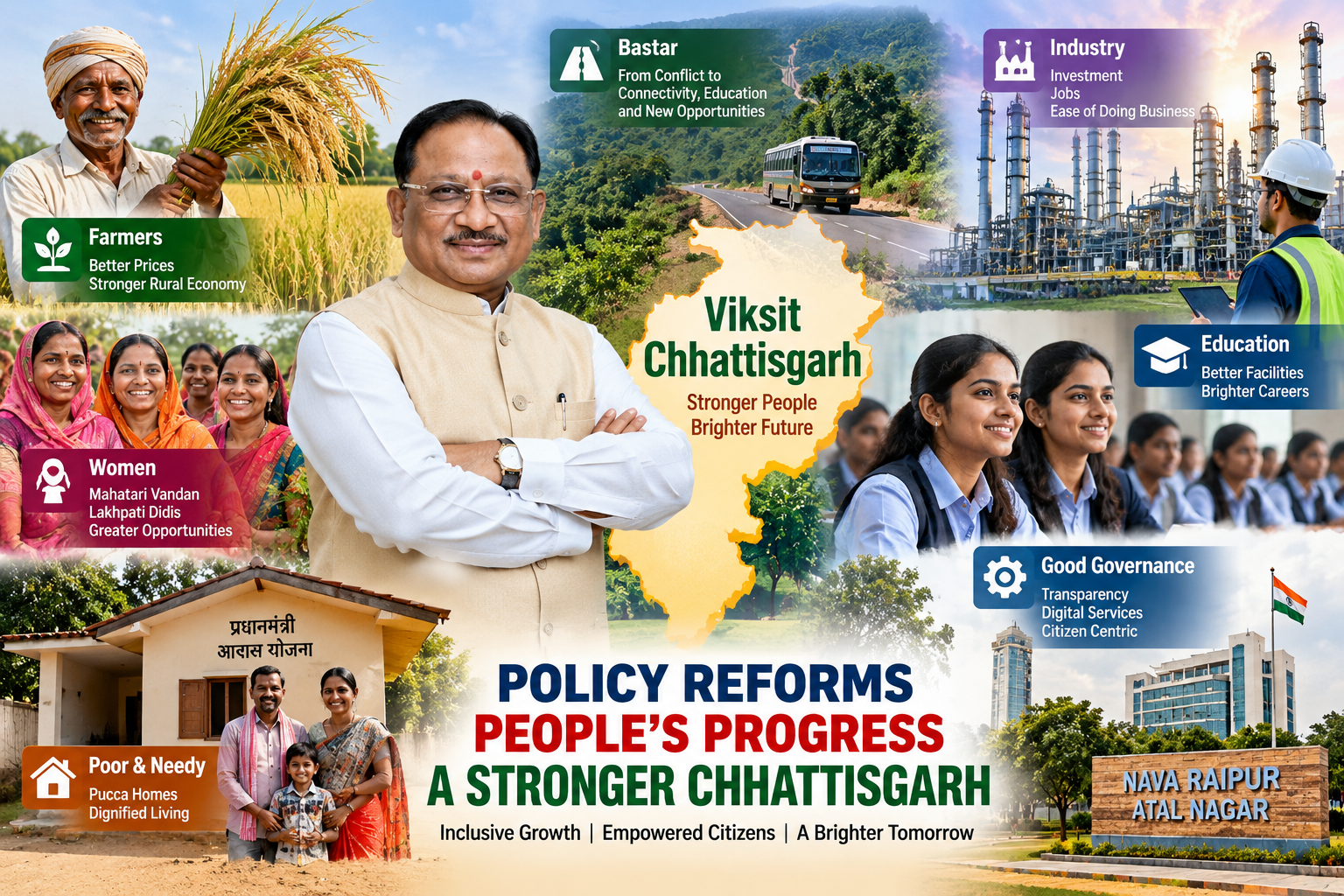
A representational visual captures Chhattisgarh’s changing development landscape — from farmers, women’s empowerment and housing to a more connected Bastar, education, industrial investment and citizen-centric governance. The State’s policy push seeks to translate welfare, reforms and investment into wider opportunities and long-term economic growth. (AI-generated representational image)
Key Highlights
- More than 24.40 lakh PMAY-Gramin houses sanctioned; over 11 lakh homes completed and handed over during the past two-and-a-half years.
- 25.24 lakh farmers participated in paddy procurement during 2025–26, with 141.04 lakh metric tonnes procured.
- Around 68 lakh women have received more than ₹20,000 crore through 31 Mahtari Vandan instalments.
- 13.85 lakh women have become Lakhpati Didis.
- A ₹4,824-crore livelihood enhancement programme has been prepared for nearly 10 lakh Bastar families.
- More than 450 Ease of Doing Business reforms have been implemented.
- Investment proposals exceeding ₹8 lakh crore could potentially generate more than 1.72 lakh jobs.
From farmers, women and poor families to industry, education, Bastar and governance, a series of policy decisions is reshaping the State’s development landscape
By Dhananjay Rathore
Joint Director, Public Relations
Raipur, September 8, 2026: Chhattisgarh is witnessing a significant shift in its development trajectory as a series of policy reforms and welfare decisions begin translating into changes on the ground. From housing and agriculture to women’s economic empowerment, industrial investment, digital governance and the transformation of Bastar, the State government has sought to combine welfare delivery with longer-term structural reforms.
Under Chief Minister Vishnu Deo Sai, the government’s more than two-and-a-half years in office have been marked not merely by the announcement of schemes but by attempts to change systems governing their implementation. While welfare programmes have remained central to the administration’s agenda, policy changes in industry, education, minerals and governance have simultaneously sought to build the foundation for sustained economic growth.
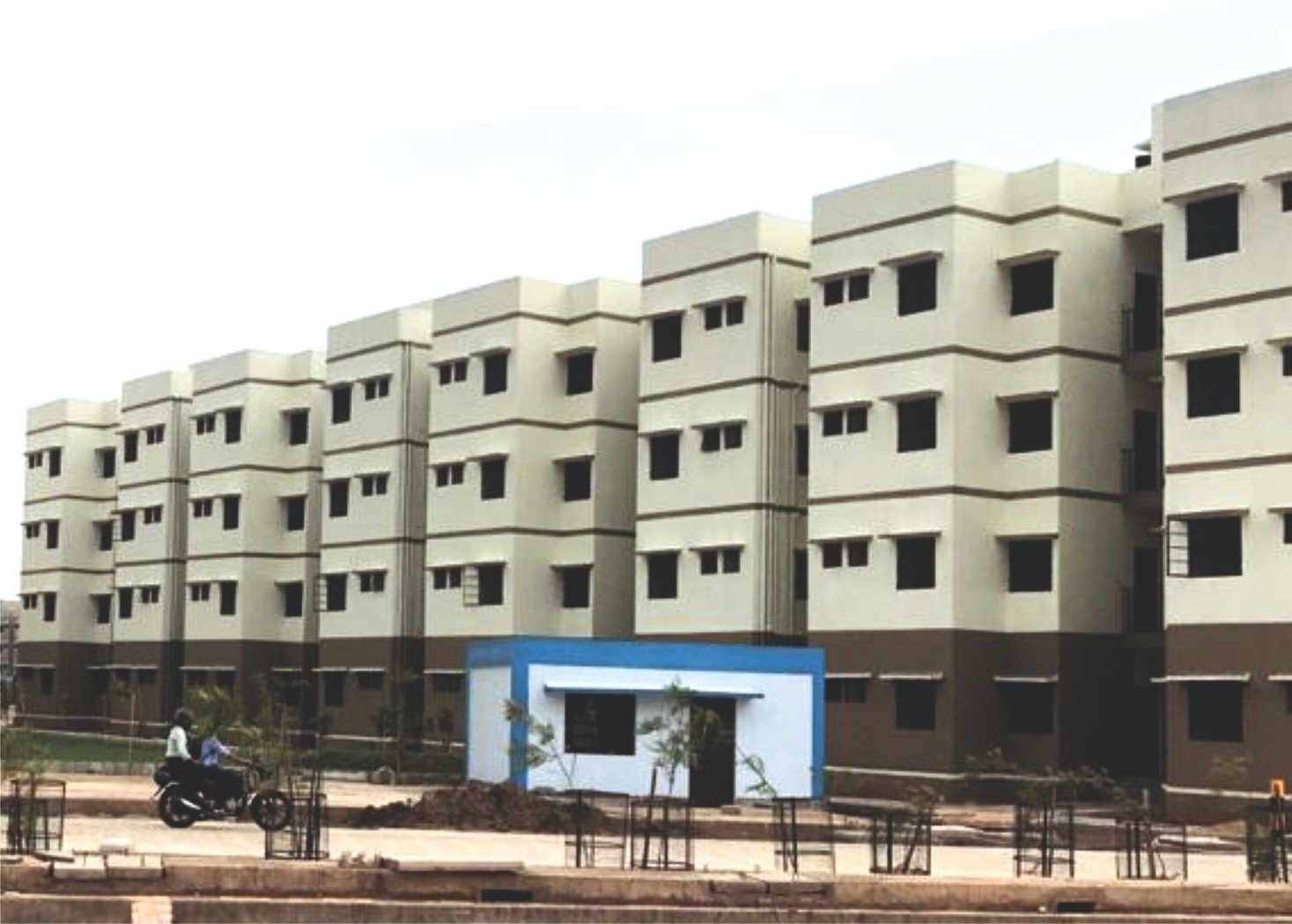
One of the government’s earliest major decisions concerned housing for economically weaker families. At its first Cabinet meeting, the government decided to approve houses for more than 18 lakh needy families. Under the Pradhan Mantri Awas Yojana-Gramin, 24.40 lakh houses have now been sanctioned in the State.
Around 1,600 houses are being completed every day on average, while more than 11 lakh homes — including earlier and newly sanctioned houses — have been handed over to beneficiaries during the past two-and-a-half years.
Agriculture and Women at the Centre of Rural Growth
Agriculture has remained another major pillar of the government’s development strategy. Farmers have been allowed to sell paddy at ₹3,100 per quintal up to 21 quintals per acre.
During the 2025–26 Kharif marketing season, 141.04 lakh metric tonnes of paddy were procured from 25.24 lakh farmers. Combining the Minimum Support Price and benefits under the Krishak Unnati Yojana, nearly ₹43,723 crore was provided to farmers.
The procurement system has also undergone technological changes. Online tokens, biometric verification and real-time monitoring have been introduced with the objective of making the process more transparent and convenient for farmers.
Women’s economic empowerment has emerged as another major focus. Under the Mahtari Vandan Yojana, around 68 lakh eligible women have received more than ₹20,000 crore directly into their bank accounts through 31 instalments.
At the same time, 13.85 lakh women in the State have become Lakhpati Didis, while women from more than 31 lakh economically weaker families are associated with self-help groups under the Bihan Mission.
Measures have also been introduced to encourage women’s ownership of property, including a 50 per cent concession in registration fees and a one-percentage-point concession in stamp duty.
Bastar Moves From Conflict Towards Connectivity
Perhaps the most consequential transformation is being attempted in Bastar, where decades of Naxal violence severely constrained infrastructure, education, healthcare and economic opportunities.
Alongside security operations, the government has adopted a strategy of taking public services and development programmes deeper into previously inaccessible areas. Initiatives such as Niyad Nellanar 2.0 and the Bastar Munne Abhiyan are aimed at extending government schemes to people living in remote regions.
Education Cities are being developed in difficult areas such as Orchha and Jagargunda. A ₹4,824-crore livelihood enhancement programme has also been prepared with the objective of increasing the incomes of nearly 10 lakh families in Bastar.
Security camps in forested areas are increasingly being used as points through which services can reach remote communities. The Mukhyamantri Gramin Bus Seva has been launched to improve public transport, while roads, bridges, mobile connectivity, fair-price shops, health centres, schools and Anganwadi facilities are being expanded.
Under the Mukhyamantri Swasth Bastar Abhiyan, more than 34 lakh health examinations have been conducted and digital health profiles prepared.
The broader objective is to move Bastar beyond its long association with conflict and strengthen its identity around education, tourism, livelihoods and economic opportunity.
Industrial Reforms Seek to Turn Investment Into Jobs
Chhattisgarh has simultaneously sought to simplify the process of establishing and operating industries. More than 450 Ease of Doing Business reforms have been implemented, while the State has introduced the Ease of Doing Business Act, 2026.
Under Jan Vishwas reforms, 279 minor offences have been decriminalised. A one-click single-window mechanism, simplified land diversion procedures and automatic mutation following property registration are among the administrative changes introduced to reduce procedural delays.
Following the Industrial Development Policy 2024–30, the State has received investment proposals worth more than ₹8 lakh crore. These proposals have the potential to generate more than 1.72 lakh employment opportunities if they translate into projects on the ground.
The emerging policy direction therefore extends beyond attracting investment alone. The larger challenge — and opportunity — is to convert investment commitments into industries, industries into employment, and economic expansion into improvements that are visible in the everyday lives of citizens.