Kumar Bahukhandi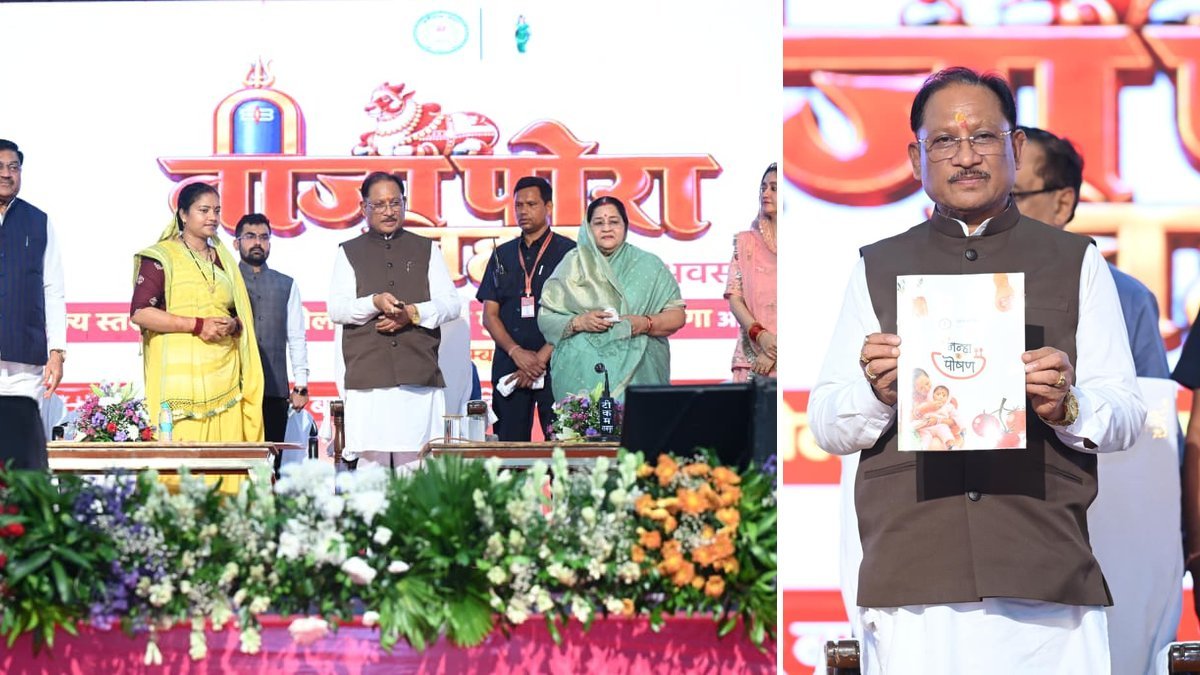
A home for his sisters: Chief Minister Vishnu Deo Sai welcomes women to the Teeja-Pora celebration at the Chief Minister’s residence in Nava Raipur and unveils the nutrition initiative on Saturday, September 12, 2026 — a day when the official residence took on the warmth of a ‘maika’-Photo Credit:channel24india.com via CMO
At Teeja-Pora, Vishnu Deo Sai was not merely the Chief Minister — for women arriving from across Chhattisgarh, his home opened its doors with the warmth of a brother’s house, while children found an affectionate elder waiting for them
Key Highlights
- CM residence transformed into a maika for women celebrating Teeja-Pora.
- Sai welcomed women as sisters coming to their brother’s home.
- Traditional games, swings, mehendi and folk performances recreated a Chhattisgarhi village atmosphere.
- CM participated in annaprashan, feeding kheer to young children and blessing them.
- ‘Har Ghar Munga-Ghar Ghar Munga’ campaign and National Nutrition Month launched.
- Celebration linked cultural affection with women’s empowerment and child nutrition.
There are occasions when public life moves beyond offices, protocols and political designations. A government residence ceases to look like a seat of power and begins to resemble a family courtyard. On Saturday, something of that kind unfolded at the Chief Minister’s residence in Nava Raipur.
Women had come from different parts of Chhattisgarh to celebrate Teeja-Pora. But the emotion surrounding their arrival was rooted in something much older and more intimate than an official celebration — the Chhattisgarhi tradition of a daughter returning to her maika, her maternal home, for Teeja. The residence had been decorated like a Chhattisgarhi village, with traditional elements, swings and folk activities filling the premises with the atmosphere of a festive family home.
And standing at the centre of it was Chief Minister Vishnu Deo Sai.
But for those few hours, the more meaningful description perhaps was simply — “Vishnu Bhaiya.”
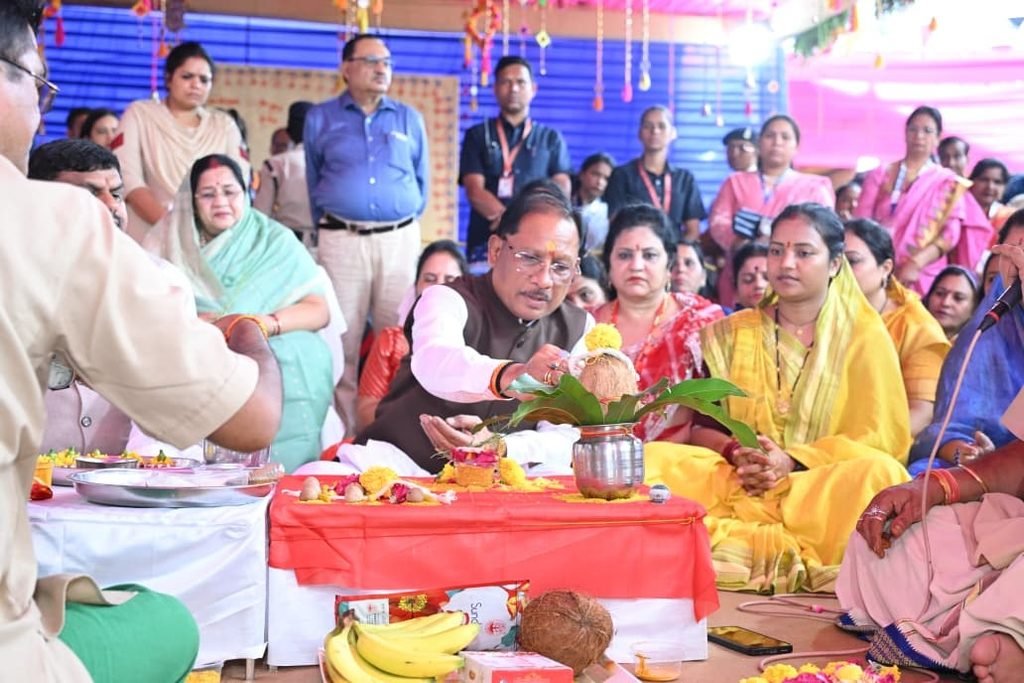
In the spirit of Teeja-Pora, Chief Minister Vishnu Deo Sai joins women in traditional worship at the Chief Minister’s residence in Nava Raipur on Saturday, September 12, 2026-Photo Credit:channel24india.com via CMO .
Sai himself gave words to that emotion. Welcoming the women, he said that Chhattisgarh has a beautiful tradition of daughters and sisters returning to their maternal homes during Teeja.
“Today, all of you sisters have come to my home from across the State. Therefore, the Chief Minister’s residence is your maternal home today. Your coming to your brother’s house is a matter of happiness and good fortune for me.”
That one sentiment changed the character of the gathering.
A ‘Maika’ Where Sisters Arrived With Their Children
For a married woman, maika is not merely an address. It is often the one place where age and responsibilities briefly lose their weight — where she can once again be somebody’s daughter and somebody’s sister.
That feeling appeared to run through the Chief Minister’s residence as women participated in phugdi, tug-of-war, musical-chair activities, mehendi and swings. The official residence took on the character of a Chhattisgarhi village courtyard, bringing different strands of the State’s folk traditions together in one place.
But daughters and sisters rarely return to their maternal homes alone. Their children come with them.
And that is where the occasion acquired another emotional layer.
When Sai sat among mothers and their little ones and fed kheer to children during their annaprashan, the image went beyond the formal performance of a government programme. The Chief Minister blessed the children and wished them healthy, happy and bright lives, while also interacting with their mothers about their health and nutrition.
If their mothers had come to Vishnu Bhaiya’s home as sisters, the children had, in a cultural sense, come to the home of their mother’s brother — a relationship carrying its own affection in Indian family life.
It was a small gesture: a spoonful of kheer offered to a child.
Yet family affection is often expressed through precisely such small gestures.
From Ritual to Responsibility
The familial mood did not separate the celebration from its cultural and social meaning.
Sai worshipped Lord Shiva and Goddess Parvati and prayed for the happiness and prosperity of the people of Chhattisgarh. He described Teeja as a festival connected with Parvati’s devotion and Pora as an expression of gratitude towards agriculture and livestock — traditions that connect families to the land as much as to one another.
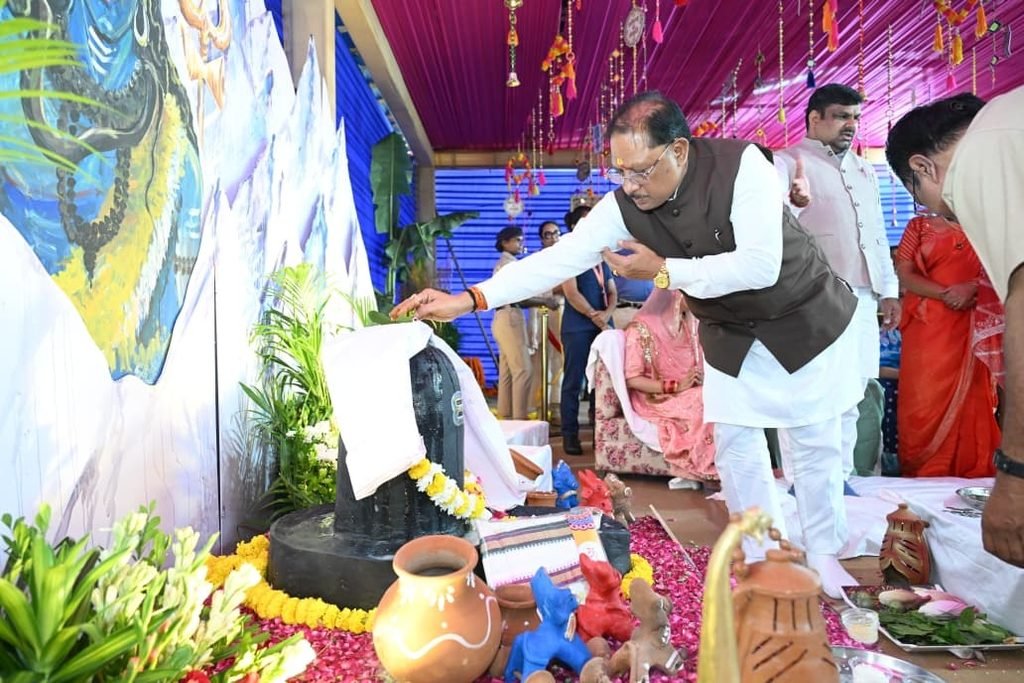
Chief Minister Vishnu Deo Sai offers prayers to Lord Shiva during the Teeja-Pora celebration at his Nava Raipur residence on Saturday, September 12, 2026, praying for the happiness and prosperity of Chhattisgarh-Photo Credit:channel24india.com via CMO .
The concern of an elder for the well-being of women and children also found a practical expression.
Sai launched the State-wide ‘Har Ghar Munga-Ghar Ghar Munga’ campaign, encouraging families to grow and consume moringa because of its nutritional value. National Nutrition Month was also launched, a nutrition awareness vehicle was flagged off and women were administered a pledge on nutrition.
The symbolism was difficult to miss: a celebration centred on sisters was accompanied by a message about their health and the nourishment of their children.
A Sister’s Strength Is Also Her Independence
Affection, however, cannot be measured only through ceremonies.
The larger question is whether a woman returning from her maika goes back to her own home stronger than before.
Sai said more than 68 lakh women were receiving ₹1,000 every month under the Mahtari Vandan Yojana and that over ₹20,000 crore had been transferred through 31 instalments. He cited examples of women using the money for their daughters’ futures, buying sewing machines or investing in small businesses.
Women, he said, were also moving into new economic roles — from Lakhpati Didis and Dealer Didis to Rani Mistris and Drone Didis.
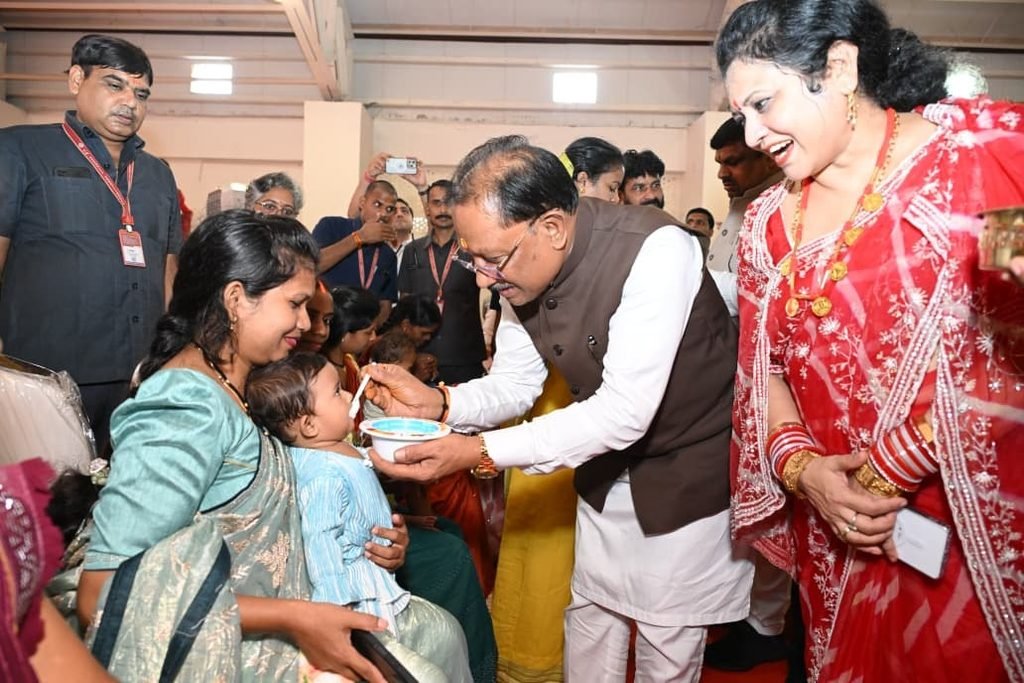
A brother’s affection extends to the next generation: Chief Minister Vishnu Deo Sai feeds kheer to a little child during an Annaprashan ceremony as mothers participate in the Teeja-Pora celebration at his Nava Raipur residence on Saturday, September 12, 2026-Photo Credit:channel24india.com via CMO .
Those figures belong to governance. But behind every figure is a woman trying to gain a little more control over her own choices.
And perhaps that is where the idea of a brother’s responsibility acquires a contemporary meaning. A sister does not need only affection; she needs opportunity, dignity, security and the confidence to make decisions for herself.
For One Day, No Gates Between Power and Family
A Chief Minister’s residence ordinarily symbolises authority. There are security barriers, appointments, officials and protocol.
Teeja-Pora temporarily gave it another identity.
There were sisters playing traditional games. There were mothers with children. There were folk artists, swings, mehendi and the sights of rural Chhattisgarh. There was worship before Shiva and Parvati. There was a Chief Minister feeding kheer to little children.
And above everything else was one sentence:
“Today, the Chief Minister’s residence is your maika.”
The real beauty of that sentence lies in what maika means to generations of Indian women.
A daughter may marry and build another home. Years may pass. Responsibilities may multiply. She may become a mother and eventually a grandmother.
Yet somewhere there remains a door through which she hopes she can enter without formality.
On September 12, for many women of Chhattisgarh, that door was opened at the Chief Minister’s residence.
And on the other side stood Vishnu Bhaiya.