Kumar Bahukhandi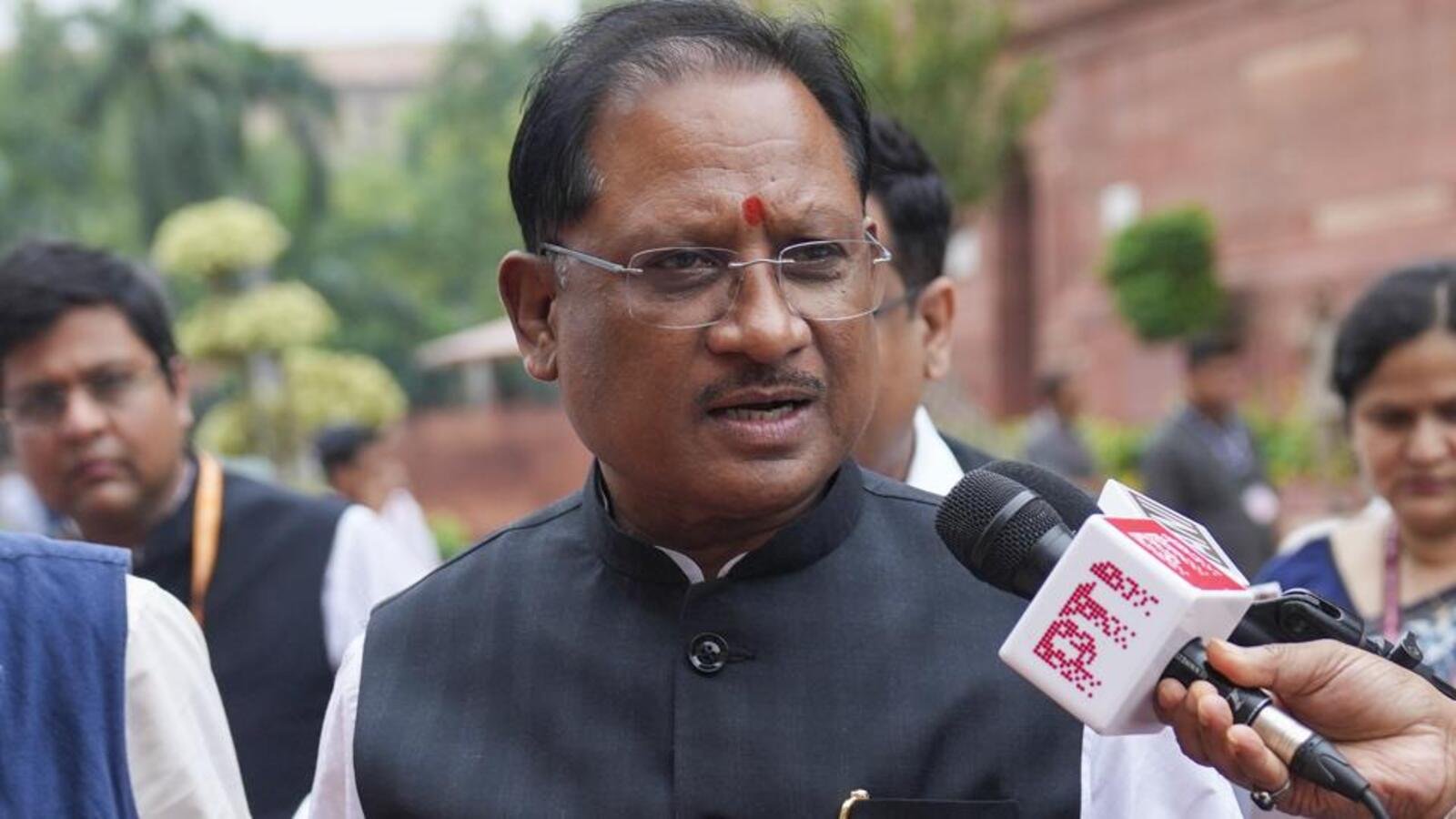
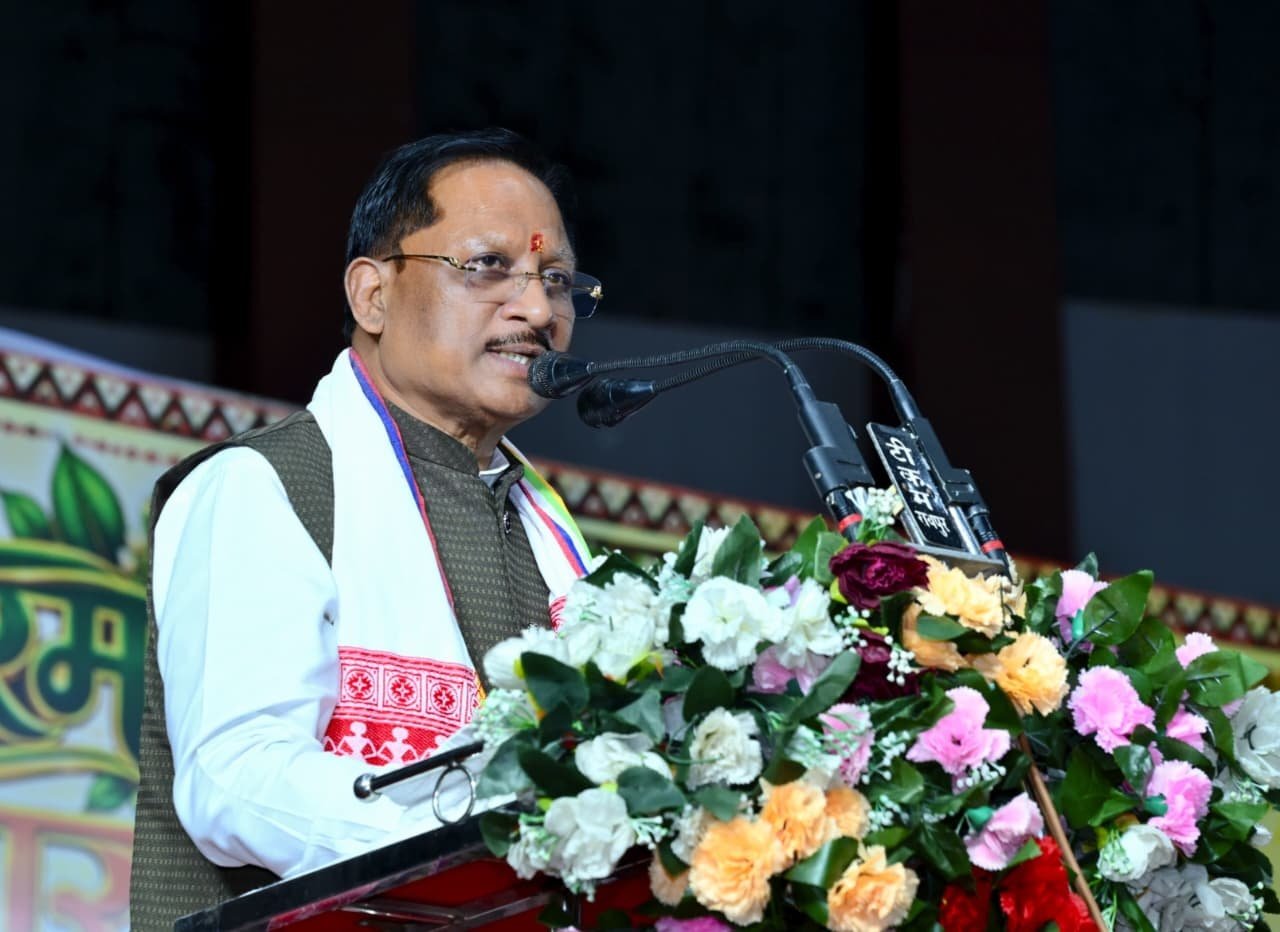
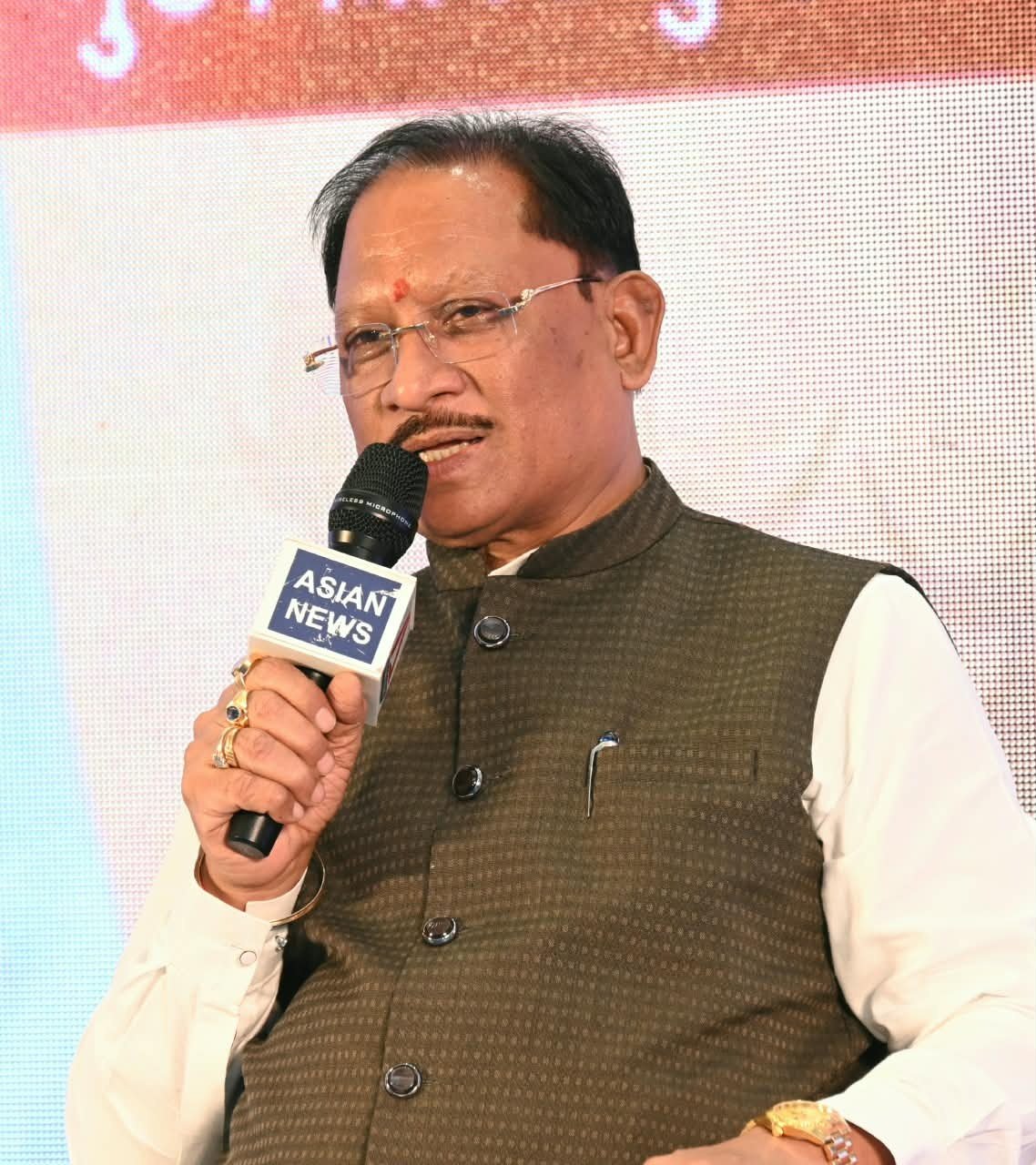
Chhattisgarh Chief Minister Vishnu Deo Sai interacts with the media. Sai backed Prime Minister Narendra Modi’s warning on ‘Dimaagi Naxals’ following the Prime Minister’s 80th Independence Day address from the Red Fort, maintaining that the decline of armed Naxalism must be followed by a sustained challenge to extremist ideology. (File Photo: PTI)
Echoing the Prime Minister’s Red Fort address, Chhattisgarh Chief Minister Vishnu Deo Sai says the defeat of armed Naxalism must now be followed by a wider struggle against the ideology of violence
Key Factors
- Sai backs Modi’s Independence Day warning on ‘dimaagi Naxals’
- Chief Minister says armed Naxalism has been eliminated but the ideological challenge remains
- Changing Bastar gives Chhattisgarh a unique perspective on the Prime Minister’s message
- Security gains bring development, rehabilitation and employment to the centre of the post-Naxal agenda
- The debate also demands a clear distinction between advocacy of violence and legitimate democratic dissent
- Bastar’s lasting victory depends on ensuring that another generation never finds extremism attractive
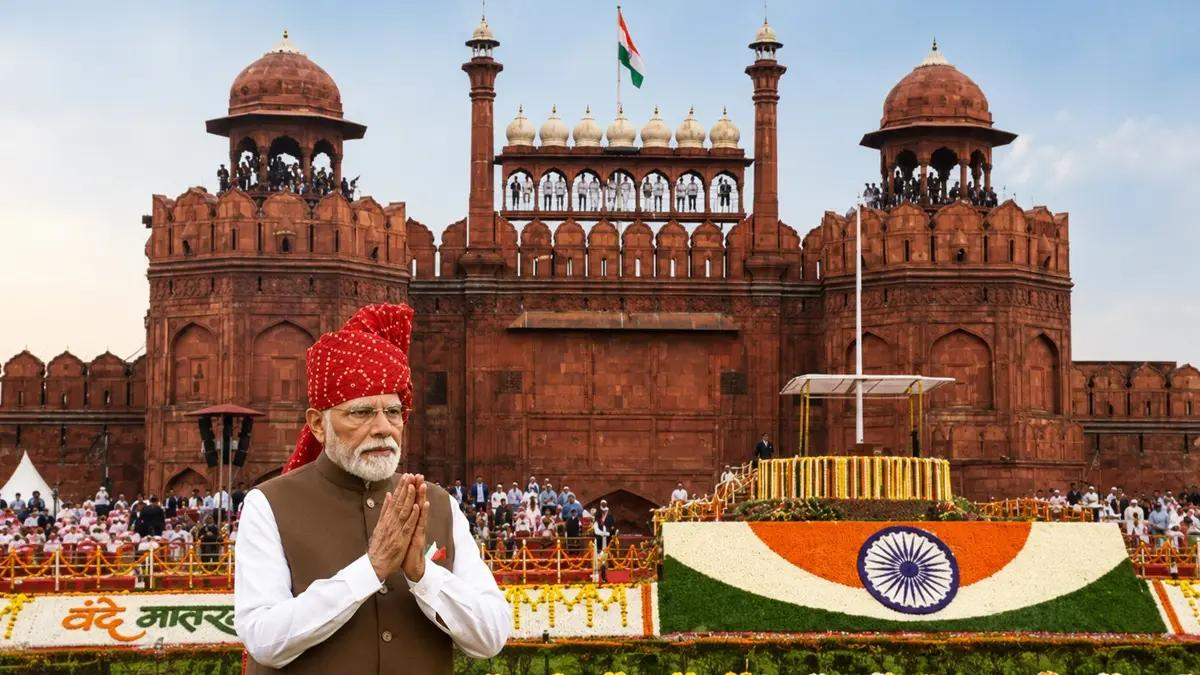
When Prime Minister Narendra Modi addressed the nation from the ramparts of the Red Fort on India’s 80th Independence Day, one part of his speech had particular resonance in Chhattisgarh.
The Prime Minister spoke of the success achieved against armed Naxalism but warned that the challenge had not disappeared completely. Even as the gun-wielding insurgency loses ground, he cautioned against what he termed “dimaagi Naxals” — those who, in his assessment, continue to sustain or promote an extremist mindset.
In Chhattisgarh, Chief Minister Vishnu Deo Sai strongly endorsed the Prime Minister’s assessment.
“The Prime Minister is absolutely right. Armed Naxalism has been eliminated, but ‘dimaagi Naxals’ still remain,” Sai said while responding to Modi’s Independence Day address.
Coming from the Chief Minister of Chhattisgarh, the observation carries significance beyond routine political endorsement.
Few states have experienced the human, social and economic cost of Maoist violence as deeply as Chhattisgarh. For decades, large parts of Bastar were known nationally through encounters, ambushes, improvised explosive devices, security casualties and villages where the writ of the administration struggled to reach.
That picture is changing rapidly.
And it is precisely because the armed movement has been pushed back so significantly that the question raised by Modi — and reinforced by Sai — deserves closer examination.
The Battle Beyond the Battlefield
What does victory over Naxalism mean once the guns begin to fall silent?
For much of its existence as a separate state, Chhattisgarh has confronted Maoism as one of its gravest internal-security challenges.
The conflict was never confined to armed cadres and security forces.
Ordinary tribal families lived with its consequences. Roads could become targets. Construction projects could be obstructed. Schools and government buildings were affected. Movement through certain areas carried risks unimaginable in other parts of the state.
Security personnel paid with their lives. So did civilians and members of tribal communities.
Development itself became inseparable from security.
The transformation now unfolding in Bastar therefore represents far more than a change in policing statistics.
Security camps have moved deeper into areas once regarded as Maoist strongholds. Roads and telecommunications have expanded. Government services are reaching settlements that remained isolated for years. Maoist cadres have surrendered, while sustained security operations have substantially reduced the geographical space available to the insurgency.
Independence Day 2026 offered powerful symbols of that transition.
The Tricolour was raised in villages where the shadow of Maoism had for decades prevented normal expressions of national and civic life. Former strongholds witnessed Independence Day celebrations involving local communities, officials and security personnel.
Such scenes carry a meaning that numbers alone cannot convey.
A national flag flying freely in a village once dominated by an armed movement represents more than the recovery of territory.
It represents the recovery of public space, civic confidence and normal life.
But recovering territory is not the same as securing the future.
Security forces can dismantle camps, recover weapons, disrupt networks and push armed cadres out of their traditional areas of influence.
An idea cannot be eliminated through an encounter.
And that is where the next phase of Chhattisgarh’s struggle begins.
If Maoism found space historically in isolation, deprivation, grievances and distrust of institutions, lasting peace will require those conditions to be addressed with the same determination that has characterised the security campaign.
A village cannot merely be declared Naxal-free.
It must acquire the conditions that allow it to remain Naxal-free.
A newly built road matters because it allows a farmer to reach a market, an ambulance to reach a patient and a teacher to reach a school.
Mobile connectivity matters because isolation has historically been one of extremism’s greatest advantages.
Education matters because it gives a young person choices.
Employment matters because peace becomes durable when people have a stake in stability.
Healthcare, banking, electricity, drinking water and responsive administration matter because the presence of the State is ultimately judged not by the number of security camps it establishes but by the quality of life it enables.
The transition from security operations to ordinary governance may therefore be one of the most important tests facing the Sai government.
Winning Back More Than Territory
There is another dimension to the changing Bastar story that deserves greater attention.
For decades, much of India came to know Bastar through photographs of armed Maoists, security forces, burnt vehicles and the aftermath of violence.
That was never the whole identity of the region.
Bastar possesses an extraordinary cultural inheritance — tribal traditions, languages, festivals, forests, crafts, music, dance and landscapes that long predate the conflict.
Peace creates the opportunity for this identity to emerge from behind the imagery of insurgency.
Recent developments have already provided glimpses of that change.
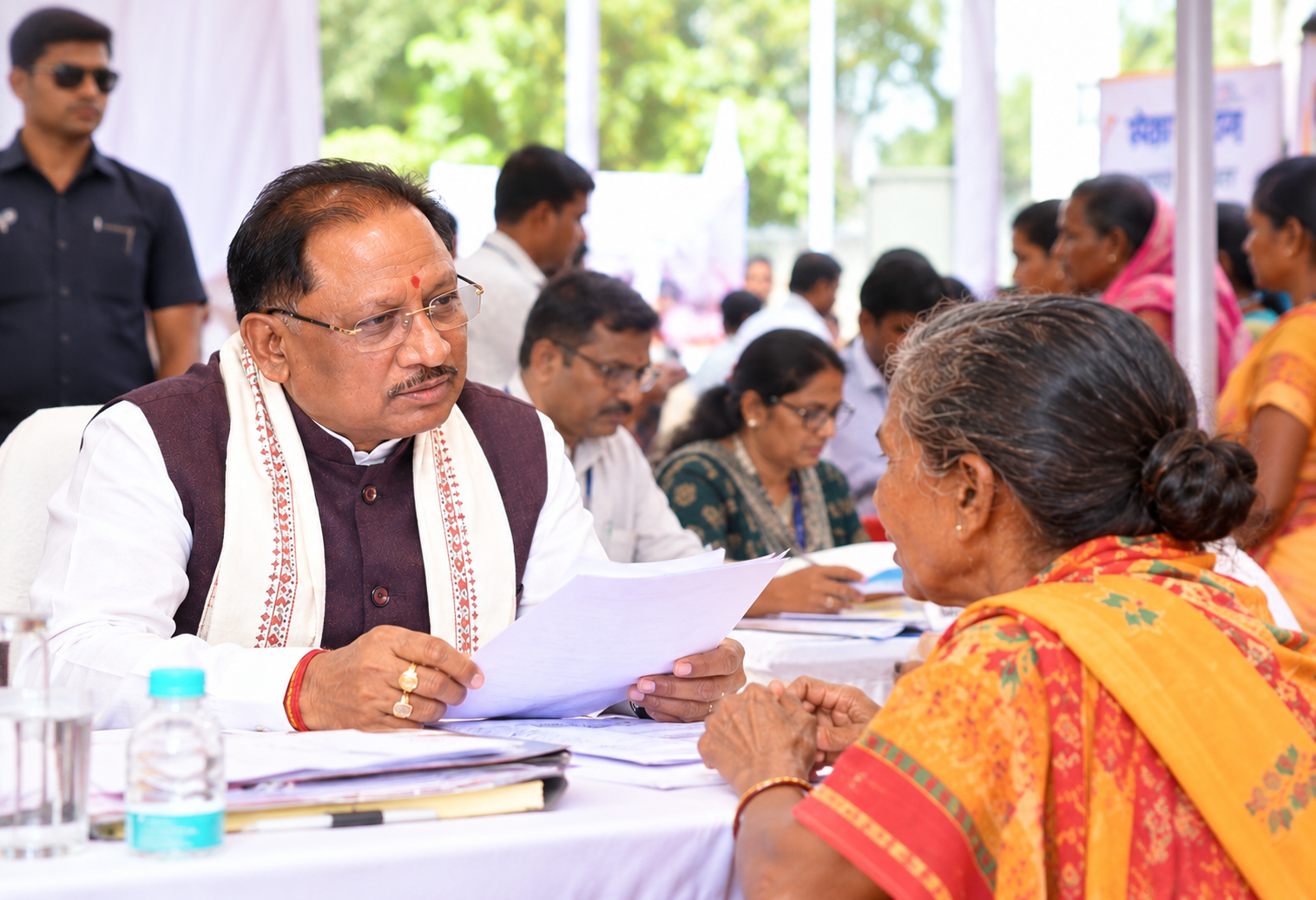
Former Maoist cadres are returning to mainstream society. Young people from previously affected regions are participating in sporting and cultural activities. Communities that once lived under the pressure of insurgency are increasingly engaging with government institutions.
The transformation of surrendered women Maoists offers a particularly striking example. Women who once lived within armed formations have been seen acquiring skills, participating in public programmes and attempting to build entirely different lives.
Such rehabilitation should not be treated as a public-relations exercise.
It is an essential part of countering extremism.
A person who surrenders a weapon needs more than immediate financial assistance. Reintegration requires skills, employment, social acceptance and the confidence that there is a dignified future outside the movement.
If surrendered cadres return to communities without livelihoods or acceptance, the process remains incomplete.
The same principle applies to the next generation.
The strongest protection against a revival of Maoism will not be permanent deployment of extraordinary numbers of security personnel.
It will be a generation that sees education, enterprise, sport, employment and democratic participation as more powerful instruments of change than violence.
What Does ‘Dimaagi Naxal’ Mean?
This is also where Modi’s phrase “dimaagi Naxals” requires careful consideration.
The expression is politically powerful. It is also broad enough to generate legitimate debate.
If it refers to individuals who continue to advocate armed revolution, justify Maoist violence or encourage the overthrow of constitutional democracy through force, the ideological challenge is obvious.
A weakened armed organisation does not necessarily mean that the ideas used to justify its violence have disappeared.
But India is also a constitutional democracy, and that makes another distinction equally important.
Criticism of the government is not Naxalism.
A journalist questioning an official claim, an academic examining displacement, a lawyer representing an accused person, a tribal activist demanding forest rights or an opposition leader challenging security policy cannot be branded extremist merely for disagreeing with those in power.
Democratic dissent and advocacy of political violence are fundamentally different things.
Recognising that distinction does not weaken the campaign against Naxalism.
It strengthens its democratic legitimacy.
Indeed, the most convincing answer India can give to an ideology advocating violence is to demonstrate that its constitutional system provides peaceful means to challenge authority, seek justice and change governments.
Elections allow governments to be removed.
Courts allow State action to be challenged.
Journalism allows power to be questioned.
Parliament and Assemblies allow political disagreement.
Peaceful protest allows grievances to be expressed.
None of these is a weakness of the Republic. They are among its greatest strengths.
The ideological battle against Maoism must therefore be fought with confidence rather than fear.
Development Must Include Bastar’s People
The retreat of armed Naxalism also opens enormous economic possibilities for southern Chhattisgarh.
Improved security and connectivity can encourage investment, tourism, local enterprise and employment.
But development in Bastar carries a special responsibility.
The region’s tribal communities cannot merely become spectators to economic transformation taking place around them.
Their participation must be central to it.
Land, forests and traditional livelihoods have profound economic and cultural significance. Development that ignores those relationships could create new grievances even while old ones are being resolved.
The State therefore faces a delicate but achievable task: expanding economic opportunity while protecting identity, dignity and legitimate community rights.
The best answer to extremist propaganda will be development that people can see, participate in and benefit from.
A young tribal entrepreneur building a successful enterprise is an answer.
A girl from a remote village entering university is an answer.
A farmer obtaining a better price because a new road connects his village to a market is an answer.
A former Maoist earning a dignified livelihood after surrender is an answer.
A tribal family receiving responsive healthcare from a functioning government facility is an answer.
These may appear to be ordinary achievements.
In a region emerging from decades of insurgency, they are profoundly political ones.
From Security Success to Democratic Success
Sai’s endorsement of Modi’s Independence Day warning should therefore be seen against this larger transition.
The first stage of the struggle was necessarily about restoring the authority of the constitutional State in areas where armed organisations exercised influence.
The next stage is about demonstrating what that constitutional State can deliver.
This is a more complex test.
A security operation has identifiable objectives. A territory can be secured. A camp can be established. A cadre can surrender. A weapon can be recovered.
Trust is harder to measure.
So is opportunity.
And so is the disappearance of an extremist idea.
Yet these will ultimately determine whether the gains made against Maoism become permanent.
The State, in effect, has two victories to achieve.
The first is to establish the authority of the Constitution over territory previously dominated by armed insurgents.
The second is to convince every citizen living there that the constitutional system belongs to them and can answer their aspirations.
The first victory can be secured through force when necessary. The second must be earned through governance.
That distinction is central to understanding the future of Bastar.
As extraordinary security deployment becomes progressively less necessary, ordinary institutions must become increasingly effective.
Police camps should eventually cease to be the most visible symbols of the State.
Schools, hospitals, markets, universities, businesses, roads and elected institutions should take their place.
That would mark the real transition from a conflict zone to a normal democratic society.
A Challenge for Politics Too
The debate also places responsibility on political parties across the spectrum.
The government must resist using the language of extremism so loosely that legitimate critics feel threatened by it.
The Opposition, civil society and intellectual communities have an equal responsibility not to romanticise or rationalise political violence merely because they disagree with the State.
There should be ample room in Indian democracy to debate land acquisition, tribal rights, policing, mining, rehabilitation, displacement and the conduct of security operations.
There should be no ambiguity, however, about the rejection of violence as an instrument of political change.
That democratic consensus would itself represent a major ideological defeat for Maoism.
The Chhattisgarh emerging from the conflict now has an opportunity that appeared distant for much of the past quarter-century.
Bastar can cease to be defined by Naxalism.
Its young people can be known for achievement rather than the conflict into which they happened to be born.
Its forests can attract travellers rather than armed patrols.
Its cultural traditions can reach wider audiences.
Its communities can engage with the State without fear.
And its former insurgents can demonstrate through their own transformed lives that returning from violence is possible.
That is the larger context in which Modi’s Red Fort warning and Sai’s subsequent endorsement should be understood.
The terminology of “dimaagi Naxals” will undoubtedly continue to generate political argument.
But behind the phrase lies a question more consequential than the argument itself:
Can India ensure that the ideology of armed extremism loses the social conditions from which it once drew strength?
Chhattisgarh may now be closer than ever to answering that question.
Its security achievements have created an opening. What happens next will depend on governance, justice, employment, rehabilitation, education and the confidence of communities that have lived with conflict for generations.
If those foundations are secured, Bastar’s transformation will represent far more than the end of an insurgency.
It will demonstrate that democracy can recover territory without surrendering democratic values — and that development can ultimately achieve what the gun alone cannot.
The ultimate victory over Naxalism will come not merely when the guns fall silent, but when the ideology of violence loses its appeal.