Kumar Bahukhandi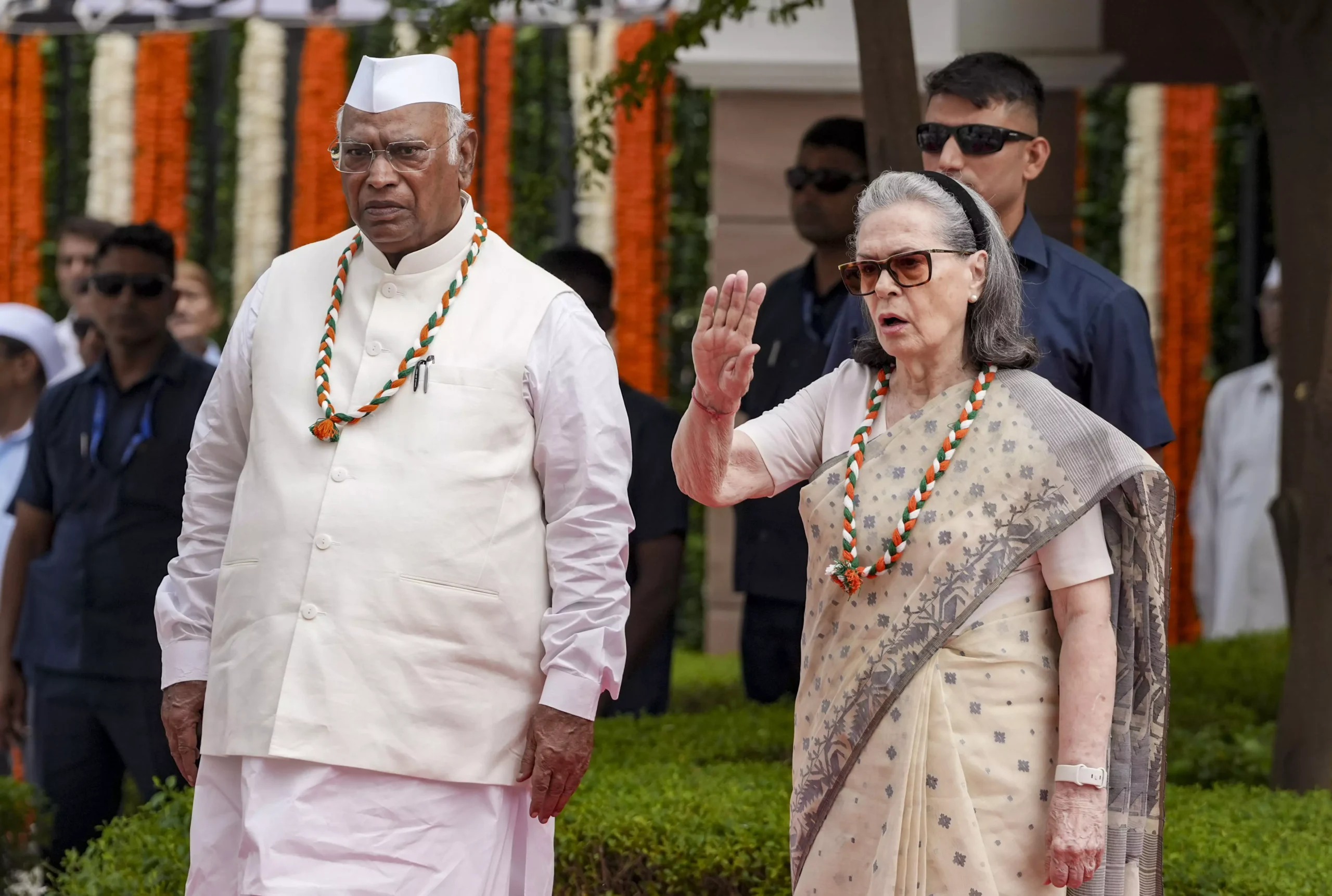
Congress Parliamentary Party Chairperson Sonia Gandhi and Congress president Mallikarjun Kharge during the 80th Independence Day celebrations at the AICC headquarters in New Delhi on August 15, 2026. The Congress programme subsequently became the centre of a political controversy over the rendition of Vande Mataram, with the party rejecting allegations of disrespect towards the national song. (Photo: PTI)
The controversy over Vande Mataram and the absence of senior Congress leaders from the Red Fort raise a larger question: should political differences ever overshadow participation in national occasions?
Key Factors
- BJP leaders accused Sonia Gandhi and other senior Congress leaders of showing disrespect towards Vande Mataram during the Congress Independence Day programme; the Congress denied the allegation.
- Madhya Pradesh Chief Minister Mohan Yadav demanded an apology from Sonia Gandhi and Rahul Gandhi over the controversy.
- Rahul Gandhi and Mallikarjun Kharge did not attend the Independence Day ceremony at the Red Fort.
- Political differences are fundamental to democracy, but national occasions should provide common ground for both the government and the Opposition.
- Attendance at a particular ceremony cannot alone determine patriotism, but the conduct of senior constitutional and political figures carries considerable symbolic significance.
- Vande Mataram belongs to the nation’s freedom struggle and should not become another instrument of partisan confrontation.
Independence Day belongs neither to the government of the day nor to the Opposition. It belongs to India.
That simple distinction risks becoming blurred when political disagreements spill over into occasions intended to represent the unity of the Republic.
The controversy surrounding the singing of Vande Mataram at the Congress headquarters in New Delhi during the 80th Independence Day celebrations is the latest example. BJP leaders accused Congress Parliamentary Party Chairperson Sonia Gandhi of objecting to the complete rendition of the national song. The Congress rejected the allegation.
Since the intention behind a gesture can be disputed, it would be unfair to pronounce anyone guilty merely on the basis of an interpretation. Yet the controversy raises a much broader question about the place of politics on occasions that are meant to unite the country.
Madhya Pradesh Chief Minister Mohan Yadav accused Sonia Gandhi and Rahul Gandhi of insulting Vande Mataram and demanded that they apologise to the nation. He recalled the national song’s association with India’s freedom movement and generations of freedom fighters who embraced it as an expression of devotion to the motherland.
Political accusations and counter-accusations are hardly unusual in India. Independence Day, however, ought to be different.
Patriotism Cannot Become a Party Possession
The absence of Leader of the Opposition in the Lok Sabha Rahul Gandhi and Congress president Mallikarjun Kharge from the national Independence Day ceremony at the Red Fort has consequently attracted political attention.
There may be political, protocol, health or personal reasons behind a leader’s decision to attend or not attend a particular ceremony. Attendance at the Red Fort cannot, by itself, become a certificate of patriotism.
Yet symbolism matters enormously in public life.
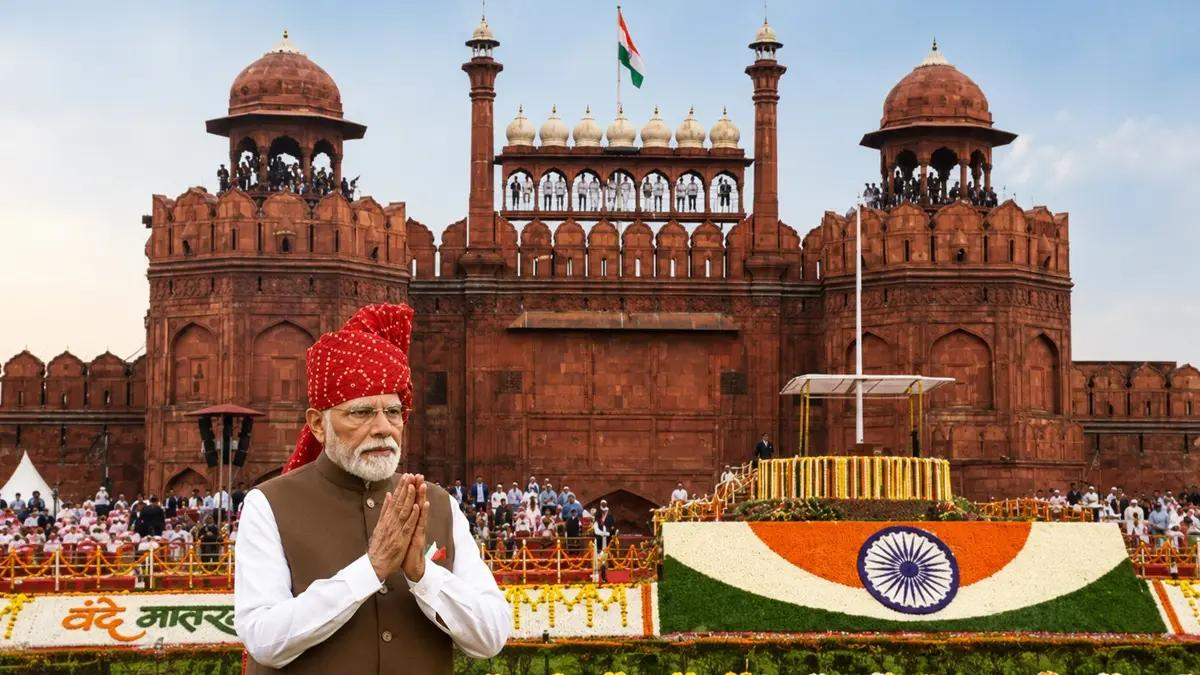
When the Prime Minister stands at the Red Fort on Independence Day, the occasion goes beyond the political identity of the individual occupying that office. The ceremony represents the Indian state and commemorates the freedom won through the sacrifices of countless Indians belonging to different regions, religions, communities and political traditions.
An Opposition leader does not endorse the government’s policies merely by attending a national ceremony.
Indeed, there is something powerful about political adversaries sitting beneath the same Tricolour on Independence Day and returning to Parliament later to disagree fiercely over policies. That is not weakness. That is democracy at its healthiest.
Rahul Gandhi, like leaders belonging to virtually every major political party, visits temples and other religious and cultural places during political and public programmes. Whether an individual visit is motivated by personal faith, political considerations or both is something only the leader concerned can genuinely answer.
But this leads to a legitimate question.
If political leaders understand the importance of being present at religious, cultural and social occasions, should national occasions not command at least equal importance?
India does not require its Opposition to agree with its Prime Minister. Quite the contrary. A healthy democracy requires an Opposition willing to challenge the government, question its decisions, expose shortcomings and present an alternative vision before the electorate.
But opposition to a government should never appear to become distance from national institutions or occasions representing the Republic itself.
The same principle applies equally to the ruling party.
Patriotism cannot become the proprietary possession of the BJP, Congress or any other political organisation. A citizen should never have to demonstrate love for India by supporting Narendra Modi, Rahul Gandhi, Mallikarjun Kharge or any other political personality.
Similarly, controversies involving Vande Mataram should not immediately be converted into certificates declaring who is nationalist and who is not.
Vande Mataram occupies an extraordinary position in India’s national consciousness. It inspired generations during the freedom struggle and became inseparable from the sacrifices of those who challenged colonial rule.
Its dignity therefore deserves protection from two extremes: deliberate disrespect on one side and unnecessary politicisation on the other.
Senior political leaders must also recognise that their actions, gestures and absences carry meanings far beyond their immediate intentions. A gesture lasting a few seconds can become a national controversy. An empty chair at an important national ceremony can communicate something even when no message was intended.
That is the responsibility accompanying public life.
Independence Day should therefore offer something increasingly rare in Indian politics — a few hours when government and Opposition remember that their political battles take place within a nation whose freedom was secured long before today’s parties and personalities occupied the political stage.
Governments will change. Prime Ministers will change. Opposition leaders will change. Political alliances will be formed and broken.
The Tricolour will remain.
That is precisely why August 15 should never become just another date on India’s political calendar.
It should remain a day when disagreement gives way, however briefly, to a shared acknowledgement:
Before being political opponents, we are citizens of the same Republic.