Kumar Bahukhandi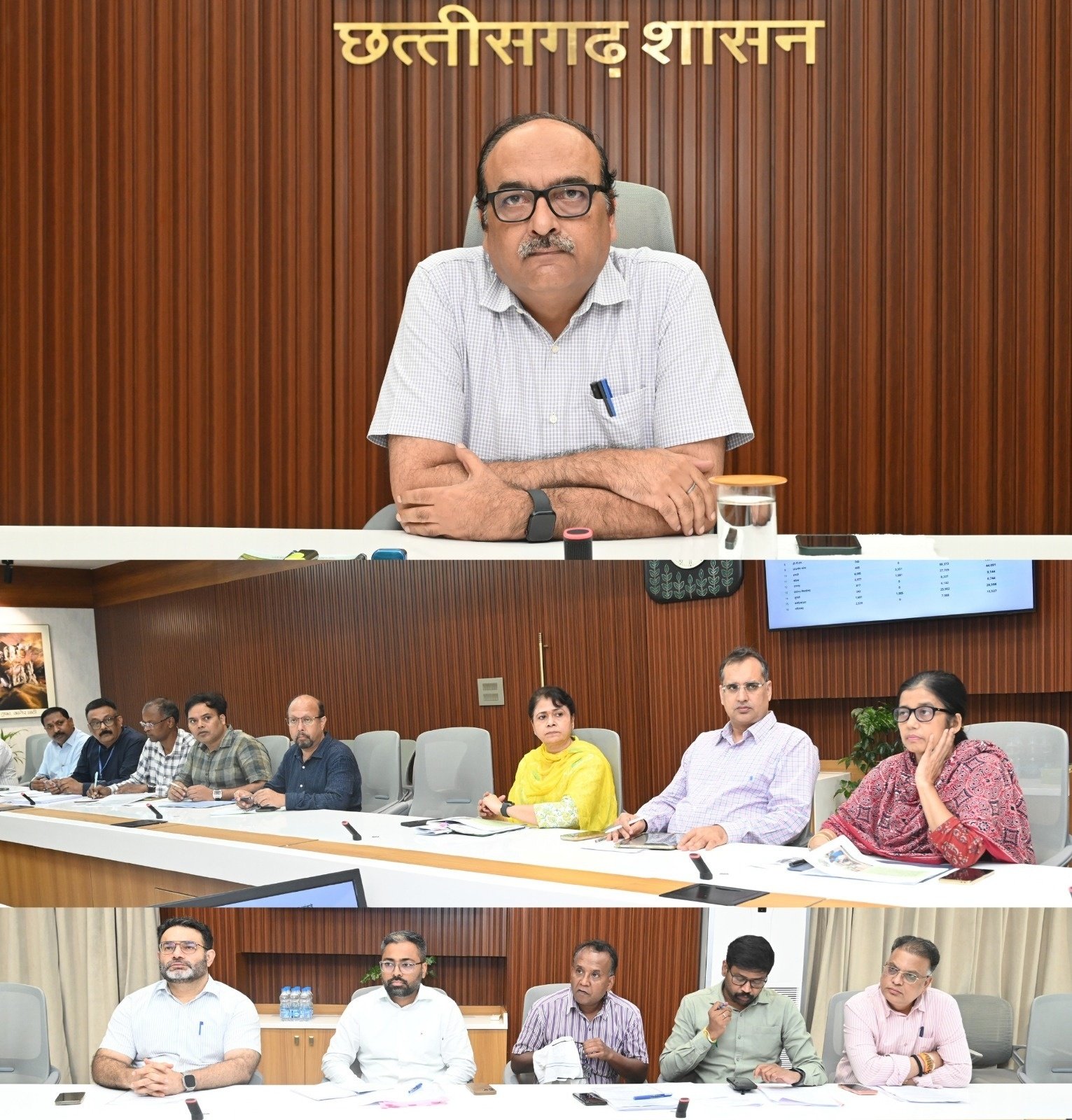
Chief Secretary Vikas Sheel chairs a high-level meeting at Mahanadi Bhawan, Raipur, on Thursday, October 15, 2026, to review preparations for Chhattisgarh’s ‘Har Ghar Munga, Ghar Ghar Munga’ campaign aimed at combating malnutrition and anaemia. Senior officials from the Women and Child Development, School Education, Panchayat and Rural Development, Agriculture, Horticulture and Forest Departments attended the meeting to discuss sapling distribution, institutional plantation, nutrition gardens and digital monitoring. Photo: channel24india.com via CG/DPR
Chief Secretary Vikas Sheel chairs high-level meeting; free drumstick saplings to reach households, Anganwadi centres, schools and hostels, with geo-tagging and live dashboard monitoring to ensure effective implementation.
Key Highlights
- Statewide campaign aims to improve nutrition and reduce malnutrition and anaemia, particularly among children and pregnant women.
- Free Munga (drumstick) saplings to be distributed to households, with plantation planned during February–March.
- Around 23,500 schools to establish nutrition gardens and introduce Munga leaves into midday meals.
- Anganwadi centres, Ashrams and hostels to participate in the plantation programme.
- District Collectors to supervise implementation, supported by digital geo-tagging and live dashboard monitoring.
- Women and Child Development Department designated as nodal agency, with several other departments assigned specific responsibilities.
Raipur: Chhattisgarh is preparing to launch an ambitious statewide nutritional initiative, ‘Har Ghar Munga, Ghar Ghar Munga’, aimed at combating malnutrition and anaemia through the widespread cultivation and consumption of Munga, commonly known as drumstick or moringa. The Women and Child Development Department will spearhead the campaign, under which free saplings will be distributed to households and planted at Anganwadi centres, schools, Ashrams and hostels. The programme was discussed at a high-level meeting chaired by Chief Secretary Vikas Sheel at the Mahanadi Bhawan Secretariat on Thursday, October 15, 2026, where detailed responsibilities were assigned to various departments to ensure coordinated implementation across the state.
Chief Secretary Reviews Statewide Nutrition Initiative
The high-level meeting chaired by Chief Secretary Vikas Sheel focused on developing a coordinated strategy to address nutritional deficiencies through a sustainable, community-based approach.
The proposed campaign seeks to encourage households to cultivate Munga plants and incorporate their nutritious leaves and pods into regular diets.
The initiative will involve several government departments, including Women and Child Development, School Education, Panchayat and Rural Development, Horticulture, Agriculture and Farmers’ Welfare, and Forest and Climate Change.
The programme is designed to bring nutritional resources closer to households, particularly in rural and economically disadvantaged areas where access to diverse and nutritious food may be limited.
Rather than relying exclusively on supplementary food distribution, the campaign seeks to encourage families to grow a source of nutritious vegetables within their own surroundings.
Munga: A Nutrient-Rich Plant with Significant Dietary Benefits
Munga, also known as Sahjan or drumstick, is widely recognised for the nutritional value of its leaves and pods.
The plant contains important nutrients, including iron, calcium, protein, vitamin A precursors and vitamin C.
These nutrients contribute to several essential functions of the human body, including growth, immunity, bone health and the formation of healthy blood cells.
Munga leaves can be prepared as a leafy vegetable and incorporated into a variety of traditional meals, making them a potentially useful addition to household diets.
During the meeting, officials highlighted the importance of promoting Munga consumption, particularly among children experiencing nutritional deficiencies and pregnant women who require adequate and balanced nutrition.
However, while Munga can contribute to a nutritious diet, it is not a substitute for medical diagnosis, iron supplementation or other prescribed treatment for anaemia and severe malnutrition.
The campaign’s potential benefits will depend on regular dietary use, appropriate nutrition education and access to other essential health and nutrition services.
Free Saplings to Be Distributed to Households Across Chhattisgarh
One of the central components of the programme is the free distribution of Munga saplings to households throughout the state.
The government intends to encourage families to plant and maintain the saplings so that Munga becomes a readily available source of nutritious food.
The Horticulture, Agriculture and Farmers’ Welfare, and Forest and Climate Change Departments will be involved in preparing saplings through their nurseries.
Distribution and plantation are planned for February and March.
District Collectors will supervise the implementation of the campaign to ensure coordination between departments and effective execution at the local level.
The emphasis will be not only on distributing saplings but also on ensuring that the plants receive proper care and survive after plantation.
This approach is intended to establish a lasting household nutritional resource rather than a short-term plantation drive.
Munga Plantation in Anganwadi Centres, Schools and Hostels
The campaign will extend beyond individual households to public institutions serving children and vulnerable communities.
Free Munga saplings will be provided for plantation at Anganwadi centres, schools, Ashrams and hostels across Chhattisgarh.
These institutions will be encouraged to maintain the plants and use the initiative to promote awareness about nutritious food and healthy dietary practices.
The programme is expected to support nutritional education by allowing children to observe how food-producing plants are grown, maintained and harvested.
It will also create opportunities for teachers and Anganwadi workers to explain the importance of locally available vegetables and balanced diets.
Nutrition Gardens Planned in Approximately 23,500 Schools
An important component of the initiative involves establishing nutrition gardens in approximately 23,500 schools across Chhattisgarh.
Under the proposed programme, Munga saplings will be planted on school premises to develop Shala Poshan Vatikas, or school nutrition gardens.
The government also plans to introduce Munga leaves into midday meals, enabling schoolchildren to benefit from the plant’s nutritional properties.
The school-based programme is expected to combine practical nutrition education with the promotion of healthier eating habits.
Students may also develop a better understanding of environmental responsibility, plant cultivation and the relationship between agriculture and human health.
School authorities will play an important role in maintaining the plants and ensuring that the gardens remain functional.
The initiative could also encourage children to share knowledge about the nutritional value of Munga with their families, extending the programme’s reach into local communities.
Digital Geo-Tagging and Live Dashboards to Monitor Plantation
The State Government plans to use digital monitoring systems to track the implementation of the campaign.
Special emphasis will be placed on geo-tagging planted saplings and monitoring plantation activities through live dashboards.
The system is intended to help authorities monitor the location, maintenance and survival of plants.
Digital monitoring will also support district administrations in identifying areas where plantation efforts require additional attention.
The use of technology is expected to strengthen transparency and accountability while enabling officials to assess progress across districts.
Alongside plantation monitoring, the programme will seek to track relevant nutritional indicators through the responsible departments.
The effectiveness of these systems will depend on regular field verification and accurate reporting.
Women and Child Development Department to Lead the Campaign
The Women and Child Development Department has been designated as the nodal department for the initiative.
It will coordinate activities at the Anganwadi level, identify beneficiaries, promote nutritional awareness and supervise routine implementation.
Anganwadi workers will have an important role in communicating the benefits of Munga cultivation and consumption to families.
Their involvement is particularly significant because Anganwadi centres already work closely with pregnant women, lactating mothers and young children.
The department’s coordination with other agencies will be essential to ensuring that sapling distribution is supported by nutrition education and follow-up activities.
Panchayats and Self-Help Groups to Strengthen Community Participation
The Panchayat and Rural Development Department will play an important role in implementing the programme at the village level.
Gram Panchayats will assist in identifying suitable spaces for plantation, supporting nursery development and spreading awareness among households.
Self-help groups will also be involved in communicating the objectives of the campaign and encouraging community participation.
Their engagement could help the programme reach households through existing village-level networks.
Community participation will be particularly important in ensuring that saplings are planted, watered and protected after distribution.
The campaign also offers an opportunity to encourage families to recognise the nutritional and practical value of locally grown vegetables.
Agriculture, Horticulture and Forest Departments Assigned Technical Responsibilities
The Horticulture and Agriculture Departments will provide technical assistance for producing quality Munga saplings and suitable planting material.
Their responsibilities will include guidance on plantation techniques, the use of organic manure and measures for protecting plants from damage.
The Forest Department will also extend support for sapling production and related activities.
Coordination between these departments is expected to ensure that sufficient planting material is available for the statewide campaign.
Technical guidance will be important because the success of the initiative depends on selecting suitable planting locations, maintaining plants and ensuring their long-term survival.
A Community-Based Approach to Improving Nutrition
The ‘Har Ghar Munga, Ghar Ghar Munga’ campaign reflects an effort to link public nutrition programmes with household cultivation, school participation and community awareness.
By promoting the availability of a nutrient-rich plant, the government aims to encourage families to include more locally grown vegetables in their diets.
The programme also recognises the importance of involving multiple departments in addressing complex nutritional challenges.
Malnutrition and anaemia cannot be addressed through a single intervention. Their prevention and management require balanced diets, healthcare access, nutritional supplementation where necessary, sanitation, maternal care and sustained public awareness.
Within this broader framework, the Munga campaign could provide an additional source of dietary nutrients and encourage healthier food practices.
Senior Officials Attend High-Level Meeting
The meeting was attended by Principal Secretary of Women and Child Development Shahla Nigar, Secretary of Tribal Development Bhuvnesh Yadav, Secretary of School Education Dr Kamalpreet Singh, and Secretary of Panchayat and Rural Development Bhim Singh.
Senior officials from the Forest, Horticulture and Agriculture Departments were also present.
The participation of officials from several departments reflected the government’s emphasis on coordinated implementation and administrative monitoring.
Towards a Healthier and Better-Nourished Chhattisgarh
The proposed statewide campaign seeks to transform Munga from a familiar household plant into a widely cultivated source of nutritional support.
Its success will depend on the timely availability of saplings, effective plantation, proper maintenance, regular consumption and sustained public participation.
By involving households, Anganwadi centres, schools, hostels, Panchayats and self-help groups, the initiative aims to create a broad community network for promoting nutritional awareness.
The planned use of geo-tagging and live monitoring systems could further strengthen implementation by helping authorities track progress and identify challenges.
As Chhattisgarh prepares to roll out the campaign, the central objective remains to make nutritious food more accessible while strengthening community participation in the fight against malnutrition and anaemia.
If implemented effectively and supported by existing health and nutrition services, ‘Har Ghar Munga, Ghar Ghar Munga’ could become a meaningful component of the state’s long-term efforts to improve public health and nutritional well-being.