Kumar Bahukhandi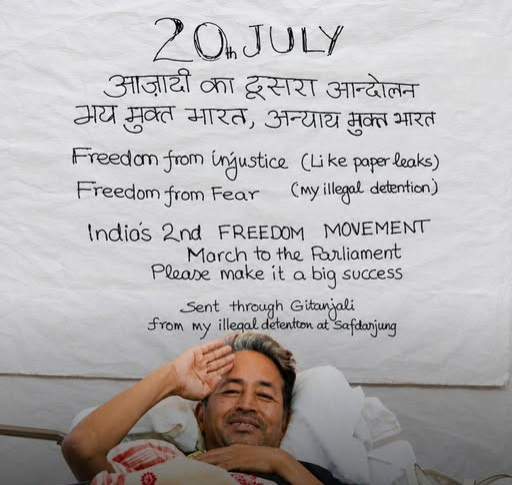
“From a hospital bed to the national conscience—Sonam Wangchuk’s message reminds us that peaceful protests are measured not by location, but by the strength of their purpose”-Photo Credit -channel24india.com ( Source Social Media )
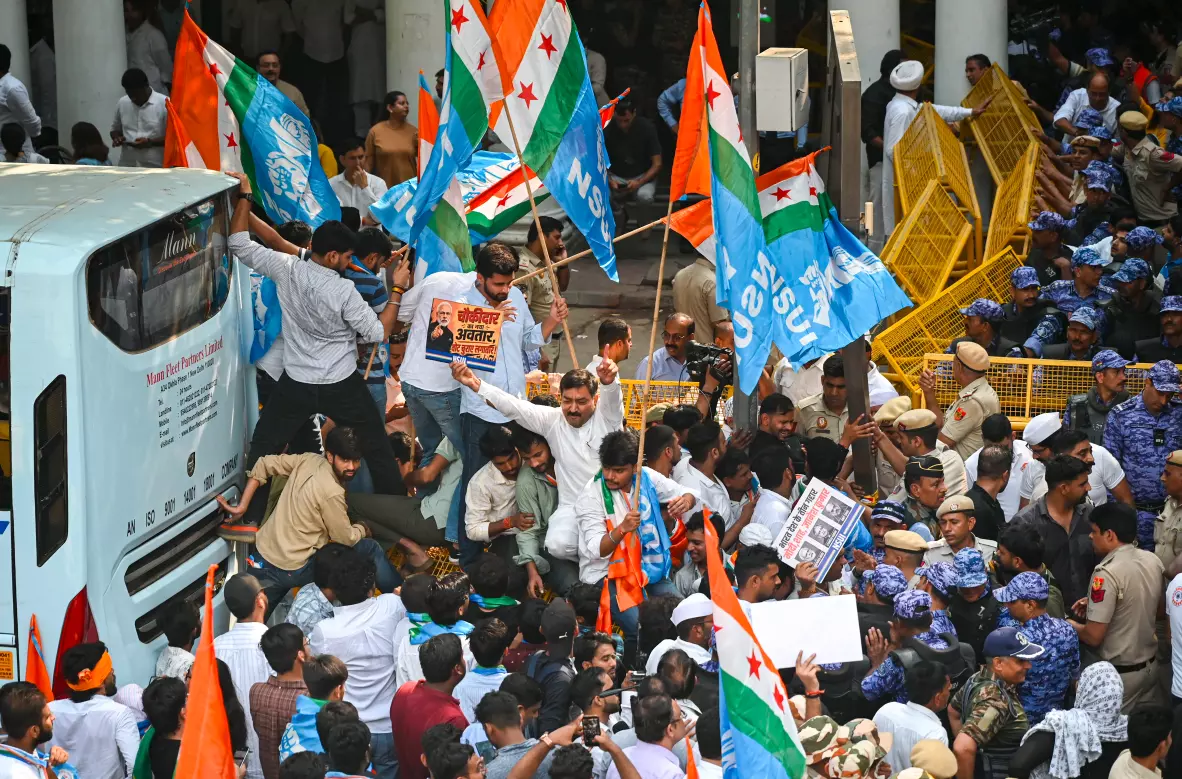
When activist and education reformer Sonam Wangchuk was reportedly shifted to a hospital under police supervision during his prolonged fast, the move immediately triggered a debate that extended far beyond his health. The letter he wrote from the hospital has now become more than a personal note—it has evolved into a political and moral statement about dissent, democracy, and the relationship between citizens and the State.
The significance of Wangchuk’s letter lies not in its emotional appeal alone but in the questions it raises. It asks whether a peaceful protest can retain its strength when the protester is physically removed from the site of agitation. More importantly, it challenges the idea that shifting a protest into a hospital automatically weakens the cause behind it.
Throughout democratic history, governments have often faced a difficult balancing act. On one hand, they carry the responsibility of protecting the life of a citizen, especially when prolonged fasting threatens health. On the other, they must ensure that any intervention does not appear to suppress peaceful dissent. Forceful hospitalization may be justified on medical grounds, but politically it is always viewed through a different lens.
Wangchuk’s letter reflects this tension. Rather than expressing defeat, it projects determination. The underlying message appears to be that physical confinement cannot confine an idea. Whether one agrees with his demands or not, the communication from the hospital indicates that his campaign continues to draw its strength from public engagement rather than from the location where he is being treated.
The episode also reminds us that in the age of digital communication, movements are no longer restricted to streets or public squares. A handwritten letter or a social media post can often reach millions within hours, shaping public opinion far beyond the immediate protest site. In that sense, the hospital bed becomes another platform rather than the end of the movement.
However, public sympathy alone cannot resolve complex policy issues. Every democratic protest eventually reaches a point where dialogue becomes more productive than confrontation. If the concerns being raised involve governance, environmental protection, constitutional safeguards, or regional aspirations, meaningful engagement between the government and representatives of the movement is ultimately the only sustainable path forward.
Governments are often judged not merely by how firmly they maintain law and order, but by how confidently they listen to criticism. Equally, protest movements are remembered not only for their passion but also for their willingness to engage constructively when opportunities for dialogue emerge.
The larger lesson from this episode is that democracy thrives neither on silence nor on confrontation alone. It flourishes when institutions remain open to conversation and citizens continue to exercise their rights peacefully and responsibly.
Whether Sonam Wangchuk’s letter ultimately changes government policy remains uncertain. What is certain, however, is that it has succeeded in keeping the conversation alive. In a democracy, that may be one of the most powerful outcomes any peaceful protest can achieve.
My Insight
A hospital may safeguard a protester’s health, but it cannot by itself resolve the issues that brought the protest into existence. Lasting solutions emerge not from force or symbolism, but from sincere dialogue, transparency, and democratic engagement. In the end, it is not the hospital room that will define this chapter—it is whether the voices raised inside and outside it are genuinely heard.