Kumar Bahukhandi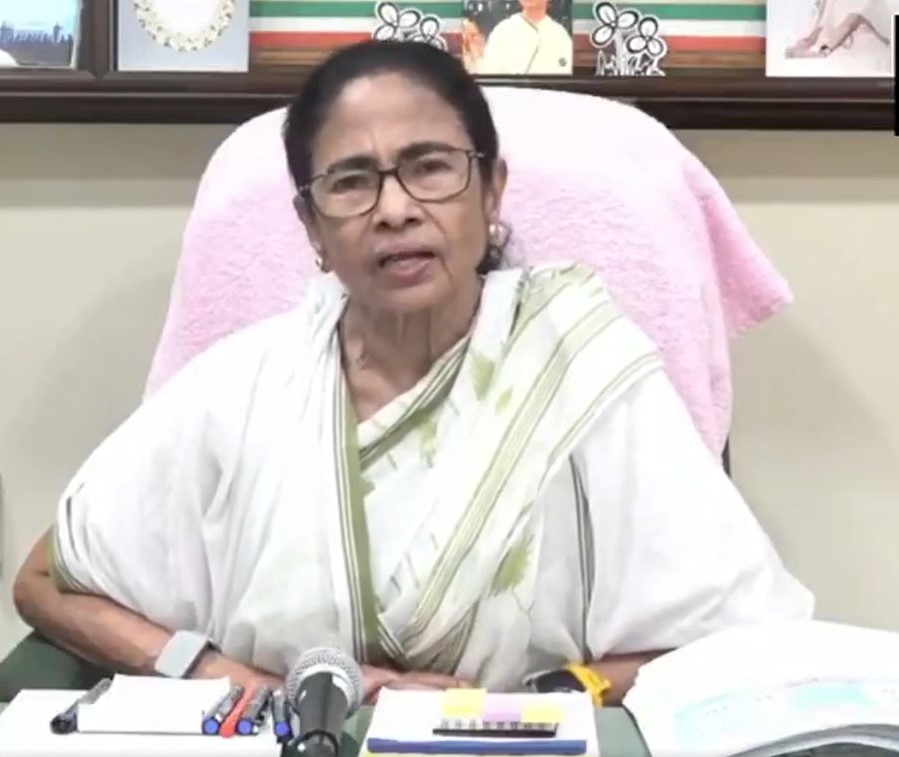
TMC chief Mamata Banerjee addresses the media, asserting that leaders wishing to leave the party should do so before the July 21 Martyrs’ Day observance, while alleging political pressure behind recent defections- Photo Credit-channel24india.com
The TMC chief’s message to party rebels reflects both confidence and caution as West Bengal’s political battle intensifies.
With West Bengal’s political landscape becoming increasingly fluid, Trinamool Congress (TMC) chief and former Chief Minister Mamata Banerjee has delivered one of her strongest political messages in recent months. Her statement—“Those who wish to leave may do so before July 21”—is more than a warning to party rebels. It is an attempt to draw a clear political line ahead of the TMC’s annual Martyrs’ Day observance, one of the party’s most significant events.
The timing of the statement is noteworthy. It comes amid reports of internal dissatisfaction and the resignation of a party MP from the film industry, reportedly Koyel Mallick, who informed the party leadership through email before meeting political leaders elsewhere. Rather than expressing anger, Mamata Banerjee publicly acknowledged the communication and thanked the MP for informing the party in advance.
Her response appeared measured, yet it carried a firm political message: those unwilling to continue with the party should leave now rather than create uncertainty later.
Pressure Politics Takes Centre Stage
During her address, Mamata Banerjee accused the BJP and central investigative agencies—including the Enforcement Directorate (ED), Central Bureau of Investigation (CBI), and other authorities—of exerting pressure on opposition leaders. According to her, individuals facing investigations or legal scrutiny are being compelled to change political loyalties.
These allegations have become a recurring theme in India’s political discourse, with several opposition parties claiming that central agencies are selectively targeting their leaders. The BJP, however, has consistently rejected these accusations, maintaining that investigative agencies function independently under the law.
The debate reflects a larger national question: where does legitimate law enforcement end, and where do allegations of political influence begin? Ultimately, these are matters that require institutional transparency and judicial oversight rather than political rhetoric alone.
Why July 21 Matters
For the Trinamool Congress, July 21 is not merely another political rally. It commemorates the 1993 police firing in Kolkata in which several Youth Congress activists lost their lives during a protest. Over the decades, the event has evolved into the party’s largest annual mobilisation, serving both as a tribute and a demonstration of organisational strength.
By asking dissatisfied leaders to make their decision before this date, Mamata Banerjee appears determined to ensure that the event projects unity rather than internal divisions.
The Battle Before the Ballot
Political defections are not unique to West Bengal. Across India, parties frequently witness leaders changing sides before crucial elections, often driven by ideology, political opportunity, personal ambition, or legal pressures. Such movements have become an accepted, though controversial, feature of contemporary electoral politics.
For the Trinamool Congress, the immediate challenge is less about the departure of individual leaders and more about maintaining cadre morale and public confidence. Every resignation invites political speculation, and every public statement becomes part of the broader narrative ahead of future electoral contests.
A Test of Leadership
Mamata Banerjee’s remarks reveal a leader attempting to balance confidence with discipline. By publicly accepting resignations while simultaneously questioning the circumstances behind them, she seeks to portray the party as resilient rather than weakened.
Whether this strategy succeeds will depend not on speeches alone but on the TMC’s ability to retain grassroots support, manage internal cohesion, and convince voters that it remains politically stable despite visible departures.
My Perspective
Political parties are judged not only by how many leaders join or leave them, but by how effectively they respond to moments of internal stress. Mamata Banerjee’s message before July 21 is both a challenge to dissenters and an appeal for organisational unity. The coming weeks will reveal whether it marks the beginning of renewed consolidation—or signals deeper shifts within West Bengal’s political landscape.