Kumar Bahukhandi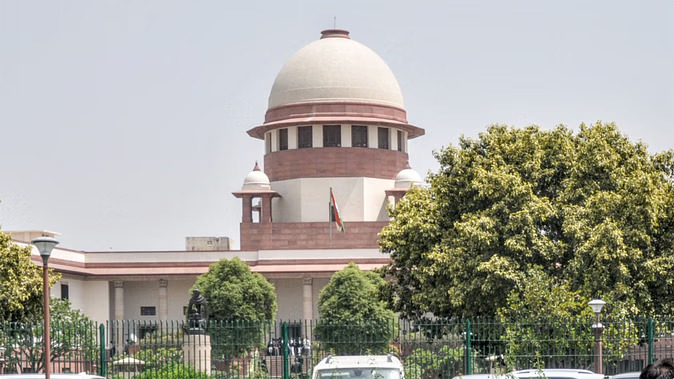
upreme Court – Photo: ANI
The Supreme Court on Thursday heard the petitions challenging the validity of the Waqf Amendment Act for the second consecutive day. The court had heard the case for about two hours yesterday. During this time, the bench did not pass any order regarding interim stay. Now know what happened in the Supreme Court today…
What happened in the Supreme Court yesterday?
Yesterday, a proposal was made to stop some important provisions of the law through an interim order. The apex court had proposed to stop the provisions of denotifying properties declared as Waqf by the courts, including non-Muslim members other than ex-officio members in the Waqf and declaring the property as non-Waqf during the investigation of the collectors. While hearing the petitions against the Act, the Supreme Court had sought a reply from the Central Government. However, there was no immediate stay on the implementation of the law. The apex court had expressed concern over the violence taking place on this issue. At the same time, the central government opposed the proposal to stop the provisions and said that the apex court should hear the matter before issuing any instructions.
Also read- Supreme Court: Big relief to Bengal teachers, ‘immaculate’ teachers will be able to continue their job till next recruitment
Earlier yesterday, a bench of Chief Justice Sanjeev Khanna, Justice Sanjay Kumar and Justice KV Vishwanathan had said that our interim order will balance the share. First, we will say in the order that any property declared as Waqf by the court will not be de-notified, that is, it will not be considered as non-Waqf, whether the property has been Waqfed by the user or through a deed. Second, the collector can continue his investigation proceedings related to any property, but the provision of the law that the property should be considered non-Waqf during the proceedings will not be effective. Third, ex-officio members can be appointed in the board and council, but all other members should be Muslims.
At the end of the hearing, the bench indicated to pass an interim order, but it decided to consider the request of Solicitor General Tushar Mehta, who appeared on behalf of the Center, on Thursday as well. The apex court proposed that the petitions related to the challenge to the Waqf Act 1995 in different High Courts should also be transferred to the Supreme Court.
Also read- Supreme Court: Hearing on the petition filed regarding the election rule amendment, ECI will have to file a reply in three weeks
P. Concern was expressed over violence in Bengal
At the end of the hearing, the Supreme Court also expressed concern over the ongoing violence in Murshidabad, West Bengal and said, one thing is very disturbing that violence is happening. If the matter is pending in the court, then this should not happen. Many senior lawyers including Kapil Sibal, Rajiv Dhawan, Abhishek Manu Singhvi, appearing on behalf of the petitioners also said, there should be no violence.
Tough questions were asked to the central government yesterday
CJI Khanna: Do all the properties that were waqfed by the user before the 2025 law came into use no longer exist as waqf?
Mehta: If the properties are registered, then they will remain waqf.
CJI: Before the arrival of the British, there was no facility of property registration in the country. Most of the mosques are from the 14th and 15th centuries. For example, Delhi’s Jama Masjid. Where will they get the registration certificate from?
Mehta: Who has stopped them from getting registered till now?
Justice Vishwanathan: What will happen if the government declares that property as government property by implementing Section 3C?
Aestions about the new law
Do all the properties that have been Waqfed on behalf of the user no longer exist as Waqf?
How can a user who has existed for centuries be asked to register Waqf properties? The CJI gave the example of Jama Masjid.
Is it fair to say that a property will not be considered Waqf until the authorized officer of the government completes the investigation of the dispute whether it is government property or not?
How can the provision of Section 2A override the decisions of the court that declare the properties as Waqf?
After the new amendments, will the majority of the members of the Central Waqf Council and State Waqf Boards be Muslims