Kumar Bahukhandi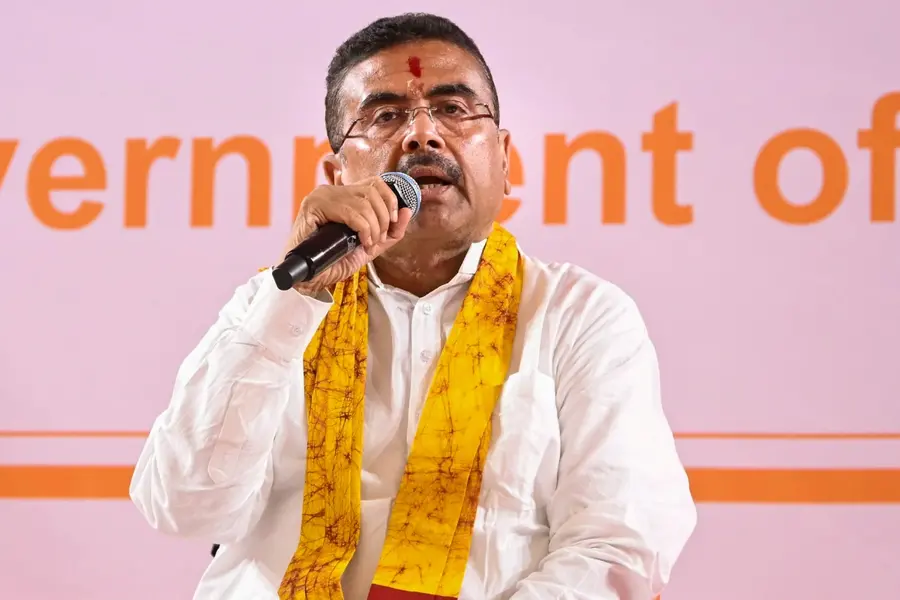
West Bengal Chief Minister Suvendu Adhikari | Photo: PTI
Consequently, the previously announced holidays for May 26 and May 27 have been cancelled, and these dates will now be regular working days for all state offices and institutions.
Kolkata: The West Bengal government declared on Saturday that May 28 will be observed as a public holiday in recognition of Eid al-Adha, commonly referred to as Bakrid, while simultaneously restructuring its previously established holiday calendar, according to an official administrative directive.
Through the issued mandate, the state executive rescinded prior holiday designations for May 26 and May 27, specifying that both dates will now operate as standard working days.
In terms of Notification No. 4188-F(P2) dated 27th November, 2025, 26th May, 2026 (Tuesday) and 27th May, 2026 (Wednesday) were declared as public holidays on account of the Day before Id-Ud-Zoha (Bakrid) and Id-Ud-Zoha (Bakrid) respectively. Now, information has been received that Id-Ud-Zoha (Bakrid) respectively. Now, information has been received that Id-Ud-Zoha (Bakrid) will be observed on 28th May, 2026 (Thursday). Accordingly, in partial modification of the aforesaid notification, the Governor is pleased to declare 28th May, 2026 (Thursday) as a public holiday under Section 25 of the Negotiable Instruments Act, 1881 on account of Id-Ud-Zoha (Bakrid),” the official notification stated.
The government order further clarified the operational status of the affected days.
“Consequent upon the above, the holidays notified earlier for 26th May, 2026 (Tuesday) and 27th May, 2026 (Wednesday) on account of the Day before Id-Ud-Zoha (Bakrid) and Id-Ud-Zoha (Bakrid), respectively, are hereby cancelled. Accordingly, 26th May, 2026 (Tuesday) and 27th May, 2026 (Wednesday) will be working days for all offices, institutions and establishments to which the aforesaid notification applies,” the text added
Cultural and Religious Significance
Eid al-Adha, or the Festival of Sacrifice, honours the scriptural account of Prophet Ibrahim’s absolute willingness to sacrifice his son in a profound act of obedience to God. The observance is traditionally characterised by communal prayers, philanthropic outreach, and the ritual slaughter of livestock, emphasising fundamental tenets of charitable sharing and social empathy.
The festival commences with the performance of namaz, a congregational prayer deemed a prerequisite prior to undertaking the Qurbani, or animal sacrifice. Following the ritual, the meat and various traditional confections are distributed among impoverished communities and extended family members. Adherents typically visit the residences of friends and relatives throughout the holiday to exchange celebratory greetings and share festive meals
(With ANI inputs )