Kumar Bahukhandi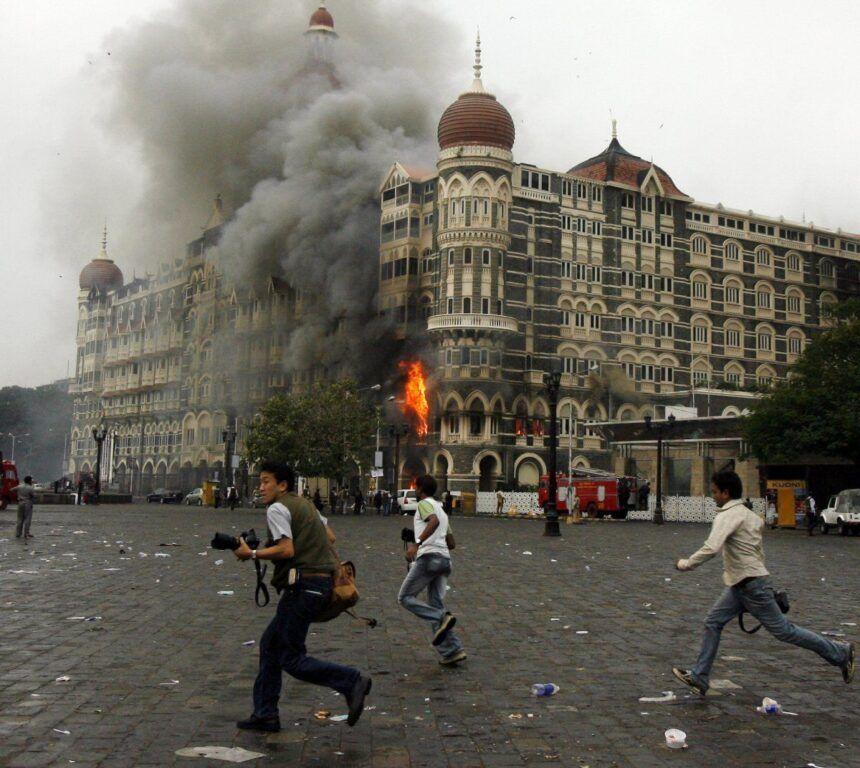
Mumbai Terror Attack: In India, ’26 November 2008′ is a date that makes everyone’s eyes wet when they remember it. Pictures of terror start floating in front of the eyes. This date reopens the old wounds of the country’s financial capital Mumbai. In fact, 16 years ago on this day, Mumbai also became a witness to one of the world’s most horrific and cruel terrorist attacks. 10 terrorists of Lashkar-e-Taiba from Pakistan shook Mumbai with bomb blasts and firing. More than 160 people were killed and more than 300 were injured in the attack.
On November 26, 2008, one of the most horrific terrorist attacks in Indian history, known as the 26/11 Mumbai attacks, unfolded in South Mumbai. Ten armed militants from the Pakistan-based terrorist group Lashkar-e-Taiba (LeT) infiltrated the city by sea and launched a series of coordinated attacks at prominent locations, including the Taj Mahal Palace Hotel, Oberoi Trident Hotel, Chhatrapati Shivaji Maharaj (CST) Railway Station, and Nariman House.
The attackers, armed with automatic weapons and grenades, took hostages and engaged in intense shootouts with security forces, causing widespread panic and chaos. The brutal assaults lasted for nearly four days and resulted in 166 fatalities, including 18 security personnel, with over 300 people injured. The attacks, which targeted both civilians and security forces, became a defining moment in India’s battle against terrorism.
The attacks revealed significant vulnerabilities in India’s security infrastructure, sparking widespread outrage and prompting urgent reforms in counter-terrorism measures. The Indian commandos, including National Security Guard (NSG) teams, worked tirelessly to rescue hostages and neutralise the attackers during the prolonged standoff.
The attack was carried out by Lashkar-e-Taiba, a Pakistan based terror group, which executed a deadly assault on multiple locations across Mumbai. The gunmen used automatic weapons and grenades to target high-profile spots such as Chhatrapati Shivaji Railway Station, Leopold Café, two hospitals, and a cinema hall.
While most of the violence ended within hours, the attacks continued at three sites: Nariman House (a Jewish outreach center), the Oberoi Trident, and the Taj Mahal Palace Hotel, where hostages were taken. The siege at Nariman House ended on November 28, with six hostages and two attackers killed. The standoffs at the Oberoi Trident and Taj Mahal Palace concluded the following day. In total, at least 174 people were killed, including 20 security personnel, 26 foreign nationals, and more than 300 injured.
WE Must never Forget 26/11
Nine of the ten terrorists were killed in the operation, with one, Ajmal Kasab, being captured alive. Kasab was later put on trial for his role in the attacks, which included charges of murder and waging war against India. Although he initially confessed, Kasab retracted his statement during the trial. He was convicted in May 2010 and sentenced to death, with his execution carried out in 2012.
Terrorists’ route and key arrests
The attackers traveled on a Pakistani-flagged cargo ship before hijacking an Indian fishing trawler and killing its crew. Upon reaching Mumbai’s coast, they used inflatable dinghies to land at Badhwar Park and Sassoon Docks, near the Gateway of India, before splitting into small teams to carry out the attacks.
In June 2012, Indian police arrested Sayed Zabiuddin Ansari, a key figure suspected of training and guiding the attackers. Pakistani-American David C. Headley, who helped plan the attacks, was arrested in 2009 and later pleaded guilty in 2011. He was sentenced to 35 years in prison in 2013 for his role in orchestrating the attack.
Strengthening counterterrorism capabilities
In the aftermath of the 26/11 attacks, the Indian government took significant steps to strengthen its counterterrorism capabilities. On December 17, 2008, the Indian Parliament approved the establishment of the National Investigation Agency (NIA), a federal body dedicated to counterterrorism investigations, modeled after the U.S. Federal Bureau of Investigation (FBI). Additionally, the Unlawful Activities (Prevention) Act (UAPA) was amended to introduce stricter measures for combating terrorism and enhancing investigative powers.
The attacks also drew comparisons to the September 11, 2001 attacks in the U.S., as both incidents highlighted vulnerabilities in national security. While the scale of the Mumbai attacks was smaller in terms of casualties and financial losses, it nonetheless galvanised global calls for improved counterterrorism coordination and reinforced the need for greater international cooperation to combat terrorism.