Kumar Bahukhandi
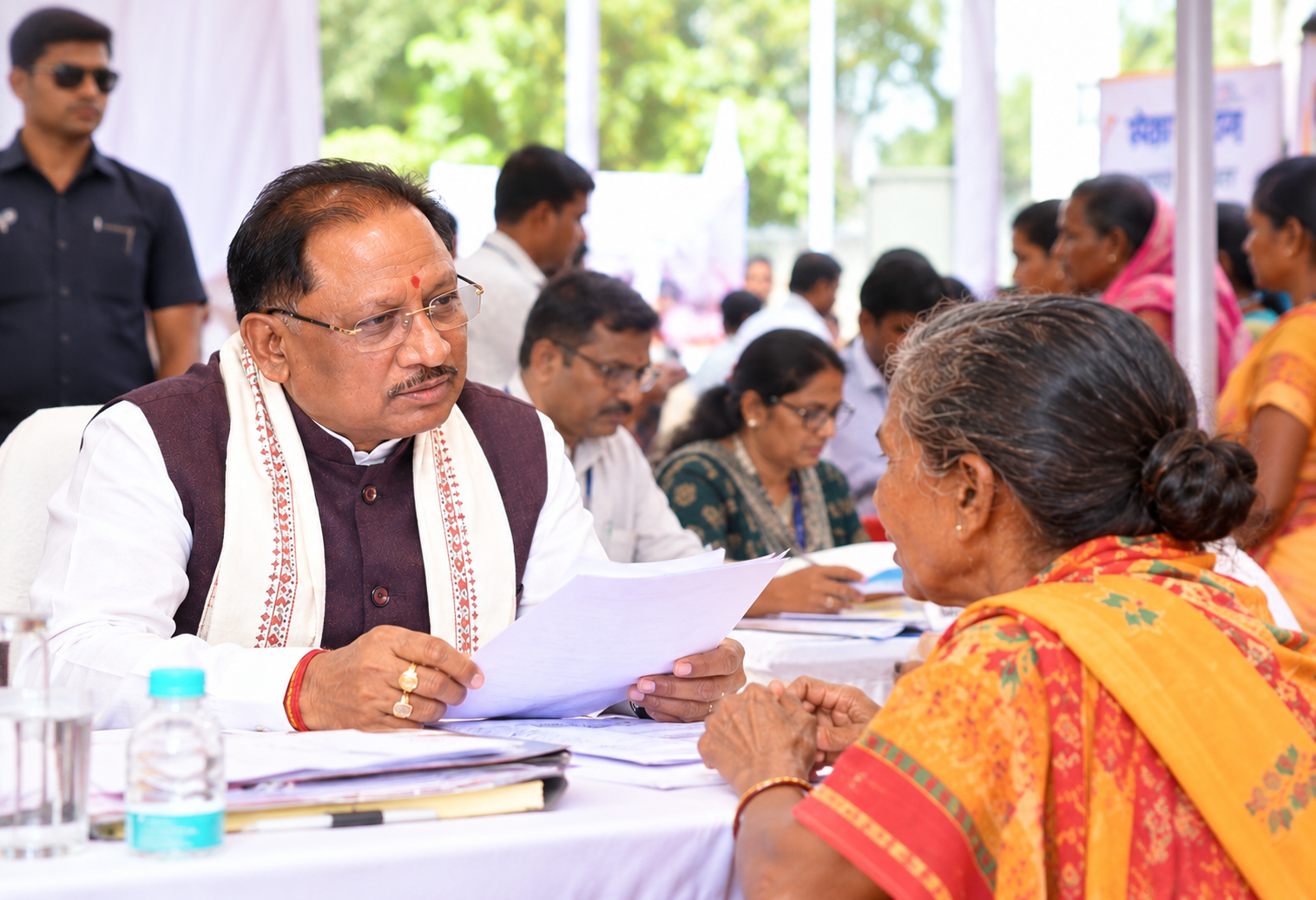
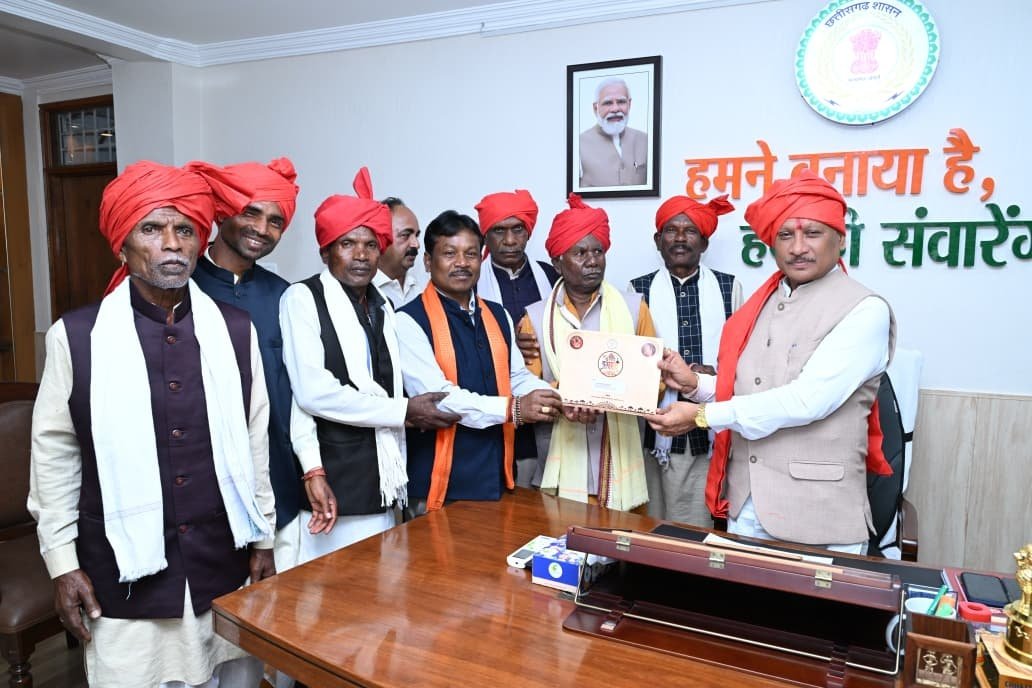
Chief Minister Vishnu Deo Sai has positioned Seva Setu as a cornerstone of citizen-centric governance, aiming to make government services faster, transparent, and accessible across every corner of Chhattisgarh-Photo Credit (File Photo)
Key Factors
- Citizen-first governance through digital transformation.
- Faster delivery of certificates and essential government services.
- Greater transparency and accountability in administration.
- Reduced paperwork, travel, and administrative delays.
- Improved access for rural and tribal communities.
- Supports the vision of Good Governance, Ease of Living, and Digital Chhattisgarh.
From Long Queues to Doorstep Services, the State’s Citizen-Centric Initiative is Redefining Public Service Delivery
In governance, success is often measured not by the number of schemes announced but by the ease with which citizens can access them. Chhattisgarh’s Seva Setu initiative, launched under the leadership of Chief Minister Vishnu Deo Sai, is emerging as a practical example of how technology can bridge the gap between the government and its people.
For decades, obtaining a simple government certificate meant navigating multiple offices, lengthy paperwork, repeated visits, and often unnecessary delays. For citizens living in remote tribal regions, the process was even more difficult, involving long journeys to district headquarters and considerable financial costs.
Today, that experience is changing.
Seva Setu is more than a digital portal—it represents a governance philosophy that places the citizen at the centre of administration. By simplifying procedures and digitising public services, the initiative aims to ensure that government services are delivered transparently, efficiently, and within a defined timeframe.
A New Face of Good Governance
Chief Minister Vishnu Deo Sai has consistently emphasized that governance should not remain confined to government offices but should reach every citizen, irrespective of geography or economic status.
Seva Setu embodies this vision by integrating multiple public services on a single digital platform, reducing paperwork and eliminating unnecessary administrative hurdles.
Whether it is obtaining a residence certificate, caste certificate, income certificate, birth or death certificate, or accessing other essential public services, citizens are increasingly able to complete the process online without making repeated visits to government offices.
This transformation is particularly significant in a state where nearly one-third of the population lives in tribal and rural areas.
Technology with a Human Face
Digital governance often risks becoming technology for technology’s sake. Seva Setu attempts to avoid that trap by combining digital infrastructure with administrative accountability.
Every application submitted through the platform is tracked digitally, allowing applicants to monitor progress in real time. Defined timelines encourage quicker disposal of cases while reducing opportunities for procedural delays.
The initiative reflects an important shift—from a government-centric system to a citizen-centric service model.
Instead of asking citizens to adjust to bureaucracy, the bureaucracy is being redesigned to serve citizens more efficiently.
Transforming Rural Chhattisgarh
The real strength of Seva Setu lies in its potential impact on villages and remote tribal communities.
In many parts of Bastar, Surguja, Jashpur, Kanker, Dantewada, Sukma, and Bijapur, obtaining official documents once required travelling hundreds of kilometres.
For daily wage workers, farmers, students, and tribal families, every trip meant losing valuable time and income.
Digital access significantly reduces these burdens.
When citizens receive essential documents quickly, they can also access scholarships, pensions, government jobs, welfare schemes, banking services, and educational opportunities without unnecessary delay.
Thus, Seva Setu indirectly strengthens social welfare across sectors.
Transparency Builds Trust
One of the most important contributions of digital governance is transparency.
Applications can now be monitored electronically, reducing uncertainty and making service delivery more accountable.
The availability of online records also minimises human error while creating an auditable administrative process.
Greater transparency ultimately strengthens public confidence in government institutions.
Supporting Ease of Living
Modern governance is no longer judged solely by infrastructure projects.
It is equally evaluated by how conveniently citizens interact with public institutions.
A student applying for college admission needs certificates on time.
A farmer requires documents for loans.
An entrepreneur needs licences without procedural bottlenecks.
A senior citizen depends upon pension-related documentation.
Seva Setu contributes to improving the “Ease of Living” by simplifying these everyday interactions.
Challenges Remain
Like every digital initiative, Seva Setu faces challenges.
Internet connectivity in remote villages continues to improve but remains uneven in certain regions.
Digital literacy among elderly citizens and remote tribal communities also requires sustained awareness campaigns.
Common Service Centres, village-level digital facilitators, and local administration will continue to play a crucial role in ensuring that technology remains inclusive rather than exclusive.
Cybersecurity, data privacy, and continuous system upgrades will also determine the long-term credibility of the platform.
Beyond Digitisation
The true success of Seva Setu will not be measured merely by the number of online applications processed.
Its real achievement will lie in whether citizens begin to feel that government services are predictable, accessible, transparent, and responsive.
Digital governance succeeds when it saves time, reduces costs, improves accountability, and restores public trust.
The Road Ahead
As Chhattisgarh advances toward its vision of a developed state, governance reforms like Seva Setu are likely to become as important as roads, schools, and hospitals.
Chief Minister Vishnu Deo Sai’s emphasis on technology-enabled governance reflects a broader administrative shift—one that seeks to replace procedural complexity with simplicity and bureaucratic distance with citizen engagement.
If continuously strengthened through better connectivity, digital awareness, administrative reforms, and timely service delivery, Seva Setu has the potential to become one of Chhattisgarh’s defining governance initiatives.
It is not merely a digital platform.
It is an effort to make governance more humane, accessible, and accountable—ensuring that every citizen, whether in a bustling city or a remote forest village, feels connected to the government through a seamless bridge of public service.