Kumar Bahukhandi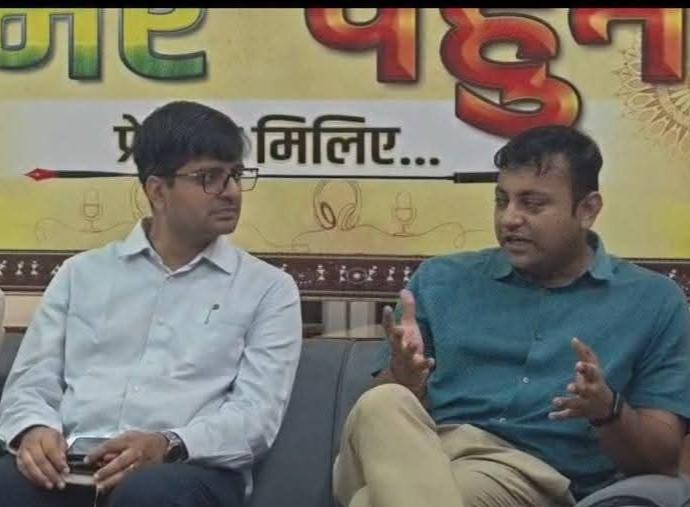
Public Relations Commissioner Rajat Bansal interacts with journalists during the ‘Hamar Pahuna’ programme at Raipur Press Club, highlighting the importance of responsible journalism in the digital age-Photo credit -channel24india.com via CG/PR
IN Short
- PR Commissioner Rajat Bansal warned against misleading news driven by the race for online attention.
- He said credibility remains journalism’s greatest strength in the digital era.
- The remarks were made during the ‘Hamar Pahuna’ programme at the Raipur Press Club.
- Raipur Municipal Corporation Commissioner Sambit Mishra also participated in the interaction.
- Journalists and officials discussed transparency, ethical reporting and stronger media-government coordination.
- The event also focused on the future development of the Raipur Press Club as a professional institution.
Chhattisgarh PR Commissioner tells journalists that credibility—not virality—will define the future of media; dialogue at Raipur Press Club focuses on ethics, transparency and changing newsroom challenges
Raipur: At a time when digital platforms reward speed and sensationalism, Chhattisgarh Public Relations Commissioner Rajat Bansal has cautioned that the growing competition for online attention should not come at the cost of truth and public trust.
Speaking during the ‘Hamar Pahuna’ interaction organised by the Raipur Press Club, Bansal said the increasing circulation of misleading content in the digital age poses a serious challenge not only to journalism but also to democratic institutions.
“Journalism derives its strength from credibility. When attention becomes the primary objective, facts often become the first casualty. That trend is a matter of concern for both democracy and society,” he observed while interacting with journalists.
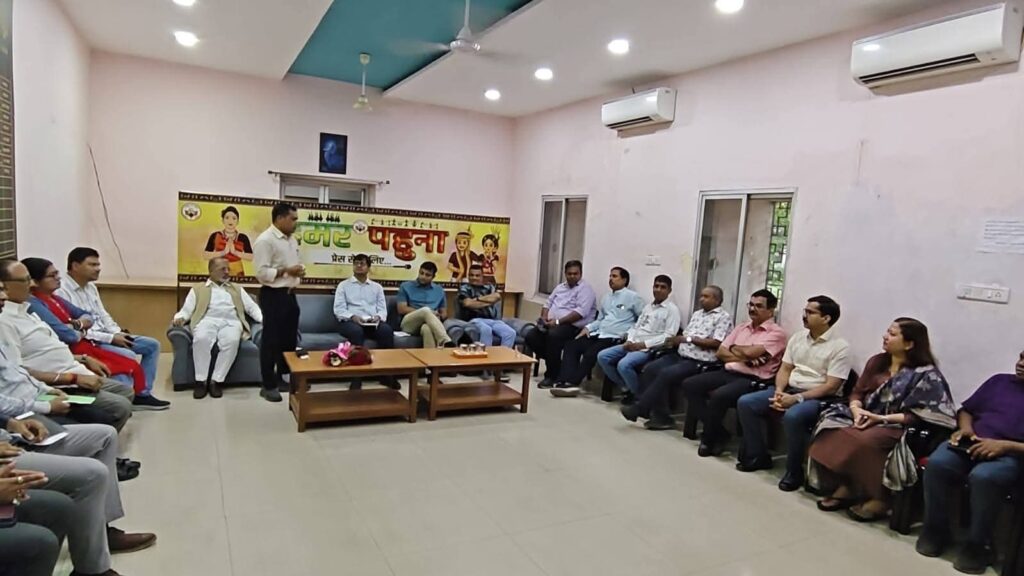
Journalists, media professionals and Sanjeev Tiwari (Additional Director PR) , Santosh Maurya (Additional Director -PR ) and others officials participate in an interactive discussion at Raipur Press Club on media ethics, transparency and the evolving challenges facing modern journalism-Photo Credit -channel24india.com via CG/PR
The event brought together media professionals, senior journalists and officials to discuss the changing landscape of journalism, the role of public communication and the need for stronger coordination between the media and government institutions.
Credibility Over Clicks
Bansal said social media has transformed the way information is produced and consumed, creating opportunities for faster communication while also increasing the risk of misinformation.
He stressed that professional journalism must distinguish itself through verification, balance and accountability.
“In an era where anyone can publish content instantly, the responsibility of trained journalists has become even greater. Public confidence can only be retained through factual and ethical reporting,” he said.
Dialogue Between Media and Government
The programme also featured Raipur Municipal Corporation Commissioner Sambit Mishra, who joined discussions on improving communication between government departments and the media.
Participants agreed that regular interaction, timely dissemination of information and institutional transparency are essential for strengthening democratic governance.
Senior journalists present at the event highlighted the importance of maintaining open channels of communication while preserving the independence of the press.
Press Club’s Expanding Role
Beyond discussing current media challenges, the gathering also explored ideas for strengthening the Raipur Press Club as a platform for professional development, constructive dialogue and capacity building for journalists.
Speakers emphasised that press clubs should evolve into centres for training, policy discussions and knowledge-sharing as journalism continues to adapt to technological change.
A Challenge for Modern Journalism
The discussion reflected a growing concern within the media fraternity that journalism today faces pressure from multiple fronts—instant news cycles, social media algorithms, misinformation campaigns and declining public trust.
Participants agreed that while technology has transformed news delivery, the core values of journalism—accuracy, fairness and public accountability—remain unchanged.