Kumar Bahukhandi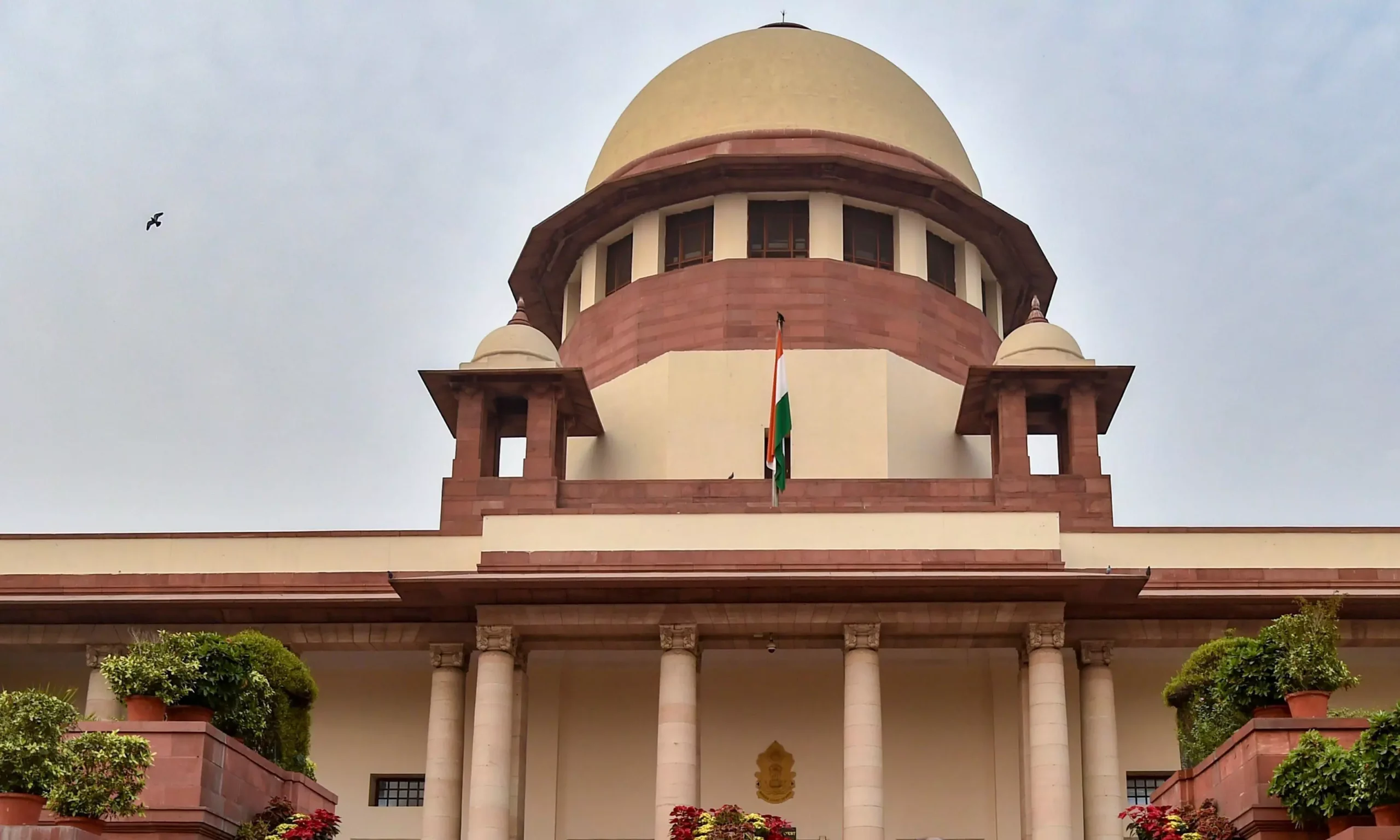
A view of the Supreme Court of India in New Delhi. The apex court on Thursday, August 6, 2026, declined to grant interim medical bail to Asaram but permitted him to engage a trained caretaker for round-the-clock assistance, while allowing him to approach the court again if his health deteriorates-Photo Credit: File Photo
The Supreme Court’s refusal to grant interim medical bail, while permitting round-the-clock care, highlights the difficult balance between a convict’s health and the rights of a sexual-assault survivor
The Supreme Court’s decision not to grant interim medical bail to self-styled godman Asaram, while simultaneously allowing him access to a trained caretaker around the clock, presents a significant example of how courts are required to balance two competing considerations — humanitarian treatment of an ageing prisoner and the seriousness of a conviction involving the sexual assault of a minor.
On Thursday, August 6, 2026, a Bench comprising Justices M.M. Sundresh and P.B. Varale declined to release the 85-year-old Asaram on interim bail on medical grounds. The court, however, kept his plea pending and gave him liberty to approach it again should his health deteriorate.
The decision followed an assessment by a medical board constituted by the All India Institute of Medical Sciences (AIIMS). According to material placed before the court, Asaram did not presently require hospitalisation but needed continuous medical assistance. The court consequently permitted him to engage a trained caretaker of his choice for round-the-clock assistance.
This distinction is important. The court did not disregard his health concerns; nor did it conclude that those concerns presently justified his release.
Age and Illness Versus Gravity of Conviction
Cases involving elderly or seriously ill prisoners inevitably raise questions of compassion and dignity.
A prisoner does not cease to possess fundamental human dignity merely because he has been convicted. Appropriate medical treatment remains part of a humane criminal justice system.
At the same time, humanitarian considerations cannot be examined independently of the nature of the offence, the judicial findings and the interests of the survivor.
Asaram was convicted by a trial court in April 2018 for sexually assaulting a minor at his ashram in 2013 and was sentenced to imprisonment for the remainder of his natural life.
More significantly, the Rajasthan High Court on May 27, 2026 upheld his life sentence, although it granted him partial relief on some other charges. The High Court stressed the importance of the survivor’s testimony while rejecting the argument that Asaram’s age and physical condition should outweigh the established conviction.
Parole and Bail Are Different Questions
Another aspect requiring careful reporting is the distinction between parole and judicial interim bail.
The Rajasthan High Court recently granted Asaram 20 days’ regular parole, after examining the rejection of his parole application and his conduct during previous periods of temporary release.
That does not automatically mean that the Supreme Court was required to grant interim medical bail.
The two forms of temporary release arise in different legal contexts and involve different considerations. Reporting one as contradicting the other would therefore oversimplify the judicial process.
Indeed, during Thursday’s proceedings, Solicitor General Tushar Mehta raised the issue of the parole application, while Asaram’s lawyers maintained that it had been filed earlier and was not based on his present medical grounds.
A Question Larger Than One Convict
The significance of Thursday’s order extends beyond Asaram.
Indian courts frequently confront difficult questions involving prisoners who are elderly, terminally ill or suffering from serious medical conditions. The justice system cannot become indifferent to illness simply because the person seeking treatment has been convicted of a grave crime.
But compassion must also operate within the boundaries of accountability and equality before law.
If adequate treatment can be provided while a sentence continues to operate, courts are entitled to examine whether temporary release is genuinely necessary.
The Supreme Court’s approach in this instance appears to follow precisely that middle course: medical assistance has been permitted, but incarceration continues.
The Survivor Cannot Disappear From the Story
There is another dimension that journalism itself must remember.
When a famous or influential convict seeks bail on grounds of age or illness, public discussion can quickly become centred entirely around the convict — his medical condition, family, followers and personal circumstances.
The survivor can gradually disappear from the narrative.
That would be a serious imbalance.
The criminal proceedings did not originate with Asaram’s health. They originated with allegations made by a minor, followed by investigation, trial, conviction and appellate judicial scrutiny.
Compassion towards a prisoner and sensitivity towards a survivor are not mutually exclusive. A mature justice system must be capable of protecting both human dignity and judicial accountability.
IPC, BNS and the Importance of Legal Accuracy
India’s substantive criminal law has since undergone a historic transition, with the Bharatiya Nyaya Sanhita, 2023 replacing the Indian Penal Code from July 1, 2024.
But that change should not lead news organisations to rewrite the legal history of older cases.
Asaram’s alleged offence occurred in 2013 and his conviction was recorded under provisions of the IPC and other laws then applicable. Consequently, references to the specific conviction should retain the IPC provisions used by the courts rather than substitute their present-day BNS equivalents.
That distinction may appear technical, but in legal journalism precision is not a technicality — it is part of accuracy.
My Insight
The Supreme Court’s order neither closes the door on Asaram’s health concerns nor converts those concerns into an automatic entitlement to liberty. By permitting continuous professional care while leaving open the possibility of reconsideration should his condition worsen, the court has attempted to accommodate humanitarian concerns without presently disturbing a life sentence upheld by the Rajasthan High Court.
Justice must be compassionate, but compassion cannot erase accountability. Equally, punishment cannot become a justification for denying necessary medical care. The difficult task of constitutional justice lies precisely in maintaining that balance.